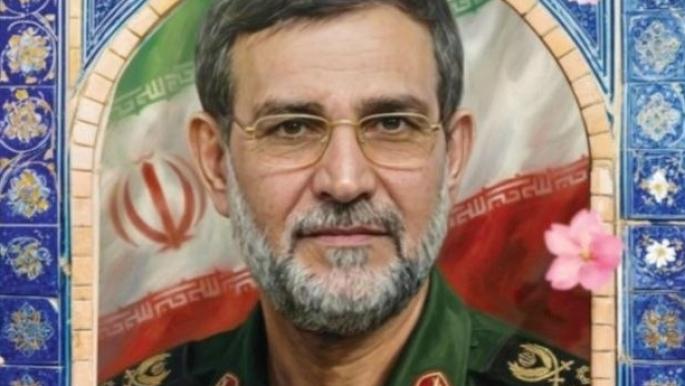
The Iranian Revolutionary Guard mourned Admiral Ali Reza Tangsiri today, Monday, following his assassination in an operation attributed to Israel last Thursday. This incident has provoked widespread reactions in Iranian political and military circles, with some considering it a significant blow to the military capabilities of the Islamic Republic.
Tangsiri, who has led the naval forces of the Revolutionary Guard since 2017, was a prominent figure in developing Iran's naval capabilities, particularly in the field of submarine and warship manufacturing. He played a crucial role in enhancing Iran's presence in the waters of the Arabian Gulf, which has heightened tensions with neighboring countries, especially the United States and Israel.
Details of the Assassination
Iranian media reported that Admiral Tangsiri was the target of a planned assassination while he was in an unspecified location. Military sources confirmed that the operation bears the fingerprints of Israel, which has long targeted Iranian military figures in attempts to halt Iran's nuclear program and curb its influence in the region.
The assassination comes at a sensitive time, as the region is witnessing escalating tensions between Iran and Israel, with both countries exchanging threats and military operations in recent years. Tangsiri is considered one of the most prominent military leaders who contributed to strengthening Iranian naval capabilities, making his assassination a strategically significant event.
Background & Context
Historically, Iranian-Israeli relations have been marked by increasing tensions, with Iran viewing Israel as a major enemy in the region. These tensions have notably intensified since the United States withdrew from the Iranian nuclear deal in 2018, leading to an escalation of military activities from both sides.
The Iranian Revolutionary Guard, regarded as the military arm of the Iranian regime, has played a pivotal role in supporting militias in Iraq, Syria, and Lebanon, which has raised Israeli concerns. In this context, the assassination of Admiral Tangsiri is seen as part of an Israeli strategy aimed at undermining Iranian military capabilities.
Impact & Consequences
The assassination of Admiral Tangsiri is expected to have significant repercussions on Iranian military strategy. This incident may lead to increased military readiness within the Revolutionary Guard and could contribute to an escalation of military operations against Israeli targets in the region.
Furthermore, this incident could ignite tensions between Iran and Western countries, as the Revolutionary Guard is part of the broader conflict between Iran and the United States and its allies. This event may be used as a pretext to justify further military operations or even retaliatory attacks.
Regional Significance
The assassination of Admiral Tangsiri is a significant event with direct implications for regional security. The rising tensions between Iran and Israel could lead to escalated conflicts in the region, affecting neighboring Arab countries.
This incident may also reshape alliances in the region, as some Arab countries might seek to enhance cooperation with Israel in the face of Iranian threats. Conversely, Iran may seek to bolster its influence in Iraq and Syria, complicating the security landscape in the region.
In conclusion, the assassination of Admiral Ali Reza Tangsiri marks a turning point in the Iranian-Israeli conflict, highlighting the escalation of military operations between the two sides and reinforcing instability in the region.