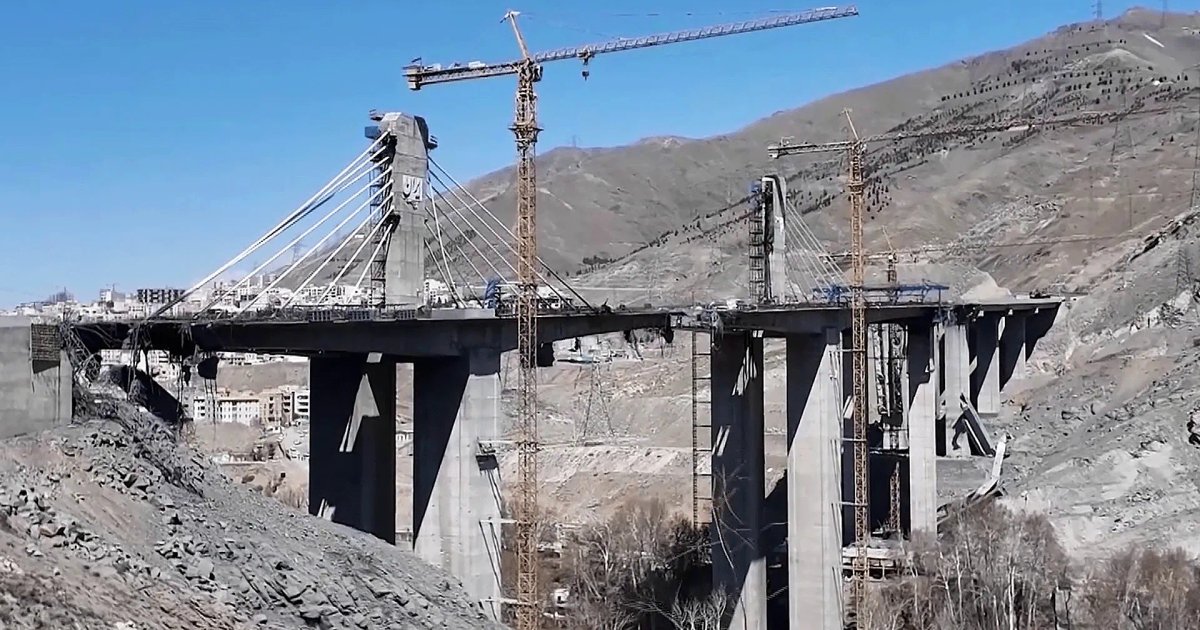
The US attack targeting the Karaj Bridge, situated west of the Iranian capital Tehran, has triggered a wave of anger within Iranian circles. Abu al-Fazl Rahmani, the director of the company responsible for the bridge's construction, confirmed that the project was built entirely with Iranian capabilities and was on the verge of opening to serve citizens.
Rahmani added in his statements that this attack reflects the United States' dissatisfaction with the progress Iran is making in infrastructure development, noting that the bridge represents a national achievement that Iranians take pride in.
Details of the Incident
The attack on the bridge occurred at a sensitive time, as Iran had announced plans to develop its infrastructure and enhance its economic capabilities. The bridge, considered a vital project, aimed to improve transportation flow and facilitate access to the areas surrounding the capital.
Iranian statements came after media reports monitored the attack, believed to be part of a broader US strategy to pressure Iran amid escalating tensions between the two countries. This attack is considered the first of its kind targeting a civilian project of this magnitude, further intensifying regional tensions.
Background & Context
Historically, Iranian-American relations have seen increasing tensions since the Islamic Revolution in 1979. Since then, the United States has imposed economic sanctions on Iran, negatively impacting the Iranian economy. In recent years, these tensions have escalated further, especially after the US withdrawal from the Iranian nuclear deal in 2018.
This attack comes at a critical juncture, as Iran seeks to bolster its economic capabilities through new infrastructure projects, making it a potential target for US pressures. The targeted bridge is part of a larger plan to develop the country's transportation network, deemed essential for improving the local economy.
Impact & Consequences
The attack on the Karaj Bridge could have serious repercussions on relations between Iran and the United States. This military escalation demonstrates that the United States is willing to go far in its policy towards Iran, potentially leading to strong Iranian reactions both militarily and diplomatically.
Moreover, this attack may affect foreign investments in Iran, as international companies might hesitate to enter the Iranian market due to increasing risks. This situation could exacerbate the already struggling economic conditions in the country, which is suffering from sanctions.
Regional Significance
The escalating tensions between Iran and the United States could also impact security and stability in the Arab region. Iran plays a significant role in various regional conflicts, and any escalation in relations with the United States may reflect on its allies in the region.
Neighboring Arab countries are expected to closely monitor these developments, as any military escalation could destabilize the entire region. This situation may also reopen discussions about Arab countries' policies towards Iran, especially amid ongoing tensions.
In conclusion, the US attack on the Karaj Bridge illustrates that tensions between Iran and the United States remain unresolved, and their repercussions may extend to other areas, necessitating greater international attention to address these escalating crises.