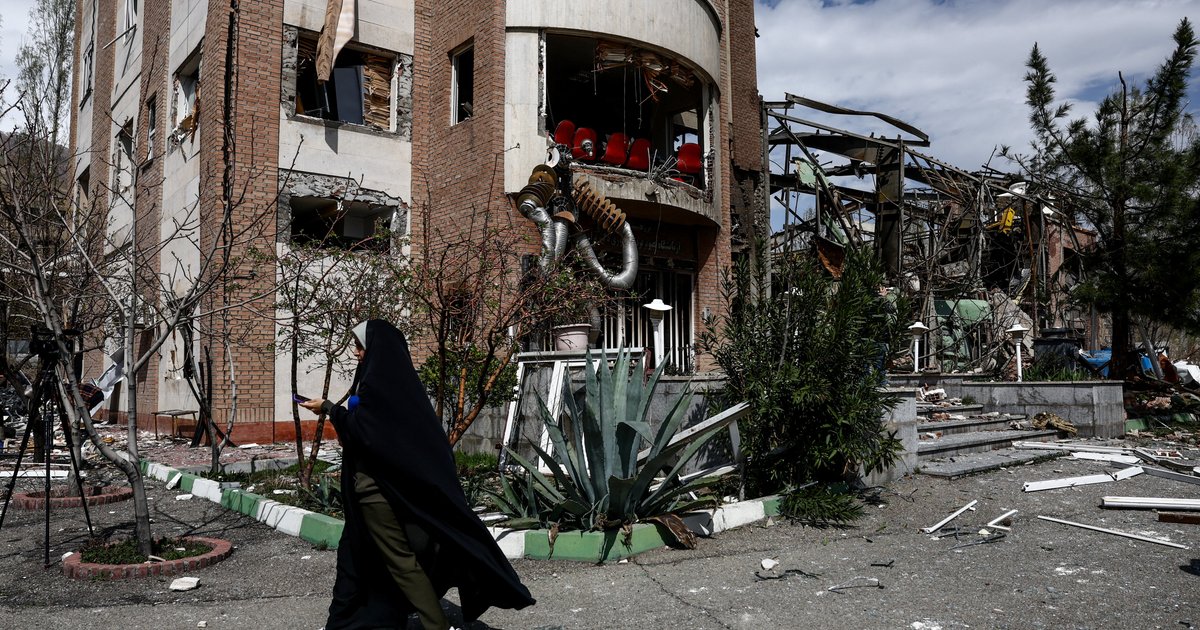
Iran has firmly rejected any immediate move to reopen the Strait of Hormuz, despite the approaching deadline set by the United States. This refusal comes at a time when international efforts are ongoing to end the conflict that has lasted for five weeks, with increasing pressure on Tehran from Washington.
In a related context, US President Donald Trump threatened to unleash "hell" on Iran if an agreement is not reached by the end of Tuesday. These statements reflect the rising tensions between the two parties, as each seeks to gain strategic advantages in the region.
Event Details
Sources have reported that the Chief of Staff of the Pakistani Army, General Asim Munir, was in contact "throughout the night" with US Vice President J.D. Vance, Special Envoy Steve Wittekov, and Iranian Foreign Minister Abbas Araghchi. These communications indicate intense efforts by the involved parties to reach a peaceful resolution to the conflict.
A senior Iranian official confirmed to Reuters that Iran will not reopen the strait as part of any temporary ceasefire. He added that Tehran will not accept deadlines while reviewing the proposal submitted by Washington, indicating that the United States lacks the readiness for a permanent ceasefire.
Background & Context
The Strait of Hormuz is one of the most important waterways in the world, through which approximately 20% of the world's total oil passes. Historically, the strait has witnessed numerous tensions between Iran and Western countries, particularly the United States. These tensions often escalate during times of political crises, impacting oil prices and global markets.
The ongoing five-week war indicates an escalation of the conflict in the region, which began after a series of mutual attacks between Iranian and American forces. These events raise concerns within the international community, as many countries seek to avoid further escalation that could lead to a full-scale conflict.
Impact & Consequences
Concerns are growing that the continuation of the conflict may have negative effects on the global economy, especially given the heavy reliance on Iranian oil. Any escalation in tensions could lead to rising oil prices, affecting consuming nations and increasing economic pressures.
Moreover, instability in the region could provide opportunities for extremist groups to exploit the chaos, further complicating the security situation in the Middle East. Neighboring countries, such as Iraq and Gulf states, may face direct repercussions as a result of these tensions.
Regional Significance
For Arab countries, the situation in the Strait of Hormuz represents a significant challenge, as many of these nations depend on oil exports. Any escalation in the conflict could affect shipping routes and increase shipping costs, negatively impacting the Arab economy.
Many Arab nations are seeking to enhance regional cooperation to address the security and economic challenges arising from the tensions in the region. The continuation of dialogue between Iran and the United States may be key to achieving stability in the area, but this requires concessions from both sides.