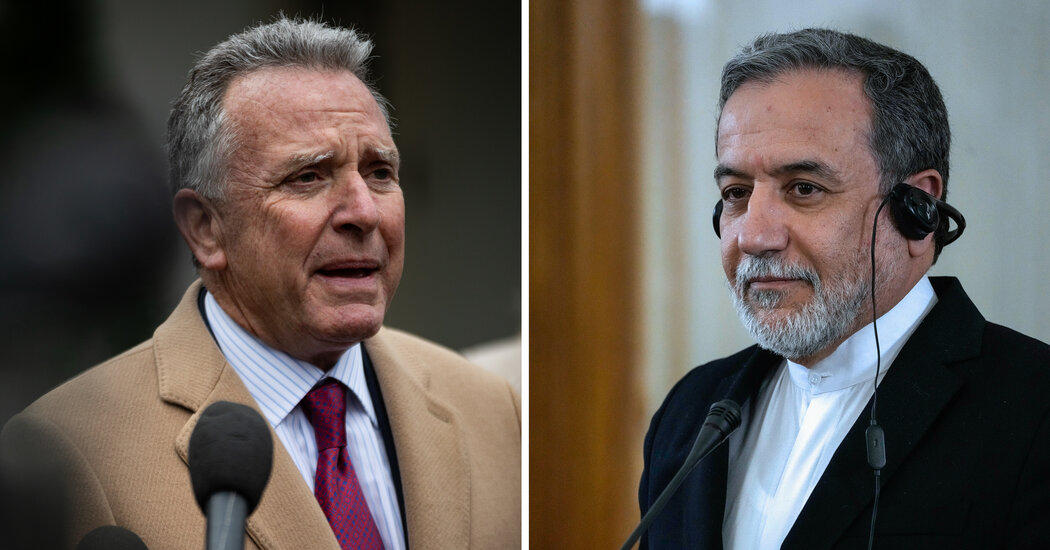
The Iranian Foreign Ministry has announced that the offer presented by the United States for nuclear negotiations includes unrealistic and illogical demands. The ministry's spokesperson, Nasser Kanani, confirmed that Tehran will not negotiate under pressure or threat, stressing that any negotiations must be based on mutual respect.
These statements come at a sensitive time, as Western countries are seeking to revive the nuclear agreement signed in 2015, from which the United States withdrew in 2018. This agreement is pivotal in efforts to prevent Iran from developing nuclear weapons, but it has faced significant challenges since then.
Details of the Event
In a press conference, Kanani stated that Iran is ready to negotiate, but under reasonable conditions that guarantee its national rights. He pointed out that the US demands include impossible conditions, making it difficult to reach any agreement. He also affirmed that Tehran will not back down from its rights in the field of peaceful nuclear energy.
The US demands also include imposing additional restrictions on Iran's nuclear program, which Tehran views as an infringement on its sovereignty. Iran has expressed its willingness to cooperate with the International Atomic Energy Agency, but at the same time rejects any external pressures that affect its sovereign decision.
Background & Context
Historically, relations between Iran and the United States have been tense, especially following the Islamic Revolution in 1979. These relations have witnessed many fluctuations, with nuclear negotiations in recent years being the only hope for easing tensions. However, Washington's withdrawal from the nuclear agreement in 2018 and the imposition of strict economic sanctions on Iran have heightened tensions.
In recent years, European countries, such as France and Germany, have attempted to play a mediating role in these negotiations, but to no avail. Iran considers the US sanctions as the main reason for the instability in the region and demands their lifting as a fundamental condition for any agreement.
Impact & Consequences
The repercussions of these negotiations extend beyond Iran, affecting regional and global security. The continuation of Iran's nuclear program could lead to an arms race in the region, increasing tensions among neighboring countries. Moreover, the failure of negotiations could negatively impact oil prices and global markets.
Furthermore, any escalation in the situation could lead to military interventions by major powers, complicating the situation further. Therefore, the success or failure of these negotiations will have far-reaching implications for regional stability.
Regional Significance
Arab countries neighboring Iran, such as Saudi Arabia and the United Arab Emirates, are among the most affected by developments in the Iranian nuclear file. The continuation of Iran's nuclear program may raise concerns in these countries, prompting them to bolster their military capabilities. Additionally, any escalation in the situation could lead to a deterioration of relations between Iran and these countries, exacerbating regional conflicts.
In conclusion, hope remains for the possibility of reaching an agreement that guarantees the rights of all parties and leads to regional stability. However, under the current circumstances, the path to achieving this still seems long and difficult.