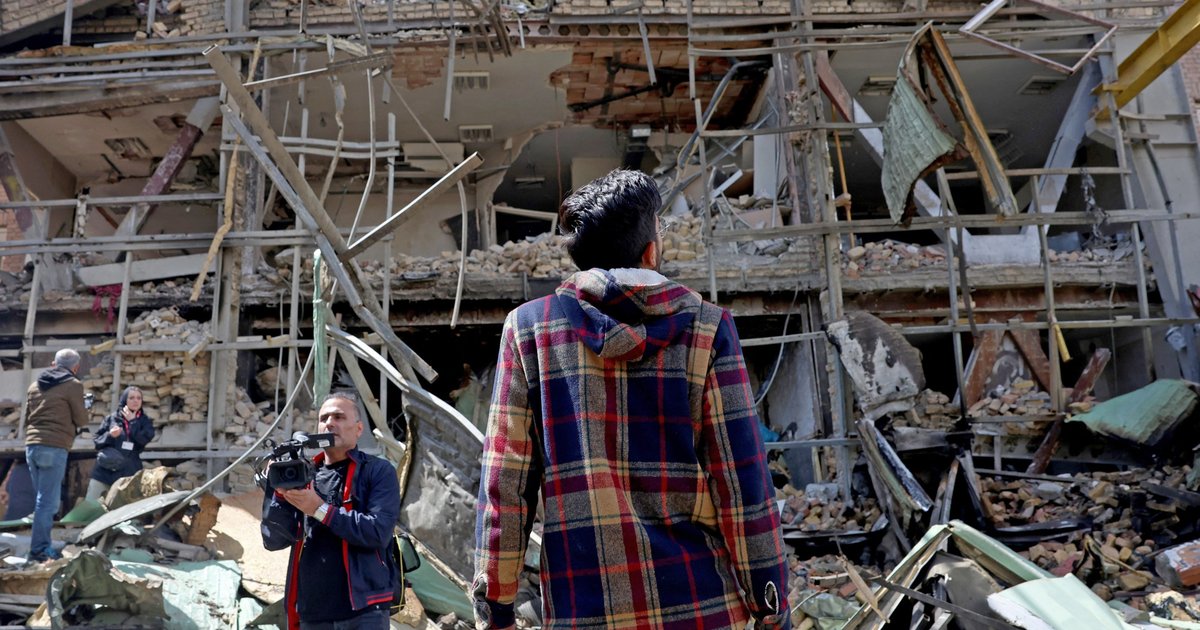
Iran's Minister of Science, Hossein Samai Saraf, announced that at least 30 universities in Iran have suffered damage due to US-Israeli airstrikes since the war began on February 28. This statement was made during his address at Shahid Beheshti University in Tehran, where a laser and plasma research center was destroyed as a result of one of the air raids.
Samai Saraf pointed out that academic institutions were not just random targets; they have been repeatedly targeted, reflecting a systematic policy aimed at destroying the scientific infrastructure in the country. He stated that attacks on universities and research centers signify a return to the Stone Age, referring to previous threats that have affected Iranian infrastructure.
Details of the Incident
These remarks come at a sensitive time, as Iran is witnessing an escalation in military tensions with the United States and Israel. Samai Saraf noted that many Iranian scientists have been targeted in this conflict, with several professors at Shahid Beheshti University killed during the hostilities. These events raise concerns about the future of higher education and scientific research in Iran.
He also confirmed that the attacks on universities are not merely military assaults but are attacks on knowledge and science, hindering the country's progress in research and development. These attacks are part of a broader strategy aimed at weakening Iran on various fronts.
Background & Context
Historically, Iran has experienced numerous military conflicts that have impacted its infrastructure, particularly in the fields of education and research. Since the Islamic Revolution in 1979, the country has faced international sanctions and military attacks, significantly affecting the development of its academic institutions. There have been ongoing attempts by the Iranian government to enhance higher education and scientific research, but these efforts face significant challenges due to regional and international tensions.
In recent years, pressures on Iran have increased due to its nuclear program, leading to an escalation of military attacks by the United States and its allies. These attacks often target critical infrastructure, including universities and research centers, raising concerns about the future of education in the country.
Impact & Consequences
The repercussions of these attacks could be far-reaching, affecting Iran's ability to develop its scientific and technological capabilities. Under these circumstances, many scientists and researchers may seek to leave the country in search of safer and more conducive environments for academic work. This could lead to a loss of the scientific competencies that Iran needs to achieve progress in various fields.
Moreover, targeting universities may provoke strong reactions from the international academic community, potentially increasing pressure on the governments conducting these attacks. This could exacerbate humanitarian crises in the region, as many students and researchers suffer from the effects of the conflict.
Regional Significance
These events hold significant importance for the Arab region, reflecting the ongoing tensions between major powers in the Middle East. The targeting of universities and research centers in Iran may have implications for neighboring Arab countries, potentially leading to increased tensions and conflicts in the region.
Additionally, these events may raise concerns among Arab nations regarding the stability of higher education and scientific research in their countries, especially amid the political and economic challenges facing the region. Therefore, enhancing academic cooperation between Arab countries and Iran could be an important step towards achieving stability and development in the region.