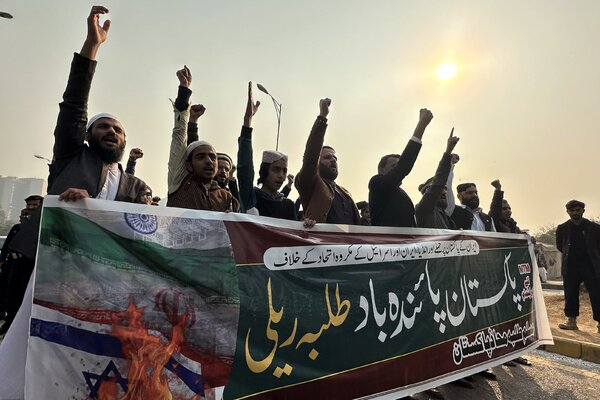
Iran has announced that it will convey its response to the peace proposal presented by the United States through Pakistan, which is considered a key mediator in this matter. This statement from an Iranian official highlights Pakistan's role as a link in the discussions between Tehran and Washington.
At the same time, another Iranian official pointed out that the American proposal to end the conflict is nothing more than a 'list of American wishes,' reflecting Tehran's discontent with the proposed terms. These statements come at a sensitive time as tensions in the region are escalating, increasing the importance of any potential diplomatic move.
Details of the Event
Pressure on Iran is mounting amid the tense situation in the Middle East, where the international community is seeking to end the ongoing conflict. The American proposal was presented in an attempt to find a peaceful resolution to the dispute, but Iranian reactions indicate that Tehran is not ready to accept the current conditions.
Pakistan, playing the role of mediator, may have a vested interest in achieving peace in the region, as it suffers from the repercussions of the conflict on its security and stability. Conveying the Iranian response through Pakistan reflects the mutual trust between the two countries in this context.
Background & Context
Historically, relations between Iran and the United States have been strained since the Islamic Revolution in 1979. These relations have experienced numerous fluctuations, with multiple attempts to reach agreements often failing due to mutual suspicions.
In recent years, tensions have significantly increased, especially after the United States withdrew from the Iranian nuclear deal in 2018. This withdrawal led to the imposition of severe economic sanctions on Iran, which greatly impacted its economy and exacerbated humanitarian conditions.
Impact & Consequences
These developments are significant not only for Iran and the United States but for the entire region. The success or failure of these talks could affect regional stability and may lead to changes in political and economic alliances.
If an agreement is reached, it could pave the way for improved relations between Iran and Western countries, potentially contributing to a reduction in tensions in the region. Conversely, the failure of the talks could lead to a new escalation in the conflict, threatening regional security.
Regional Significance
Arab countries are directly affected by the tensions between Iran and the United States. Iranian relations with some Arab nations, such as Saudi Arabia and the UAE, are already strained, and any new escalation could worsen these tensions.
The stability of Iraq, Syria, and Lebanon heavily depends on how relations between Iran and the United States evolve. Therefore, any progress in the talks could have a positive impact on the situations in these countries.
In conclusion, all eyes remain on Tehran and Washington, as the world looks forward to seeing what these talks will yield and whether they will lead to peace in the region.