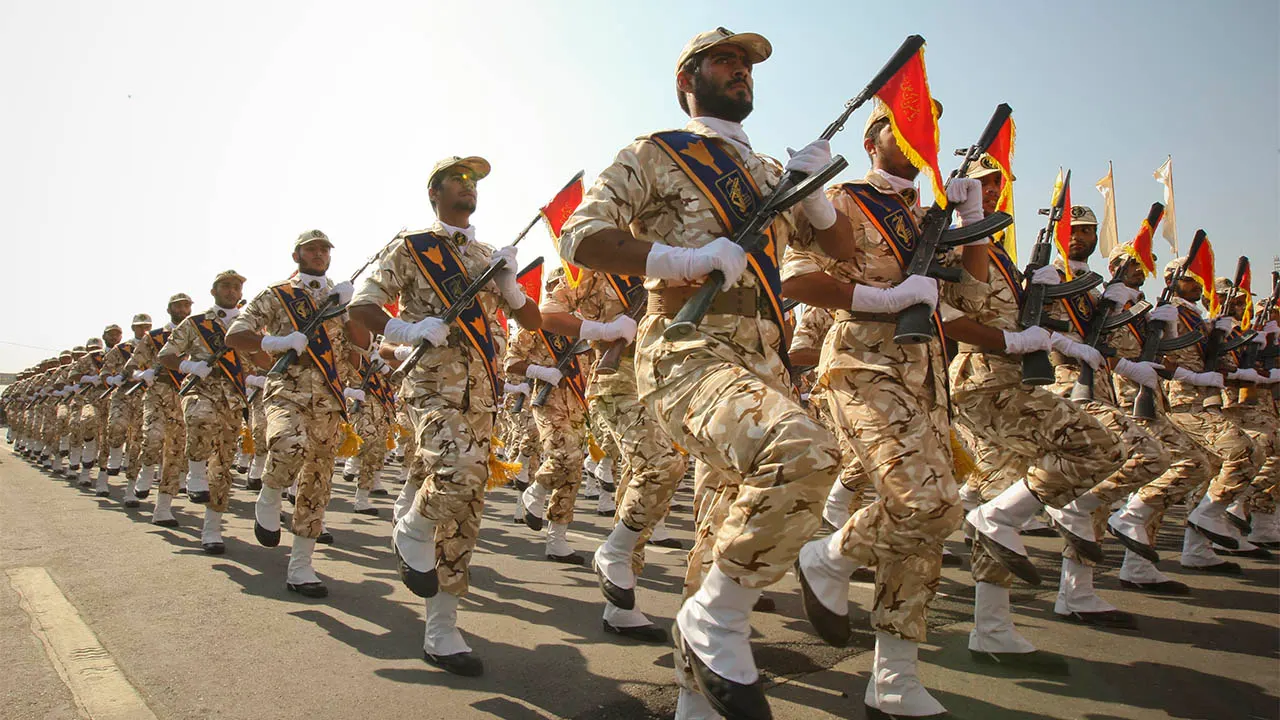
The Iranian Revolutionary Guard has announced the downing of an advanced enemy warplane near Qeshm Island. This incident occurs at a sensitive time marked by increasing tensions in the region, raising questions about the military and political dimensions of this escalation.
In an official statement, the Revolutionary Guard confirmed that the aircraft was flying in Iranian airspace and was shot down using advanced air defense systems. This event reflects Iran's capability to protect its airspace and strengthens its military position against potential threats.
Details of the Incident
According to official sources, the aircraft was downed during a precise monitoring operation by the air defense units of the Revolutionary Guard. The aircraft was identified as being of an advanced model, indicating that the enemy may have employed modern technologies in its attempt to breach Iranian airspace.
The Revolutionary Guard did not specify the identity of the aircraft or its origin, but indicated that this operation is part of enhancing Iranian national security. It was also emphasized that the Iranian armed forces will remain on alert to face any future threats.
Background & Context
This incident occurs against a backdrop of increasing tensions between Iran and the United States and its allies in the region. In recent years, relations between Iran and the West have notably escalated, especially following the U.S. withdrawal from the Iranian nuclear deal in 2018.
Recent events, including military exercises conducted by Iran, suggest that Tehran is seeking to bolster its defensive capabilities in the face of potential threats. This military escalation could have significant implications for regional stability.
Impact & Consequences
The downing of the aircraft may lead to heightened tensions between Iran and Western countries, especially if this incident is perceived as a show of force by Tehran. International reactions to this incident will be crucial in determining the course of future events.
This incident may also affect military relations between Iran and its allies, potentially leading to enhanced military cooperation in facing common threats. At the same time, it could increase pressure on Western countries to reconsider their strategies towards Iran.
Regional Significance
The downing of the warplane could have direct implications for security in the Arab region. Neighboring countries to Iran, such as Iraq and Gulf states, may feel increased anxiety over the rising military tensions.
These events may also influence the political dialogue in the region, as some Arab countries seek to improve relations with Iran. Under these circumstances, it will be important to monitor regional and international reactions to this incident.
In conclusion, the downing of the warplane near Qeshm represents a turning point in military and political relations in the region. It will be necessary to follow upcoming developments to understand the full dimensions of this event and its impact on regional security.