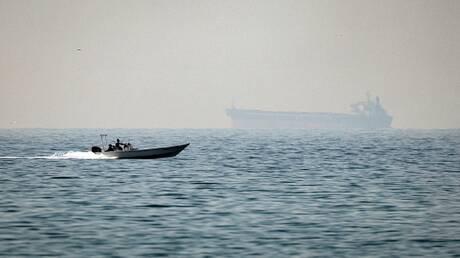
The Iranian Revolutionary Guard has confirmed that the Strait of Hormuz will remain closed to enemies, emphasizing that the comedic offers made by U.S. President Donald Trump will not lead to the opening of the strait. These statements come at a sensitive time as the region experiences increasing tensions, with the Strait of Hormuz being one of the most important maritime corridors in the world, through which approximately 20% of the world's oil passes.
The Revolutionary Guard, which is one of the main military arms of the Iranian regime, indicated that any attempt to open the strait to foreign ships would be met with a strong response. These remarks come amid escalating tensions between Iran and the United States, especially following Washington's withdrawal from the Iranian nuclear deal in 2018 and the re-imposition of economic sanctions on Tehran.
Details of the Statement
In statements made by the spokesperson for the Revolutionary Guard, it was confirmed that the Strait of Hormuz will remain closed to enemies, noting that any attempt by the United States or its allies to open this strategic passage will not succeed. He reiterated that Trump's offers, which he described as "comedic," would not affect Iran's steadfast position in protecting its sovereignty and national interests.
These statements come at a time when the region is witnessing an increase in military activities, with Iran enhancing its military presence in the Gulf, raising concerns among Western nations. There are also reports indicating that Iran has increased the number of warships in the area, reflecting its determination to protect its interests in the Strait of Hormuz.
Background & Context
The Strait of Hormuz is considered a vital transit point for oil, with approximately 18 million barrels passing through daily. Historically, the strait has witnessed numerous tensions, especially during periods of conflict between Iran and Western countries. In 1980, during the Iran-Iraq War, the strait was the scene of military operations, leading to heightened tensions in the region.
In recent years, concerns have grown that any escalation in tensions between Iran and the United States could lead to the closure of the strait, significantly impacting global oil prices and economies reliant on these resources. There are also fears that any military escalation could lead to international intervention, complicating the situation in the region further.
Impact & Consequences
The statements from the Iranian Revolutionary Guard underscore Tehran's determination to confront any threats related to the Strait of Hormuz. This stance may lead to heightened tensions between Iran and the United States, potentially affecting the stability of the entire region. Additionally, the continued closure of the strait could result in rising oil prices, impacting the global economy.
Iranian statements may prompt Western countries to reassess their strategies in the region, especially with growing concerns that any military escalation could lead to a comprehensive conflict. There are calls from some nations for dialogue to avoid escalation, but it appears that Iran is resolute in its position.
Regional Significance
Neighboring Arab countries, such as Saudi Arabia and the United Arab Emirates, are among the most affected by developments in the Strait of Hormuz. Any escalation in tensions could impact these countries' oil exports, leading to negative effects on their economies.
There are also concerns that any military escalation could result in a flow of refugees to neighboring Arab countries, increasing pressure on these nations. Under these circumstances, Arab countries must be prepared to deal with potential challenges arising from escalating tensions in the region.
In conclusion, the situation in the Strait of Hormuz remains under close observation, as any new developments could significantly impact security and stability in the region.