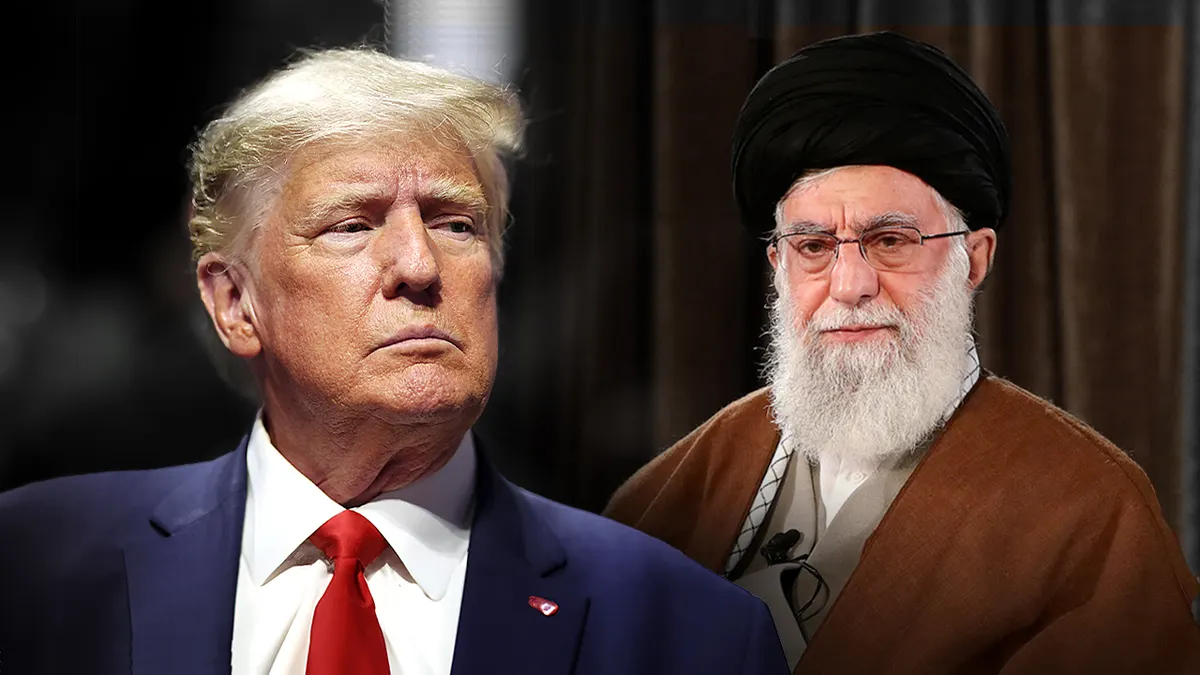
U.S. President Donald Trump indicated that Iran is showing a strong desire to reach an agreement to end hostilities after American strikes targeted infrastructure within the country. This statement comes amid confusion within the Trump administration regarding Iran's potential response, despite assurances from the U.S. Department of Defense that all scenarios had been calculated in advance.
The recent American strikes, which targeted strategic sites in Iran, were part of escalating tensions between Washington and Tehran, which have intensified in recent months. Trump noted that this military pressure may have prompted Iran to reconsider its position, reflecting a shift in regional dynamics.
Details of the Event
In statements made by Trump, he affirmed that Iran is eager to negotiate, which is considered a significant shift in its stance following a series of military tensions. The American strikes targeted vital infrastructure, leading to the destruction of some Iranian military facilities. These military operations are part of an American strategy aimed at pressuring Tehran to curb its nuclear and regional activities.
Despite the pressure, reports indicate a state of confusion within the U.S. administration regarding how to handle Iran's reaction. While the Department of Defense asserts that all scenarios were calculated, questions remain about Iran's readiness to respond and whether it will choose escalation or negotiation.
Background & Context
Historically, U.S.-Iranian relations have seen increasing tensions since the United States withdrew from the nuclear agreement in 2018. This withdrawal led to the re-imposition of harsh economic sanctions on Iran, significantly impacting its economy. In recent years, tensions have notably escalated, especially following a series of attacks on Saudi oil facilities, which Iran was accused of orchestrating.
In this context, Trump's statement serves as an opportunity to reopen channels of dialogue, although many analysts believe that Iran may not be willing to negotiate without tangible American concessions. This situation places the Trump administration in a sensitive position, where it must balance military pressure with the desire to reach an agreement.
Impact & Consequences
If talks between the United States and Iran succeed, it could lead to a de-escalation of tensions in the Middle East, which is already experiencing multiple conflicts. However, any failure to reach an agreement could result in greater military escalation, threatening the stability of the entire region.
The potential ramifications of this situation include impacts on oil prices, as any escalation could significantly drive up prices. There are also concerns that heightened tensions could spark new conflicts in other areas, such as Iraq and Syria, where American and Iranian forces are present.
Regional Significance
For Arab countries, any developments in U.S.-Iranian relations have direct implications. Gulf states, in particular, are closely monitoring the situation, as their economies heavily rely on stable oil prices. There are also fears that escalating tensions could increase sectarian strife in the region.
Ultimately, the question remains open as to whether Iran will choose negotiation or escalation. These dynamics will determine the future of U.S.-Iran relations and their impact on security and stability in the region.