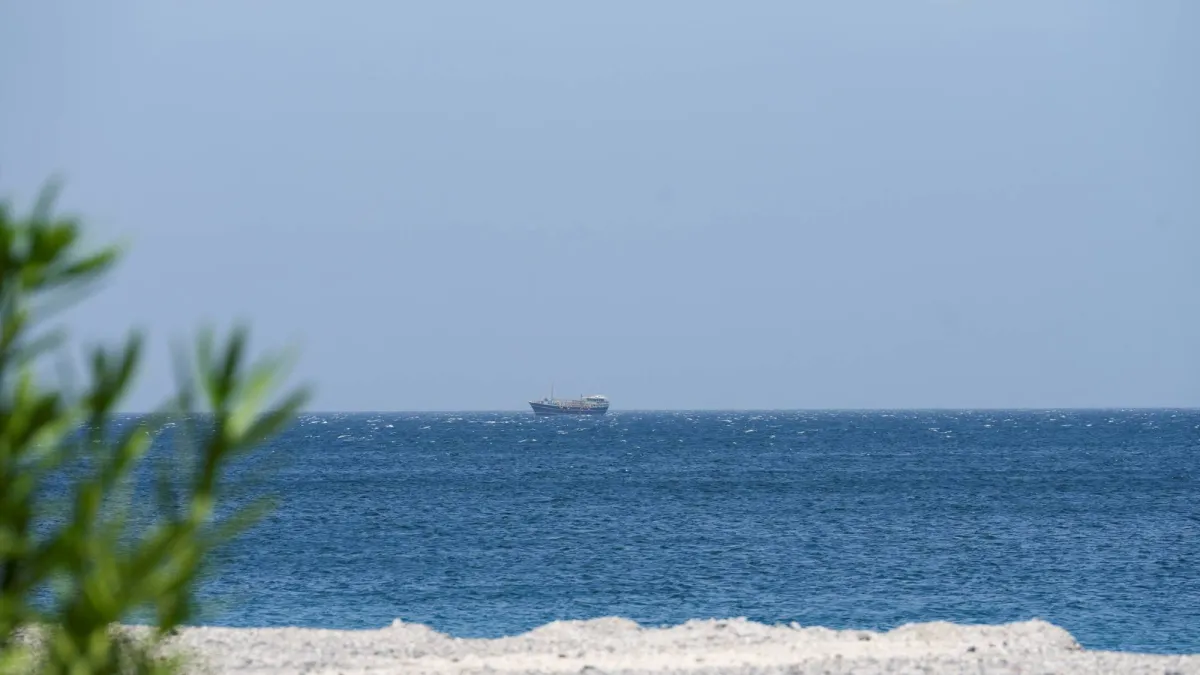
Amid the current truce between the United States and Iran, a new chapter of conflict is emerging in the Gulf region, not through weapons but through maritime laws. Tehran is seeking to impose a transit fee system on ships passing through the Strait of Hormuz, which experts consider a violation of international norms.
This move is seen as part of Iran's geopolitical strategy, aiming to enhance its control over the vital strait through which approximately 20% of global oil trade passes. Iranian officials have indicated that the fees will not be fixed but will vary based on the type of vessel and its cargo.
Details of the Event
Hamid Hosseini, spokesperson for the Iranian Oil and Gas Exporters Union, reported that Tehran plans to impose fees on oil tankers transiting through the strait, noting that these fees will be paid in cryptocurrencies. He explained that the aim of these measures is to monitor ship movements and ensure that the truce is not exploited for arms transfers.
In contrast, Oman's Minister of Transport, Said bin Hamoud Al-Maawali, confirmed that the Sultanate has signed international agreements that prohibit the imposition of any fees on ships passing through the Strait of Hormuz, emphasizing the importance of freedom of navigation in this strategic waterway.
Background & Context
Since the onset of the conflict, Iran has tightened its grip on the Strait of Hormuz, with the Revolutionary Guard imposing restrictions on navigation, leading to a significant decrease in the number of transiting vessels. The region has witnessed increasing tensions, with reports of gunfire directed at ships, adversely affecting trade flows.
The Strait of Hormuz is one of the most important maritime passages in the world, with approximately 18.5 million barrels of oil passing through daily. Any attempt to impose transit fees there would be seen as a challenge to international laws, particularly the United Nations Convention on the Law of the Sea, which stipulates freedom of navigation in international straits.
Impact & Consequences
If Iran succeeds in imposing transit fees, it could lead to a radical shift in global trade dynamics, forcing countries and companies to reassess their trading strategies. Experts have warned that this move could open the door for other countries to implement similar models, threatening the stability of the global maritime system.
Additionally, imposing fees on ship transit could lead to increased shipping and insurance costs, which would directly impact energy prices and commodity costs in global markets.
Regional Significance
These developments are particularly significant for Arab countries, many of which rely on oil exports through the Strait of Hormuz. Any escalation in tensions could affect market stability and increase economic pressures on oil-producing nations.
In conclusion, the question remains as to how the international community will respond to this Iranian initiative and whether it will lead to greater escalation in the region or if diplomacy will succeed in containing the situation.