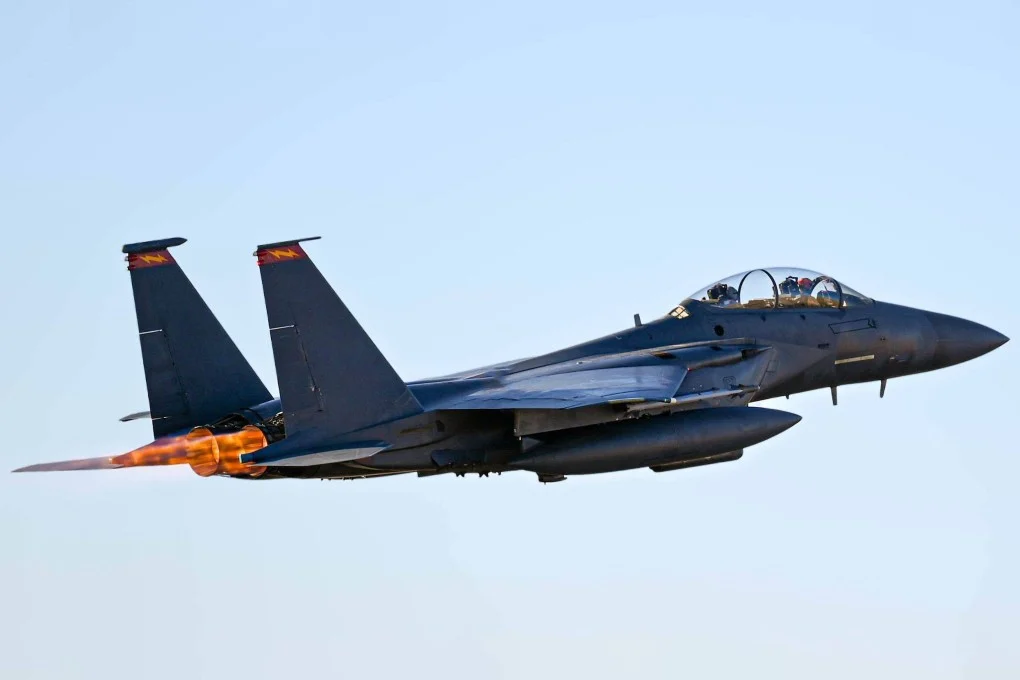
Iran announced on Friday that it had shot down an American fighter jet, specifically the F-15E, leading to the rescue of one crew member while the other is still missing. The incident took place in a tense atmosphere between the two countries, prompting the United States to launch a search and rescue operation to locate the missing crew member.
Reports indicate that Iran released images showing the wreckage of the aircraft, escalating military tensions in the region. This incident comes at a time when relations between the United States and Iran are increasingly strained, particularly following a series of military and political events that have unfolded in the region in recent years.
Details of the Incident
According to American sources, one crew member was rescued by U.S. forces following the incident, while the search continues for the other individual. The incident occurred in an area close to the Iranian border, raising questions about the nature of the mission the aircraft was undertaking.
Iran, for its part, confirmed that it shot down the aircraft as part of its defense of sovereignty, releasing images that depict the wreckage of the fighter jet. This statement reflects Iran's strong stance against any violations of its airspace and reinforces its position in the regional arena.
Background & Context
Historically, relations between the United States and Iran have been marked by increasing tensions since the Islamic Revolution in 1979. Since then, the United States has imposed economic sanctions on Iran, leading to a rise in military conflicts in the region. The recent incident occurs at a sensitive time, as discussions about returning to the Iranian nuclear deal have been ongoing, complicating the political landscape further.
In recent years, the United States has increased its military presence in the region, which has raised concerns in Iran. The latest incident could have implications for the relationship between the two countries and reflects the escalating tensions in the Middle East.
Impact & Consequences
The incident may lead to an escalation of tensions between the United States and Iran, with expectations that the U.S. will respond to this attack either militarily or diplomatically. Additionally, this incident could impact peace talks related to the Iranian nuclear program, as the United States may adopt a more hardline stance towards Iran.
Moreover, the incident could heighten tensions in the region, as other countries may exploit the situation to bolster their positions. This could lead to an escalation of military conflicts in the area, threatening regional stability.
Regional Significance
The recent events between the United States and Iran hold significant importance for the Arab region, as they could affect security and stability in Gulf states. Many Arab countries are closely monitoring the situation, as any escalation could impact their security and economic interests.
The incident may also evoke memories of past conflicts in the region, increasing concerns about the future of relations between Arab states and Iran. Amid these tensions, Arab countries may seek to strengthen their military and political alliances to counter any potential threats.