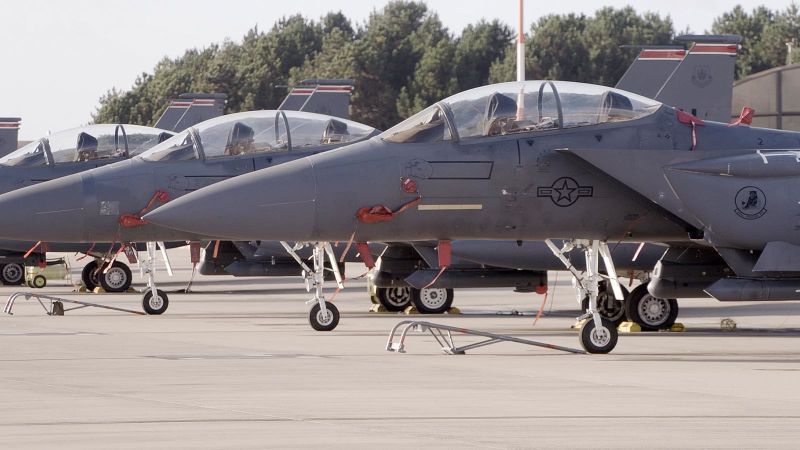
In a significant military escalation, Iran announced the downing of an advanced American fighter jet, the F-35, raising questions about the effectiveness of U.S. air defenses against Iranian threats. The Iranian Revolutionary Guard confirmed that its air defenses struck the aircraft directly, leading to its complete destruction.
Hours after American media reported the incident, the U.S. military acknowledged the event but clarified that the downed aircraft was an F-15E Strike Eagle, and initiated a search operation for its crew. Additionally, another attack aircraft, the A-10, was reported down near the Strait of Hormuz, and a Black Hawk helicopter was hit by Iranian fire.
Details of the Incident
Incidents targeting American fighter jets in Iranian airspace are increasing, contradicting American and Israeli narratives about the destruction of Iranian defenses. Two weeks ago, an F-35 was fired upon by Iranian forces during a mission over Iran, resulting in an emergency landing at an American base. This incident reflects Iran's ability to counter advanced aircraft and raises concerns about the effectiveness of stealth jets in Iranian airspace.
Iran possesses a multi-layered air defense network that includes both Russian and domestically produced systems, such as the S-300, considered one of the strongest defense systems. This system can track dozens of targets simultaneously, giving Iran the capability to protect its strategic sites.
Background & Context
Historically, Iran has sought to enhance its defensive capabilities in response to external threats, particularly from the United States and Israel. Following imposed sanctions, Iran has significantly invested in developing domestic air defense systems, such as the Bavar-373, which is regarded as a local equivalent to the S-300. These systems are designed to counter stealth aircraft, thereby increasing the effectiveness of Iranian defenses.
It is noteworthy that American aircraft, such as the F-35, are specifically designed to evade detection; however, Iranian defenses have demonstrated their capability to counter them, reflecting a remarkable evolution in Iranian military capabilities.
Impact & Consequences
The downing of American aircraft could alter the balance of power in the region and increase pressure on the U.S. administration to address the rising risks. These incidents may also lead to changes in American flight strategies, necessitating enhanced protection and support for fighter jets.
Moreover, these events could impact financial markets, with expectations that oil prices will rise due to escalating tensions in the region. The targeting of advanced aircraft like the F-35 may be interpreted in the markets as a sign that the conflict remains prone to escalation.
Regional Significance
These developments underscore that Iranian airspace is not secure even for advanced aircraft, increasing concerns among neighboring Arab states. Additionally, these events may prompt Arab countries to bolster their defensive capabilities and collaborate with the United States to ensure their security.
In conclusion, these incidents reflect the growing challenges faced by American aircraft in Iranian airspace and highlight the importance of developing new strategies to address these escalating threats.