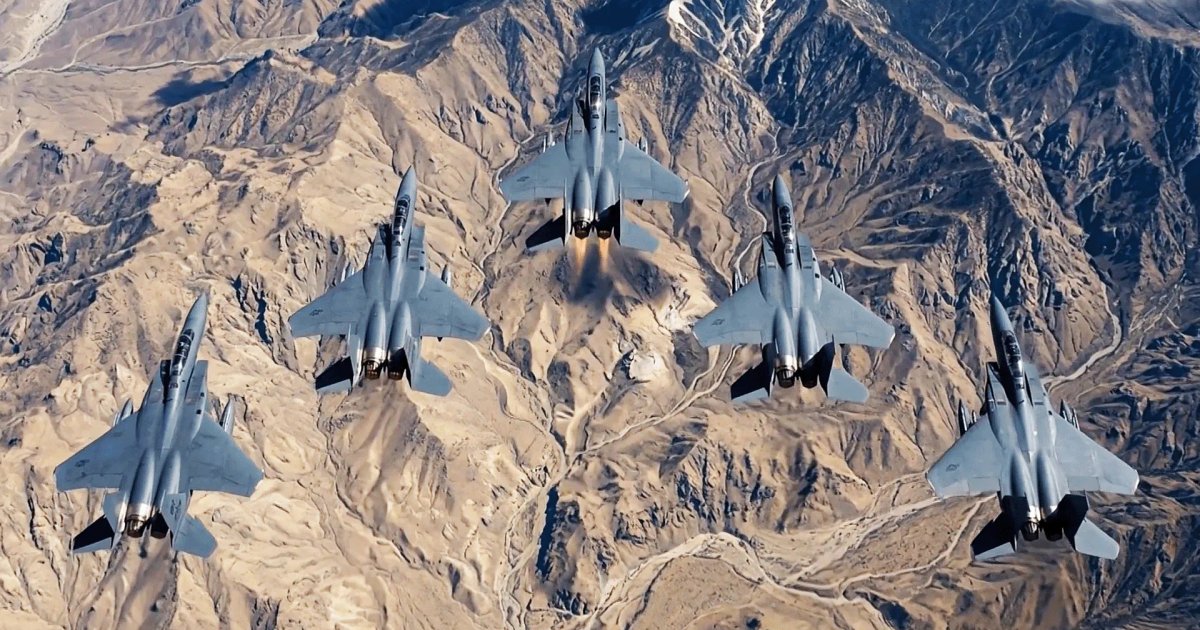
Iran has recently shot down an F-15 Strike Eagle, which is considered one of the most advanced attack aircraft in the world. This fighter jet is known for its ability to perform multiple missions, including precision bombing at long ranges under all weather conditions, both day and night, with a range of up to 4,000 kilometers.
The F-15 Strike Eagle is capable of carrying heavy munitions, making it suitable for executing complex military operations. It can also perform precise combat maneuvers and track small targets, such as drones, reflecting a significant advancement in combat aviation capabilities.
Details of the Incident
In the wake of recent escalations between the United States and Iran, the U.S. Air Force made modifications to the F-15 Strike Eagle, equipping it with a 70 mm laser-guided missile system to counter drone threats. This step is part of enhancing the defensive and offensive capabilities of the U.S. military in the region.
The F-15 Strike Eagle is utilized within the framework of U.S. Central Command operations, underscoring the importance of this aircraft in American military operations in the Middle East. Its downing by Iran serves as evidence of the increasing tensions in the region and Iran's ability to confront aerial threats.
Background & Context
Historically, the F-15 Strike Eagle has been a crucial part of the U.S. air arsenal since its introduction in the 1970s. It was developed to meet the needs of the U.S. Air Force in facing growing challenges on the battlefield. Over time, this aircraft has been updated to include modern technologies that enhance its combat effectiveness.
These developments occur against the backdrop of escalating tensions between Iran and the United States, particularly following the latter's withdrawal from the nuclear agreement and the re-imposition of sanctions. Recent events indicate that Iran is seeking to bolster its military capabilities in response to external threats, which could lead to further escalation in the region.
Impact & Consequences
The downing of the F-15 Strike Eagle could have significant implications for U.S. military strategy in the Middle East. This incident may prompt the United States to reassess its military presence in the region, especially in light of the increasing threats posed by Iran.
Additionally, this event may encourage other countries in the region to enhance their military capabilities, increasing the likelihood of military escalation among regional powers. At the same time, it could lead to increased U.S. military support for its allies in the region to counter Iranian threats.
Regional Significance
The downing of the F-15 Strike Eagle represents a turning point in the conflict between Iran and the United States, potentially affecting the stability of the Arab region. Arab countries cooperating with the United States may feel concerned about rising tensions, prompting them to strengthen their military alliances.
This event may also raise fears of a larger military escalation, as increasing tensions could lead to new conflicts in the region. It is crucial for Arab nations to remain vigilant regarding these developments and to work on enhancing their stability and security in light of these changing circumstances.
In conclusion, the downing of the F-15 Strike Eagle illustrates the growing challenges faced by military powers in the region and reflects the importance of preparedness to address potential threats. The current situation requires Arab nations to consider new strategies for dealing with escalating tensions.