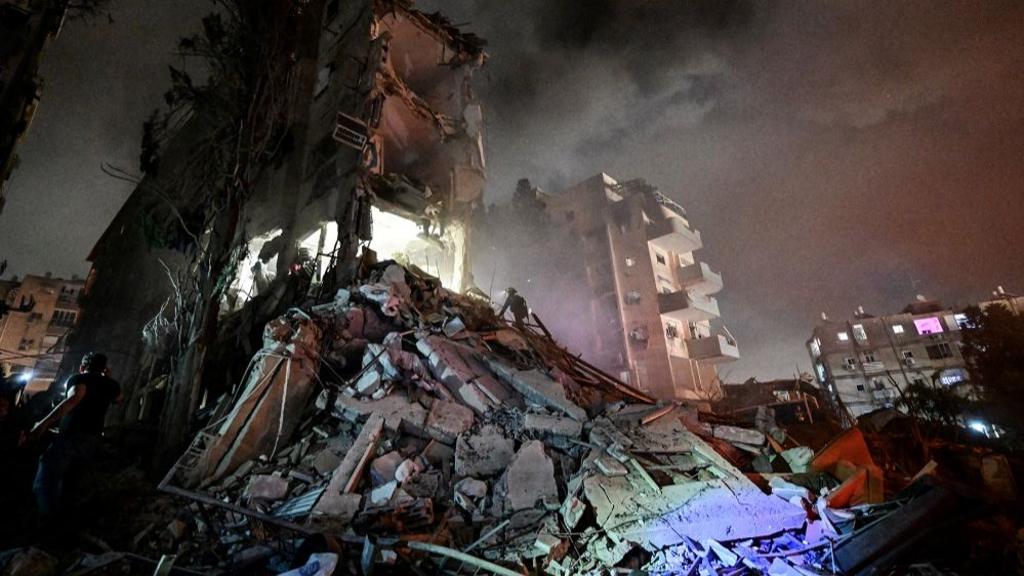
In a serious escalation of regional tensions, Iran has launched missiles at Israeli targets, intensifying the ongoing conflict between the two nations. This attack follows new warnings from former U.S. President Donald Trump, who indicated that the United States would not tolerate any threats to the security of its allies in the region.
The Iranian attack comes at a sensitive time, as the region is experiencing increasing tensions due to rapid political and military developments. Military sources have confirmed that the Iranian missiles targeted Israeli military sites, resulting in material damage, although there have been no reports of casualties.
Details of the Incident
According to reports, the Iranian attack was carried out using advanced missiles, reflecting Iran's ability to develop its military arsenal despite the sanctions imposed on it. This attack followed a series of skirmishes between Israeli and Iranian forces in Syria, where Israel seeks to prevent Iran from bolstering its military presence in the region.
On the other hand, Israel responded to the Iranian attack by launching airstrikes on sites in Syria, believed to be used by Iran as a base for its military operations. These escalations increase the risks of an all-out conflict in the region, where regional and international interests are intricately intertwined.
Background & Context
Historically, relations between Iran and Israel have been tense since the Islamic Revolution in Iran in 1979. These relations have seen a notable escalation in recent years, especially following the U.S. withdrawal from the Iranian nuclear deal in 2018. This withdrawal led to increased pressures on Iran, prompting it to enhance its military capabilities.
Additionally, events in Syria and Iraq have complicated the situation, as Iran seeks to expand its influence in the region, conflicting with the interests of Israel and its allies. These dynamics make it difficult to reach a peaceful resolution, as the risks of potential military escalation continue to rise.
Impact & Consequences
The Iranian attack on Israel carries serious implications for regional and international security. It could lead to a comprehensive military escalation, threatening the stability of the entire region. International reactions will be pivotal in determining the course of upcoming events, especially from the United States and European countries.
These events represent a real test for U.S. policies in the Middle East, as Trump seeks to reaffirm the role of the United States as a superpower capable of protecting its allies. At the same time, the escalation of tensions may prompt some countries to reassess their security and defense strategies.
Regional Significance
The events between Iran and Israel directly impact Arab countries, raising fears of a military escalation that could affect neighboring nations. These tensions also evoke memories of past conflicts in the region, increasing the need for effective diplomatic strategies to address crises.
Under these circumstances, Arab countries must be cautious in their dealings with these tensions and strive to enhance regional cooperation to face security challenges. Stability in the region requires joint efforts from all parties involved.