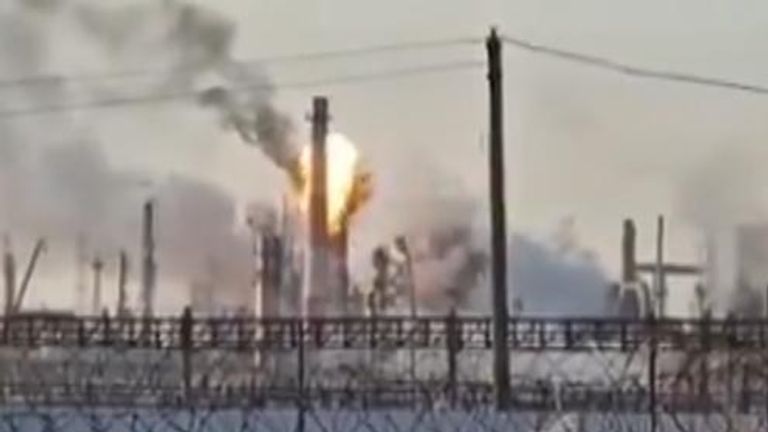
Iran has targeted vital facilities in the Arabian Gulf, launching attacks on an oil refinery and a water station in Kuwait, in addition to a gas facility in the UAE. These strikes come at a sensitive time, reflecting the rising tensions between Iran and Gulf countries.
The recent attacks indicate a serious escalation in the ongoing conflict, as Iran continues to carry out military operations aimed at the critical infrastructure of neighboring countries. These actions have provoked strong reactions from the concerned governments, which view these attacks as a threat to regional security.
Details of the Attacks
In Kuwait, Iran targeted an oil refinery and a water station, resulting in significant damage to both facilities. Meanwhile, in the UAE, a gas facility was attacked, disrupting production operations. These attacks are part of a series of targeted actions occurring in the region, aimed at demonstrating Iranian strength in the face of international pressures.
These attacks are considered part of Iran's strategy to assert its presence and influence in the Gulf, as it seeks to send clear messages to regional countries and the international community that any escalation against it will be met with strong responses.
Background & Context
Historically, relations between Iran and Gulf countries have seen increasing tensions, particularly following the United States' withdrawal from the Iranian nuclear deal in 2018. Since then, hostilities have escalated, including attacks on commercial vessels and oil facilities.
These attacks are part of the broader conflict between Iran and the United States and its allies in the region, as Iran seeks to enhance its influence amid imposed sanctions. Additionally, these events come at a critical time as Gulf countries prepare to face economic and political challenges stemming from the COVID-19 pandemic.
Impact & Consequences
The recent attacks could lead to greater military escalation in the region, as targeted countries may respond with military or political actions. This escalation could affect oil prices and financial markets, increasing instability in the region.
Moreover, these events may heighten tensions between Iran and Western countries, complicating negotiations regarding the Iranian nuclear program. Under these circumstances, pressures on Iran may increase, prompting it to take more extreme measures.
Regional Significance
These attacks directly impact security and stability in the Arab region, raising concerns among neighboring countries. Such events may lead to enhanced security cooperation among Gulf countries to address shared threats.
Furthermore, these attacks could increase divisions among Arab states, with some countries adopting tougher stances toward Iran while others may seek dialogue and negotiation. Ultimately, the region remains on alert for further developments.