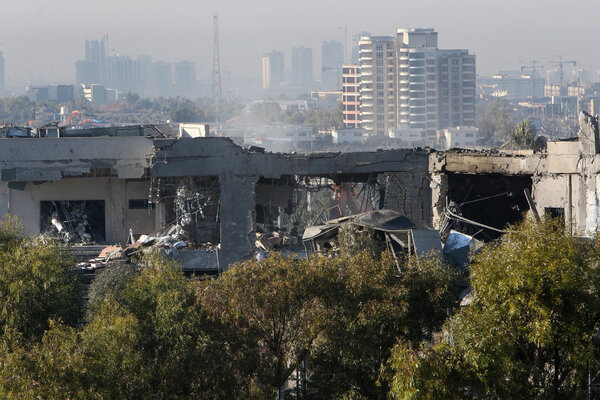
The Iranian Revolutionary Guard announced on Thursday, April 2, that it had carried out an attack on the Oracle data center in Dubai, United Arab Emirates. This announcement comes at a sensitive time when the region is witnessing heightened military and political tensions between Iran on one side and the United States and Israel on the other.
In response, UAE authorities quickly denied these claims, confirming through their official social media accounts that reports regarding the targeting of the Oracle data center are incorrect. This denial reflects the UAE's commitment to maintaining its security and economic stability, especially in light of the tense regional circumstances.
Details of the Incident
The Iranian Revolutionary Guard also announced its targeting of Amazon's cloud computing operations center in Bahrain, considering it part of a reaction to what it described as "intelligence operations" conducted by the United States and Israel in the region. This attack came after a series of events that saw an escalation in reciprocal attacks between Iran and its allies on one side and the United States and Israel on the other.
The Iranian statements come at a critical time, as the region has witnessed increased tensions following attacks by the United States and Israel on Iranian sites in late February, which led to strong reactions from Tehran and its allies in the region.
Background & Context
Historically, relations between Iran and the United States have been marked by ongoing tension since the Islamic Revolution in 1979. These tensions have escalated in recent years, particularly after the United States withdrew from the Iranian nuclear agreement in 2018, leading to the imposition of severe economic sanctions on Iran. These sanctions have significantly impacted the Iranian economy and exacerbated internal conditions.
The United Arab Emirates, particularly Dubai, is an important commercial and economic hub in the region, making it a potential target for any military escalation. Therefore, any threats or attacks on its territory could significantly affect regional and international stability.
Impact & Consequences
The reciprocal attacks between Iran, the United States, and Israel could lead to further escalation in the region, which may negatively impact regional security. Additionally, these events could affect global financial markets, especially given the heavy reliance on oil and gas from the Middle East.
On the other hand, the rising tensions may prompt regional countries to reassess their security and military strategies, potentially leading to new alliances or changes in current policies. This scenario could have far-reaching effects on relations between Arab states and Iran.
Regional Significance
For Arab countries, the escalating tensions between Iran and the United States and Israel may lead to increased security concerns, particularly in the Gulf Arab states. These countries heavily rely on regional stability to maintain their economies and security.
Moreover, any military escalation could impact trade and tourism in the region, which may negatively affect the Arab economy as a whole. Therefore, Arab countries need to enhance security and economic cooperation to face the growing challenges.