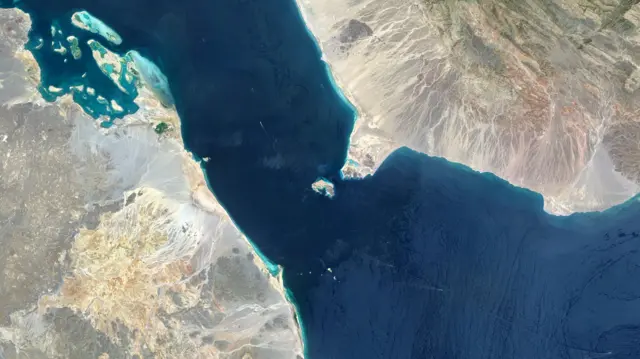
Approximately 12% of global maritime oil trade passes through the Bab el-Mandeb Strait, a vital waterway connecting the Red Sea to the Gulf of Aden. Amid increasing tensions in the region, Iran has threatened to close this strait, which could further disrupt global trade.
These threats are part of an Iranian strategy aimed at pressuring Western countries, especially after the escalation of crises in the Gulf region. The Bab el-Mandeb Strait, following the Strait of Hormuz, is considered one of the most important maritime passages through which massive quantities of oil and natural gas flow.
Details of the Threat
Recently, Iran has intensified its rhetoric regarding the potential closure of the Bab el-Mandeb Strait, raising concerns among countries involved in maritime trade. This threat comes in the context of escalating tensions between Iran and the United States, as well as increasing regional conflicts in the Middle East.
The Bab el-Mandeb Strait is a major transit point for commercial vessels, with a large number of oil tankers passing through it daily. Any closure of this strait would significantly impact global oil prices, potentially leading to increased energy costs worldwide.
Background & Context
Historically, the Bab el-Mandeb Strait has witnessed numerous military and political tensions. In recent years, military activities in the region have increased, heightening concerns about navigation security. Furthermore, the closure of the Strait of Hormuz, which is considered the most important passage in the world for oil transport, has elevated the strategic importance of the Bab el-Mandeb Strait as an alternative route.
These threats are part of the broader conflict between Iran and Western countries, as Iran seeks to use these maritime routes as a means to pressure its adversaries. At the same time, Western nations are striving to secure these passages to ensure the flow of global oil.
Impact & Consequences
If Iran carries out its threats to close the Bab el-Mandeb Strait, it would lead to severe consequences for the global economy. Oil prices are expected to rise significantly, affecting all oil-importing countries, including Arab nations.
Additionally, the closure of this strait would increase shipping costs, impacting global trade overall. Given the increasing reliance on energy, any disruption in these maritime routes would result in significant economic repercussions.
Regional Significance
Arab countries, especially those reliant on oil exports, are likely to be the most affected by any closure of the Bab el-Mandeb Strait. This strait is considered a lifeline for Arab economies that depend on oil and gas exports.
In light of these tensions, Arab nations must enhance their security and economic cooperation to ensure the safety of navigation in these vital routes. There should also be alternative strategies in place to ensure the continuity of oil flow in case of any emergency.
In conclusion, the Bab el-Mandeb Strait remains a pivotal point in global trade, and any threat to its closure warrants urgent international attention, as the repercussions could be profound for the global economy and the Arab region.