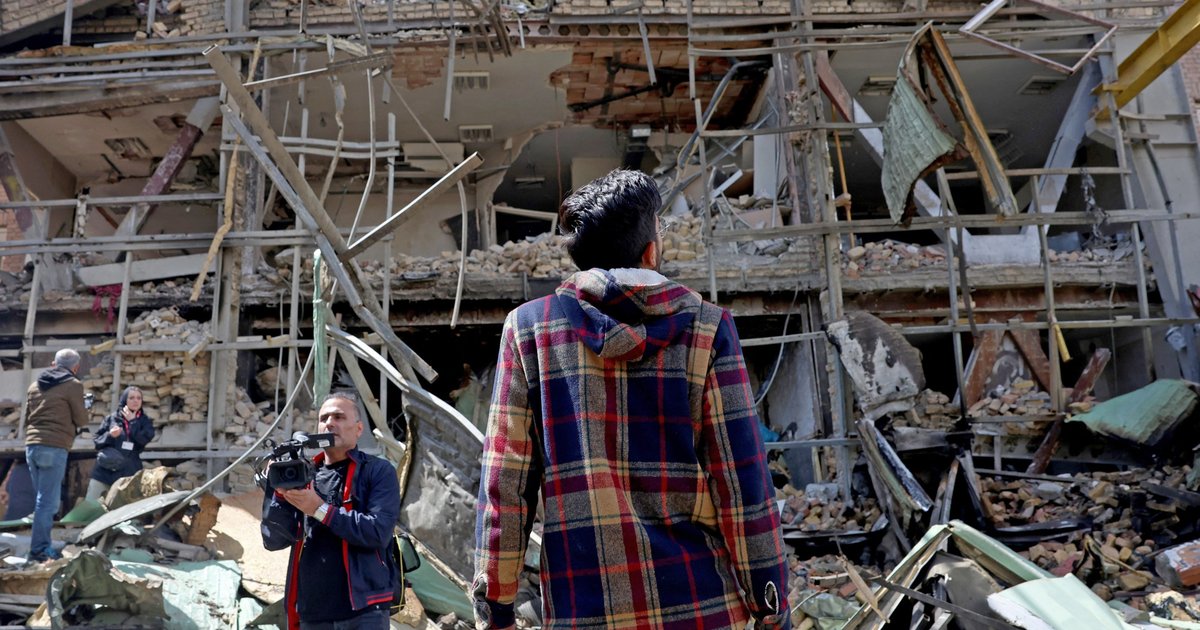
Iran's Atomic Energy Organization has declared its intention to take legal action against International Atomic Energy Agency (IAEA) Director Rafael Grossi, citing what it describes as his "inaction" following the attacks carried out by the United States and Israel on its nuclear facilities. This move comes at a time when tensions are escalating in the region, particularly after recent attacks targeting sites near the Bushehr nuclear power plant, raising concerns about the safety of Iran's nuclear installations.
In statements made by Iranian officials, it was emphasized that the organization will pursue Grossi legally for failing to take a firm stance against these attacks, which Tehran considers a direct threat to its national security. The recent assaults have sparked international concern, with the IAEA expressing grave worries over these incidents, warning that nuclear facilities "must not be subjected to attack" due to the significant risks that could arise from such actions.
Details of the Incident
The attacks on Iranian nuclear facilities, including those near the Bushehr power plant, are part of escalating tensions between Iran and both the United States and Israel. These assaults were executed at a sensitive time when Iran was negotiating with global powers regarding its nuclear program. Tehran has deemed these attacks a blatant violation of international laws, prompting it to take legal steps against the IAEA.
Simultaneously, Grossi has warned that attacks on nuclear facilities could lead to catastrophic incidents, pointing out that such actions endanger many lives. He confirmed that the IAEA is closely monitoring the situation and will make efforts to protect nuclear facilities worldwide.
Background & Context
Historically, Iran has been under close scrutiny by the IAEA, especially following the nuclear agreement reached in 2015. With the United States' withdrawal from the agreement in 2018, tensions between Iran and Western nations escalated, leading to a series of attacks and hostile statements. These events have heightened fears of a potential military escalation in the region.
The Bushehr nuclear power plant is one of Iran's most significant nuclear facilities, built in collaboration with Russia. This plant plays a vital role in meeting Iran's energy needs, making it a potential target in any future conflict. However, the recent attacks raise questions about Iran's ability to protect its nuclear facilities.
Impact & Consequences
The legal actions Iran intends to take against Grossi could escalate tensions between Tehran and the IAEA, potentially affecting future negotiations regarding Iran's nuclear program. If attacks continue, this may drive Iran to take retaliatory measures, increasing the risk of military escalation in the region.
Moreover, instability in Iran could impact global energy markets, as Iran is one of the world's largest oil producers. Any escalation in tensions could lead to rising oil prices, affecting the global economy.
Regional Significance
The ongoing events in Iran have a direct impact on the Arab region, with Arab nations closely monitoring the developments. Any escalation in tensions could have security and economic repercussions for neighboring countries, especially those reliant on regional stability to secure energy supplies.
In conclusion, the situation in Iran remains under observation, with increasing fears of a potential military escalation. The international community must take effective steps to ensure that conditions do not worsen and to protect nuclear facilities from any future attacks.