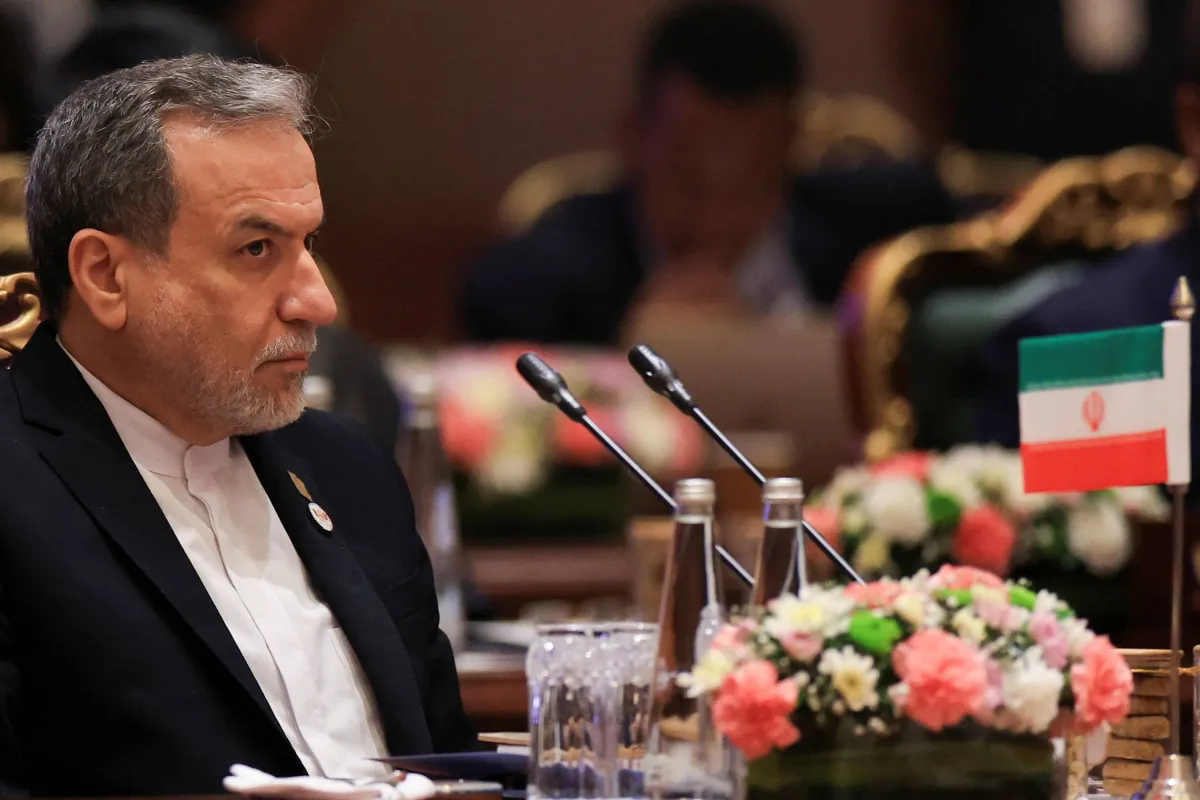
Iranian Foreign Minister Abbas Araghchi called on BRICS member states on Thursday to condemn what he termed violations of international law by the United States and Israel, as the recent war overshadowed the meeting of foreign ministers in New Delhi.
In his speech at the meeting, Araghchi emphasized that Iran sees itself as a "victim of unlawful expansion and war instigation," stressing the need for BRICS countries and other "responsible" nations to take a clear stance against what he described as the "violations of international law by the United States and Israel," including their "illegal aggression against Iran."
Details of the Meeting
The meeting witnessed a rare exchange of heated words between Araghchi and Khalifa Shaheen Almarar, the UAE's Deputy Foreign Minister, reflecting the escalating regional tensions. Araghchi characterized his country as a "victim of unlawful expansion and war instigation," urging the BRICS group to resist "Western hegemony and the impunity that the United States believes it deserves."
The BRICS+ group includes Brazil, Russia, India, China, South Africa, Egypt, Ethiopia, Indonesia, Iran, and the UAE. The meeting is taking place at a time when tensions are rising between Iran and its neighboring countries, complicating efforts to reach a joint statement.
Background & Context
India is set to hold the presidency of BRICS for 2026 and is one of the countries most affected by Iran's closure of the Strait of Hormuz since the outbreak of war on February 28. This maritime corridor is typically used for the transit of about one-fifth of the world's oil and liquefied natural gas shipments, and its disruption has caused widespread energy supply disruptions and price increases.
New Delhi's hosting of the meeting comes amid increasing pressure on energy supplies, as ships flying the Indian flag have been attacked since the war began, prompting the Indian government to summon the Iranian ambassador to express its "grave concern."
Impact & Consequences
The remarks made by Indian Foreign Minister Subrahmanyam Jaishankar raised caution, as he avoided criticizing any specific country, emphasizing the importance of freedom of navigation through international waterways. He also expressed concern over the increasing use of unilateral sanctions and their impact on developing nations.
The meeting coincided with India's announcement of a ship flying its flag sinking off the coast of Oman after being attacked, further escalating tensions in the region. The Indian Foreign Ministry confirmed that the attack was "unacceptable," stressing the need to avoid targeting commercial vessels and civilian sailors.
Regional Significance
Risks to commercial navigation in the Gulf are increasing, particularly around the Strait of Hormuz, where several ships have been attacked since the conflict began. Disruptions in navigation in Hormuz have led to rising energy prices and increased fears of renewed inflation.
At the conclusion of the meeting, Araghchi asserted that Tehran has "not placed any obstacle" to navigation in the Strait of Hormuz, indicating that the strait is suffering from "American aggression." Meanwhile, pressures are mounting on the BRICS group to reach a unified stance amid regional divisions.