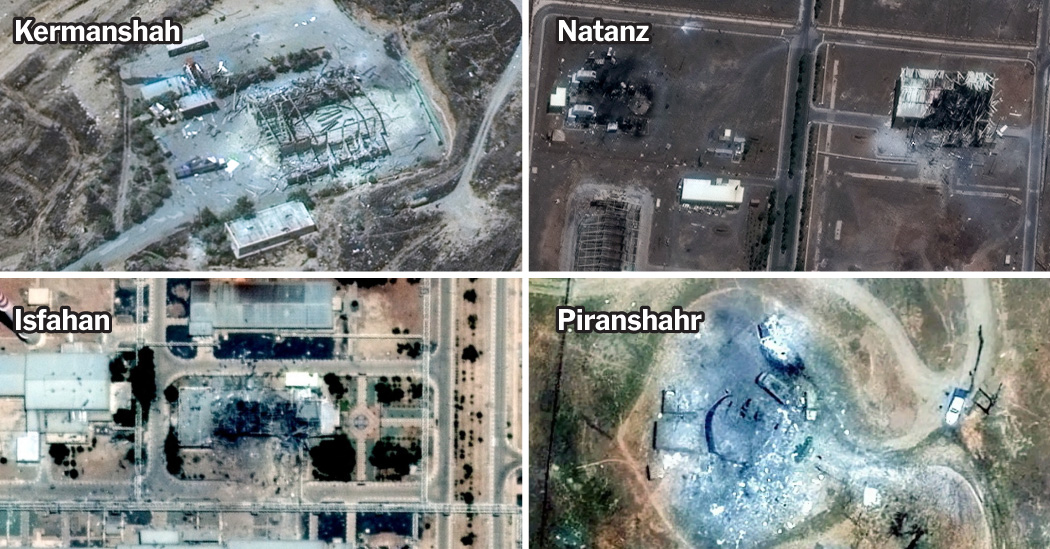
Iran has vowed to retaliate after several strategic sites on its territory were hit by airstrikes attributed to Israel. The attacks, which targeted two of the largest iron factories in the country, as well as a power station and civilian nuclear sites, have provoked strong reactions from Iranian officials who asserted that they would make the aggressor pay a "heavy price."
As tensions in the region escalate, these strikes further intensify existing crises. Iranian officials have indicated that the attacks represent an unacceptable escalation and reflect Israel's desire to undermine Iran's military capabilities.
Details of the Incident
The Israeli strikes, which occurred late at night, targeted vital sites in Iran, resulting in significant damage. According to reports, the attacks not only destroyed facilities but also impacted the electrical infrastructure in the region. News reports confirmed that the strikes were highly precise, suggesting the use of advanced technology.
These developments come at a sensitive time as leaders of the G7 gather for a summit to discuss global issues, including tensions in the Middle East. U.S. Senator Marco Rubio, who attended the summit, indicated that military operations could conclude within two weeks, raising questions about regional stability in the near future.
Background & Context
Historically, relations between Iran and Israel have been tense, with Israel accusing Iran of seeking nuclear weapons that threaten its security. In recent years, Israeli attacks on Iranian sites have increased, particularly those linked to the Iranian nuclear program. These strikes are part of an Israeli policy aimed at preventing Iran from enhancing its military capabilities.
Iran views these attacks as part of a broader strategy to undermine its influence in the region. In the past, Iran has responded to such attacks with strong statements but has refrained from direct military action, raising questions about how it will respond this time.
Impact & Consequences
These strikes represent a serious escalation in the conflict between Iran and Israel and could lead to military responses from Iran. Should Iran decide to carry out its threats, it could result in widespread military escalation in the region, affecting both regional and global security.
Furthermore, military escalation could impact oil prices and financial markets, as the region is one of the world's most critical shipping points. Any disruptions in this area could lead to price increases and a decline in investments.
Regional Significance
Arab countries are directly affected by any escalation in tensions between Iran and Israel, as many of these nations share concerns about Iran's growing influence in the region. Any military escalation could destabilize countries like Iraq, Syria, and Lebanon, where Iran-backed militias are present.
Under these circumstances, Arab nations need to enhance their security cooperation to address potential threats and work towards stabilizing the region through dialogue and diplomacy.