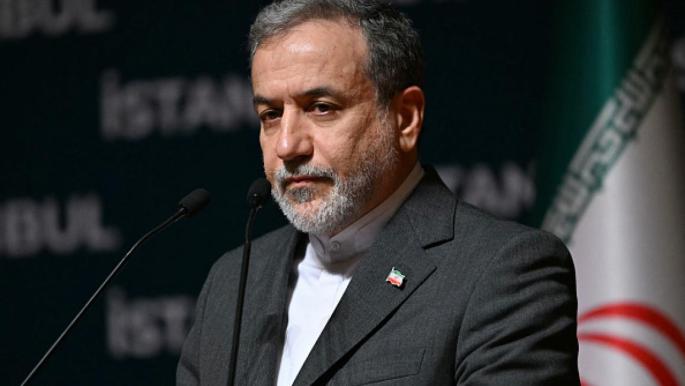
Iranian Foreign Minister Abbas Araghchi responded on Thursday evening to the attack that targeted a bridge west of Tehran, emphasizing that assaults on civilian infrastructure will not compel Iranians to surrender. These statements come at a sensitive time when Iranian-American relations are experiencing increasing tension.
Araghchi pointed out that such hostile actions reflect a weakness in the American stance, and that Iran will continue to defend its sovereignty and national interests. He also affirmed that the Iranian people will not back down in the face of threats but will persist in their efforts to enhance their stability and security.
Details of the Incident
The attack on the western bridge in Tehran is part of a series of assaults targeting Iranian infrastructure, which has provoked strong reactions from Iranian officials. Araghchi, speaking at a press conference, described the attack as an unjustified act, stressing that such actions will only serve to strengthen national unity in Iran.
This attack occurs at a time when tensions between Iran and the United States are escalating, with both countries exchanging accusations regarding support for armed groups in the region. Araghchi called on the international community to take a firm stance against these actions that threaten security and stability in the area.
Background & Context
Historically, Iranian-American relations have been marked by ongoing tensions since the Islamic Revolution in 1979. These tensions escalated particularly after the United States withdrew from the Iranian nuclear agreement in 2018, leading to the imposition of severe economic sanctions on Iran.
In recent years, Iran has experienced a series of attacks targeting its vital facilities, raising international concerns about regional stability. The Iranian government has repeatedly asserted its right to defend itself against any aggressions.
Impact & Consequences
The attack on Iranian infrastructure could lead to heightened tensions in the region, as Iran may respond to these assaults in various ways, either by enhancing its military capabilities or by supporting its allies in the region.
The escalation in relations between Iran and the United States could also impact global markets, especially in the energy sector, where Iran is considered one of the largest oil-producing countries. Any escalation in tensions could result in rising oil prices, affecting the global economy.
Regional Significance
The tensions between Iran and the United States have direct implications for Arab countries, as many view Iran as a strategic adversary. Any escalation in these tensions could destabilize countries like Iraq, Syria, and Lebanon, where Iran plays a prominent role.
Moreover, the escalation could affect peace efforts in the region, as many Arab countries strive for lasting stability. Under these circumstances, Arab nations must be cautious in handling the situation and seek to promote dialogue rather than escalation.
In conclusion, the situation in Iran remains sensitive, with increasing internal and external challenges. Araghchi's statements reflect Iran's determination to confront these challenges, adding a new layer of complexity to the regional landscape.