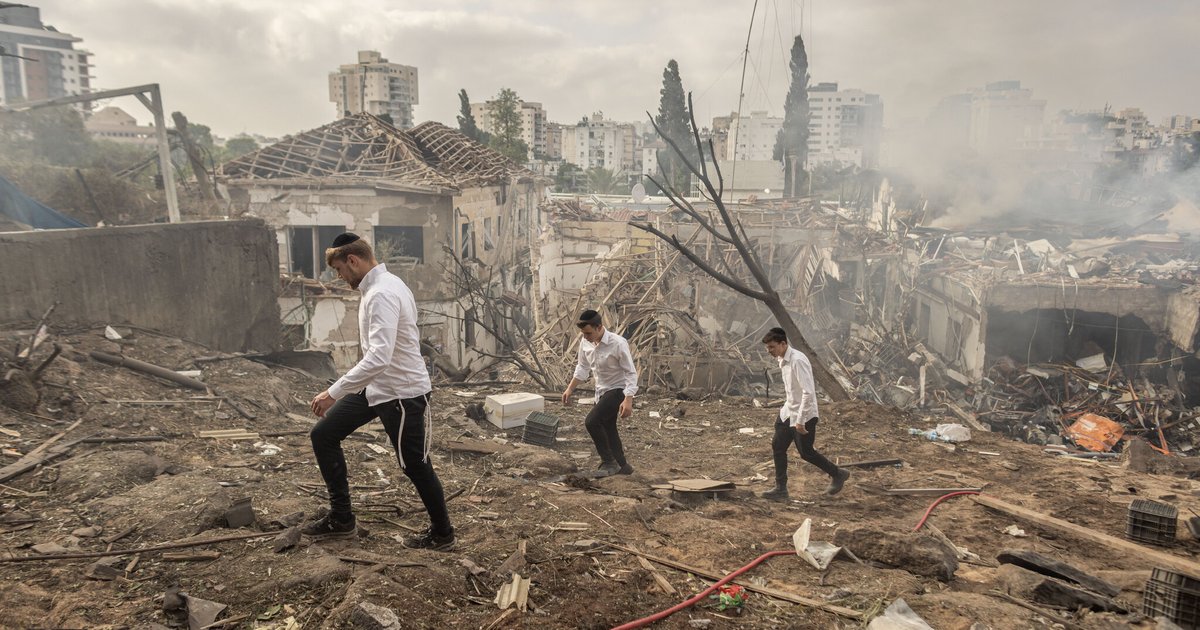
A month after the outbreak of war in Iran on February 28, the conflict has evolved from a mere military confrontation into a multifaceted global crisis, as highlighted by both the Swiss newspaper Le Temps and the French Le Monde.
While Le Monde focused on the sequence of military operations and the widening scope of the confrontation, Le Temps emphasized its economic repercussions and the logic of 'winners and losers.'
Details of the Event
As a result of this war, Le Temps paints a picture of a world experiencing widespread imbalance regarding loss and gain, indicating that this conflict is no longer purely regional but has transformed into a global shock affecting energy, food, transportation, and the economy.
Economist Didier Borowski warned that: "The shock may be severe on growth, as the destruction of infrastructure will reduce production and exports." The grimmer picture is evident in the Middle East, where some countries with already weakened economies are hit harder, as Iran and Lebanon suffer from crises while the economies of Dubai and Abu Dhabi slow down.
Context and Background
The energy infrastructure in the region's countries is suffering damage, and shipping traffic in the Gulf nearly came to a halt, making these nations some of the biggest losers from this conflict thus far. Economist Dominique Rohner summarizes the situation by stating: "Iranians are heavily affected by this war, but there is hope in the medium term, after significant suffering in the short term."
Economic forecasts are even bleaker, as Borowski warns that: "The shock may be severe on growth, as the destruction of infrastructure will reduce production and exports." Away from the battlefields, the transportation sector emerges as one of the most prominent victims, with fuel prices sharply rising, even more than oil itself, amid fears of shortages in fuel for ships and airplanes.
Consequences and Impact
Airlines have begun discussing potential rationing, and some Asian countries are already preparing to deal with a kerosene shortage. The A.P. Moller-Maersk Group, the second-largest shipping company in the world, expressed concerns about a shortage of marine fuel oil, while insurance premiums in this sector have sharply increased.
In the United States, fuel prices at gas stations have risen, despite the country being the largest producer of crude oil in the world. In Europe, half of oil consumption is used for land transportation. The United States finds itself in a complex position, benefiting economically while losing socially, as rising oil prices boost corporate profits and increase tax revenues, potentially allowing for political redistribution.
Impact on the Arab Region
Despite this, social disparities deepen, and Rohner offers a more pessimistic view, asserting that American populations "will rather be losers" due to the human and financial costs of the war, not to mention inflation. In an unstable world, the priority is no longer energy transition but energy security.
Among the unexpected winners are oil traders who benefit from market fluctuations, as they are expected to make substantial profits as long as they can secure supplies. Additionally, Russia benefits from rising prices and improves its geopolitical position.
China finds itself facing a complex equation: heavy reliance on Gulf oil but with a relative ability to withstand due to diversifying its sources and increasing dependence on electricity. However, priorities have shifted, as one analyst notes: "In an unstable world, the priority is no longer energy transition but energy security."
Renewable energies emerge as one of the relative winners, as the crisis pushes countries to accelerate the shift towards local alternatives like solar energy, yet paradoxically, the crisis itself hampers this transition by disrupting supply chains, while energy shortages drive some countries back to coal.
The most severe impact is evident in poor countries, especially in Africa and South Asia, where a food crisis looms due to rising fertilizer prices and disrupted supplies. A United Nations expert warns that "if the war continues for a few weeks, there will be a decline in global production of grains, meats, and dairy products."
Even these winners remain tied to an open crisis, which could redraw global balances if prolonged.
In the same context, Le Monde tracked the sequence of military operations, noting that in response to the American-Israeli attack, Iran did not limit its retaliation to Israel but targeted Gulf countries, launching missiles and drones at oil facilities, airports, and military bases.
The escalation has resulted in catastrophic outcomes on all levels. Humanitarianly, it is difficult to determine an accurate toll, but estimates indicate thousands of deaths and tens of thousands of injuries, in addition to millions of displaced people within Iran.
Economically, the closure of the Strait of Hormuz dealt a severe blow to global trade, as about a quarter of oil and gas supplies pass through it. The number of ships has sharply declined, leading to supply chain disruptions and oil prices rising to about $110 per barrel.
Environmentally, the strikes on energy facilities have caused widespread pollution threatening millions of residents, while fears remain over potential long-term consequences. Politically, the prospects for a solution appear murky, as despite discussions of indirect negotiations, the positions of Washington and Tel Aviv have diverged, complicating the scene further.
Both newspapers converge on one conclusion, namely that the world is shaking under the weight of a war that redistributes losses and gains, where many are losing, few are winning, yet all remain hostages to an open crisis with all possibilities.