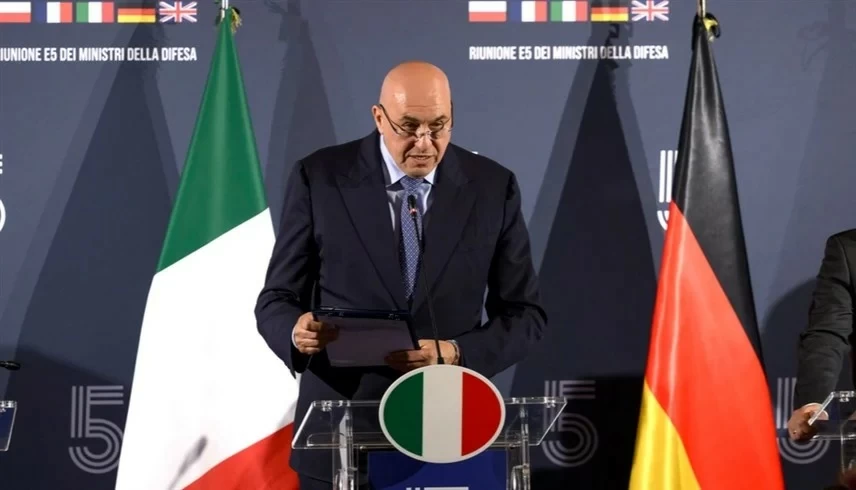
Italian Defense Minister Guido Crosetto expressed deep concern over the implications of the ongoing war in Iran, indicating that its negative effects could place both the Italian and European economies in a precarious position in the coming weeks.
In an interview with the newspaper La Repubblica, Crosetto stated that he is living through this crisis "24 hours a day," warning that the continuation of the conflict could lead to economic shocks affecting energy prices, the cost of living, and social stability.
Details of the Situation
Crosetto remarked, "What will happen in the coming weeks worries me greatly on an economic level and in our daily lives." He described the strikes targeting energy facilities from both sides as a "dramatic mistake," noting that the resulting damages would last a lifetime. Although he confirmed that the war is not "Italy's war," he emphasized the necessity of addressing its consequences, including the risks of terrorism stemming from the escalation.
He also pointed out that Italy, being a major energy-importing country, is suffering from rising fuel and gas prices, which threaten industry, farmers, and households. An Italian industrial group, Confindustria, has lowered its GDP growth forecasts for 2026 due to the war, warning of a potential recession or contraction if the conflict persists.
Context and Background
These statements come at a sensitive time, as the region is witnessing an escalation in armed conflicts, increasing concerns in Europe. Crosetto has previously criticized the American-Israeli strikes, describing them as "beyond the rules of international law," indicating that they erupted "without the world's knowledge." He also announced a heightened state of readiness in the Italian air defense system, affirming Italy's preparedness to provide air defense and drone countermeasures to allied Gulf states.
European fears are growing regarding the war's implications for energy prices and inflation, especially with the winter season approaching, which could particularly affect countries with more fragile economies.
Consequences and Impact
If the conflict in Iran continues, it could exacerbate economic crises in Europe, where many countries rely on energy supplies from the region. Disruptions in the Strait of Hormuz, a vital transit point for oil, could lead to significant increases in energy prices, negatively impacting the cost of living.
Moreover, the continuation of the conflict may lead to rising inflation rates, placing additional pressure on families and businesses. Reports have warned that Italy could face an economic recession if the conflict is not contained soon.
Impact on the Arab Region
The Arab region is directly affected by developments in the Iran war, as disruptions could escalate regional conflicts and increase tensions between countries. The effects of the war may extend to Arab markets, driving up the prices of essential goods and affecting economic stability.
In conclusion, the Italian and European concerns regarding the implications of the war in Iran highlight the importance of stability in the region, as any escalation could have dire consequences for the global economy.