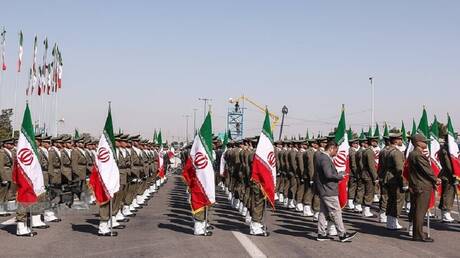
The Iranian military has warned that it could launch much stronger strikes on Tel Aviv if the United States carries out its threats to destroy bridges and power stations in Iran.
These warnings come at a time when tensions between Iran and the United States are escalating, with both countries exchanging accusations regarding military activities and regional interventions. These statements reflect Tehran's concern over any military escalation that could affect its national security.
Details of the Warning
In an official statement, the Iranian military emphasized that any American attack on Iran's vital infrastructure would not go unanswered. They indicated that the Iranian army is prepared to respond forcefully to any aggression, raising fears of a potential military escalation in the region.
These warnings follow previous American statements regarding the possibility of targeting critical facilities in Iran, which Tehran considers a direct threat to its security. Iran has expressed its readiness to utilize all its military capabilities to defend its territory.
Background & Context
Historically, relations between Iran and the United States have been marked by increasing tensions since the Iranian Revolution in 1979. These tensions have led to a series of military and economic conflicts, including the American sanctions imposed on Tehran due to its nuclear program.
In recent years, tensions have intensified following the United States' withdrawal from the nuclear agreement in 2018, leading to increased military provocations from both sides. These recent statements are part of Iran's strategy to demonstrate its military strength in the face of external threats.
Impact & Consequences
If the American threats are executed, it could lead to significant military escalation in the region, threatening the stability of Middle Eastern countries. Neighboring countries such as Iraq and Syria could be directly affected by any potential escalation.
Moreover, any attack on Iran could provoke unexpected reactions from Tehran's allies, such as Hezbollah in Lebanon, complicating the security situation in the region. Thus, military escalation could lead to widespread repercussions affecting both regional and international security.
Regional Significance
Arab countries neighboring Iran, such as Iraq, Kuwait, and Saudi Arabia, are on high alert to monitor developments. The tensions between Iran and the United States could impact the stability of these nations, as they may be subjected to retaliatory attacks or military escalation.
Furthermore, any escalation could affect oil prices and global markets, negatively impacting Arab economies that heavily rely on oil exports. Therefore, the situation requires close monitoring by Arab leaders to ensure that conditions do not worsen.
In conclusion, the situation in the region remains tense, and recent Iranian statements reflect a genuine concern over any military escalation. The international community must work to de-escalate tensions and avoid any escalation that could lead to widespread conflict.