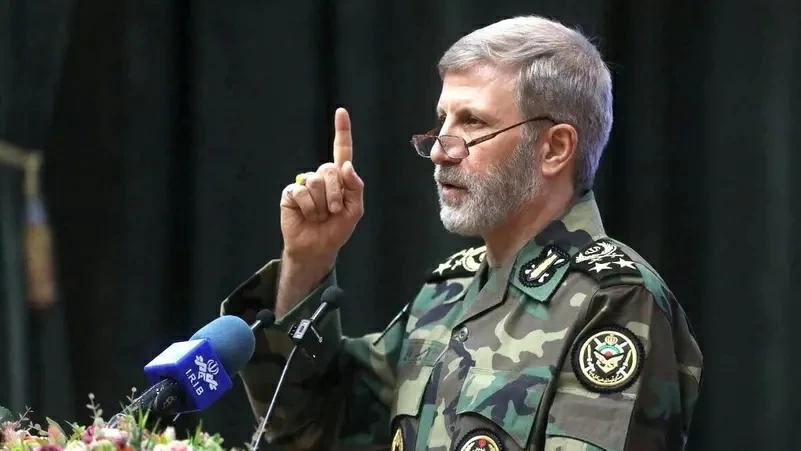
In light of the increasing statements from US President Donald Trump regarding the imminent conclusion of American military operations in Iran, Iranian Army Commander, General Amir Hatami, has instructed his forces to be ready for any form of attack. Hatami stated that the operations headquarters must monitor enemy movements with the utmost caution and precision, stressing that any hostile forces will not survive if they attempt a ground operation.
Hatami also emphasized the importance of preparing and implementing appropriate plans to counter various attack scenarios at the right time to ensure the thwarting of any potential threat. He clarified that the primary goal is to lift the specter of war from the country and ensure complete security for all citizens, indicating that the existence of safe zones at the expense of the Iranian people's security is unacceptable.
Details of the Event
These statements come at a sensitive time, as Iranian media released footage showing Hatami in a room with three military leaders and in a video call with others, reflecting a high level of coordination and military readiness. For his part, the spokesman for the Iranian Armed Forces' Joint Command, Ibrahim Zolfaghari, confirmed that the war will continue until the enemy surrenders and feels a lasting regret, pointing out that the US and Israel's assessment of Iranian military capabilities is incomplete.
Zolfaghari added that Iran will escalate its military operations through more destructive and widespread attacks on its enemies, reflecting Tehran's intention to enhance its defensive and offensive capabilities in the face of external threats.
Background & Context
Historically, relations between the United States and Iran have witnessed increasing tensions, especially following Washington's withdrawal from the nuclear agreement in 2018. Since then, the United States has imposed severe economic sanctions on Iran, exacerbating the economic and political situation in the country. In this context, Trump's recent statements serve as a warning to Tehran, reflecting Washington's desire to pressure the Iranian government.
At the same time, Iran seeks to strengthen its regional position by supporting its allies in the region, complicating the security landscape further. These dynamics have led to heightened military tensions between the two sides, raising concerns about a potential escalation in the near future.
Impact & Consequences
The exchanged statements between both sides could lead to a potential military escalation, threatening stability in the region. Should any attack occur, it may provoke military responses from Iran, increasing the risk of an all-out conflict. Additionally, any escalation in hostilities could negatively impact the global economy, particularly in the energy sector.
Moreover, military escalation could affect relations between Iran and neighboring countries, intensifying regional tensions. This situation reflects the urgent need for diplomatic dialogue to resolve disputes and avoid escalation.
Regional Significance
The recent developments between the United States and Iran are particularly significant for Arab countries, as any military escalation could impact security and stability in the region. Gulf countries, in particular, are closely monitoring the situation, as any escalation could lead to direct repercussions on their security.
Furthermore, military escalation could influence oil prices, which would reflect on the global economy. Therefore, Arab countries need to enhance security and diplomatic coordination to address any potential threats.
In conclusion, the situation in the region remains complex, depending on how the involved parties handle the current statements and tensions. Diplomatic dialogue is the optimal way to avoid escalation and achieve stability in the region.