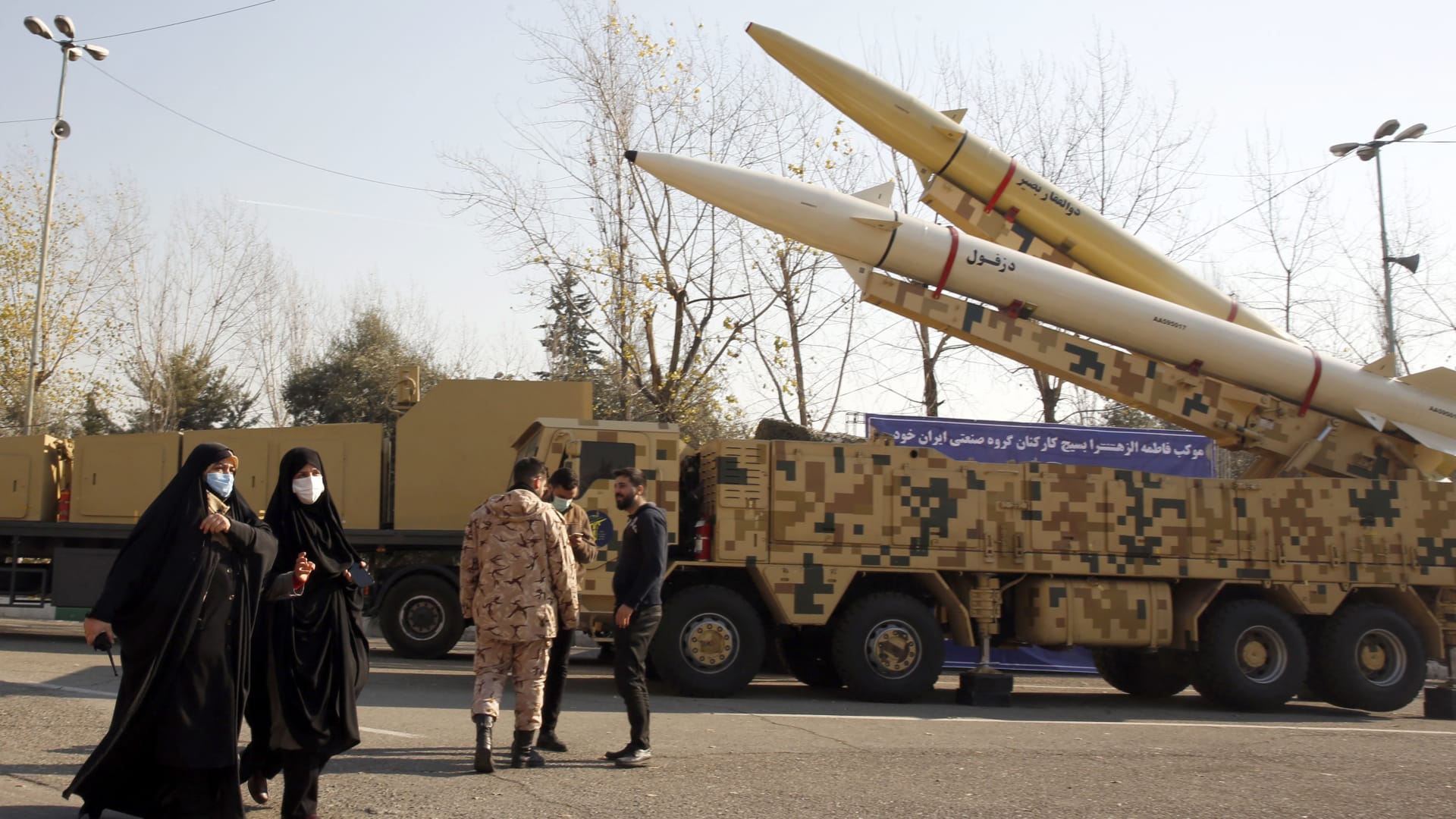
The Iranian attacks targeting Gulf states are ongoing, with Saudi Arabia, the UAE, Kuwait, and Bahrain announcing their defense against new waves of missiles and drones coming from Tehran. These assaults come on the twenty-eighth day of the conflict, raising the tension levels in the region.
In the latest updates, the Saudi Ministry of Defense confirmed that it intercepted and destroyed 11 drones in the northern region of the kingdom since Thursday morning. The Kuwaiti army also announced early Friday that its air defenses were responding to missile and drone attacks, noting that "the sounds of explosions heard were the result of the air defense systems intercepting hostile attacks."
Details of the Incident
In this context, the official spokesperson for the Kuwaiti Ministry of Defense, Colonel Saud Al-Attawan, stated on Thursday that the armed forces had intercepted six ballistic missiles and one drone over the past 24 hours. Meanwhile, the UAE Ministry of Defense reported that it intercepted 15 ballistic missiles and 11 drones, indicating that it had dealt with 372 ballistic missiles, 15 cruise missiles, and 1826 drones since the beginning of the attacks.
The Bahrain Defense Force announced on Thursday that "the air defense systems continue to confront sequential waves of Iranian terrorist attacks targeting the Kingdom of Bahrain." It clarified that it had intercepted and destroyed 154 missiles and 350 drones since the attacks began on February 28.
In a separate incident, the Abu Dhabi Media Office reported that two people were killed and 3 others injured due to missile debris falling in one of the streets of Abu Dhabi after intercepting a ballistic missile. The Bahraini Ministry of Interior also confirmed that civil defense controlled a fire at a facility in Muharraq Governorate due to Iranian aggression, noting that the attack did not result in injuries.
Background & Context
Last Wednesday, Kuwait, the UAE, Bahrain, Saudi Arabia, Qatar, and Jordan renewed their condemnation of Iranian attacks in the strongest terms, whether direct or through its proxies and affiliated armed factions in the region. They considered these actions a blatant violation of national sovereignty and territorial integrity of the states, as well as international law and the United Nations Charter.
The countries stated in a joint statement that the attacks carried out by Iranian-affiliated armed factions from Iraqi territory on facilities and infrastructure in Gulf states constitute a clear breach of international laws and charters, including Security Council Resolution 2817 (2026), which obliges Iran to cease any aggression or threat against neighboring countries immediately and unconditionally.
Impact & Consequences
Since February 28, Gulf states have been subjected to Iranian attacks with missiles and drones, in what Tehran claims is a "military response to American-Israeli attacks." While Iran asserts that it does not target specific countries but rather American bases in the region, these attacks have caused significant damage to civilian facilities in Gulf states, including airports, ports, and residential buildings.
Concerns are growing about a larger military escalation in the region, as Gulf states continue to enhance their defensive capabilities in response to these increasing threats. Additionally, these events may exacerbate humanitarian and economic crises in the region, complicating security situations further.
Regional Significance
These Iranian attacks pose a significant challenge to regional security, raising concerns among Arab states and affecting the stability of the region. The continuation of these assaults could lead to a comprehensive military escalation, threatening regional peace and security.
In conclusion, Gulf states remain on high alert, continuously monitoring any new threats that may arise. The current situation necessitates high coordination among Arab states to confront these increasing security challenges.