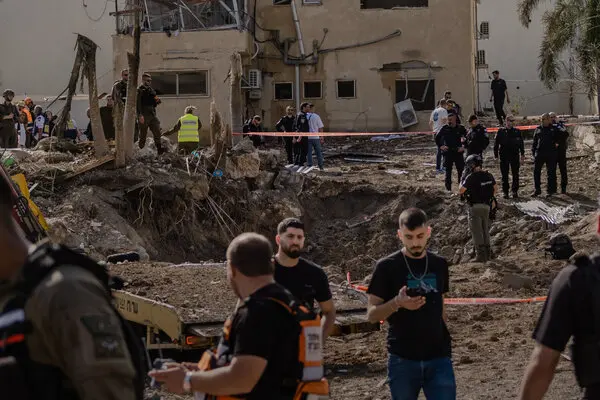
In a new escalation that highlights Iran's ability to carry out painful military operations, several sites in the Gulf and the Middle East have been targeted in multiple attacks over the past few days. Iran targeted a U.S. military base in Saudi Arabia, resulting in injuries to around twenty soldiers, in addition to drone attacks on a port in Oman and strikes on Kuwait International Airport.
An aluminum facility in Abu Dhabi was also hit by missile and drone attacks, injuring workers. These attacks come at a time when former U.S. President Donald Trump is promoting the idea that the United States has eliminated Iran's military capabilities, making these attacks evidence that Iran is still capable of inflicting harm on its enemies.
Details of the Attacks
Reports indicate that the recent attacks, which targeted Israel and Gulf countries, reflect that Iran still possesses a stockpile of missiles and drones capable of destabilizing the region. Despite claims that Iranian military capabilities have decreased by as much as 90%, the reality on the ground shows otherwise, as millions of Israelis continue to seek shelter daily due to Iranian bombardment.
Last Thursday, seven people were injured in central Israel as a result of missile attacks, with footage capturing two individuals fleeing the attack site just before a nearby car exploded. In another incident, a man was killed in Tel Aviv by shrapnel from a missile carrying cluster munitions.
Background & Context
Historically, relations between Iran and the United States have seen significant escalation since Trump's withdrawal from the nuclear agreement in 2018. This withdrawal led to the imposition of stringent economic sanctions on Iran, impacting its military capabilities. However, Iran has demonstrated resilience and adaptability, continuing to develop its military programs, including missiles and drones.
These attacks are part of Iran's strategy to respond to external pressures, as it seeks to send a clear message that it remains a key player in the region and is capable of responding to any threats.
Impact & Consequences
These attacks raise questions about the effectiveness of American and Israeli strategies in confronting Iranian threats. While the United States promotes the idea of declining Iranian capabilities, events show that Iran is still capable of executing complex military operations. This situation could lead to escalating tensions in the region and increased fears of a full-scale war.
Moreover, these attacks could affect relations between Iran and Gulf countries, potentially prompting these nations to bolster their defensive capabilities and collaborate with major powers to counter the increasing Iranian threats.
Regional Significance
For Arab countries, the ongoing tensions between Iran and the United States could lead to negative repercussions for security and stability in the region. Arab nations, especially those close to Iran, may find themselves in a difficult position between the need to defend themselves and pressure from major powers.
In conclusion, recent events serve as evidence that Iran remains capable of causing chaos in the region, necessitating proactive measures from Arab countries to protect their interests and security.