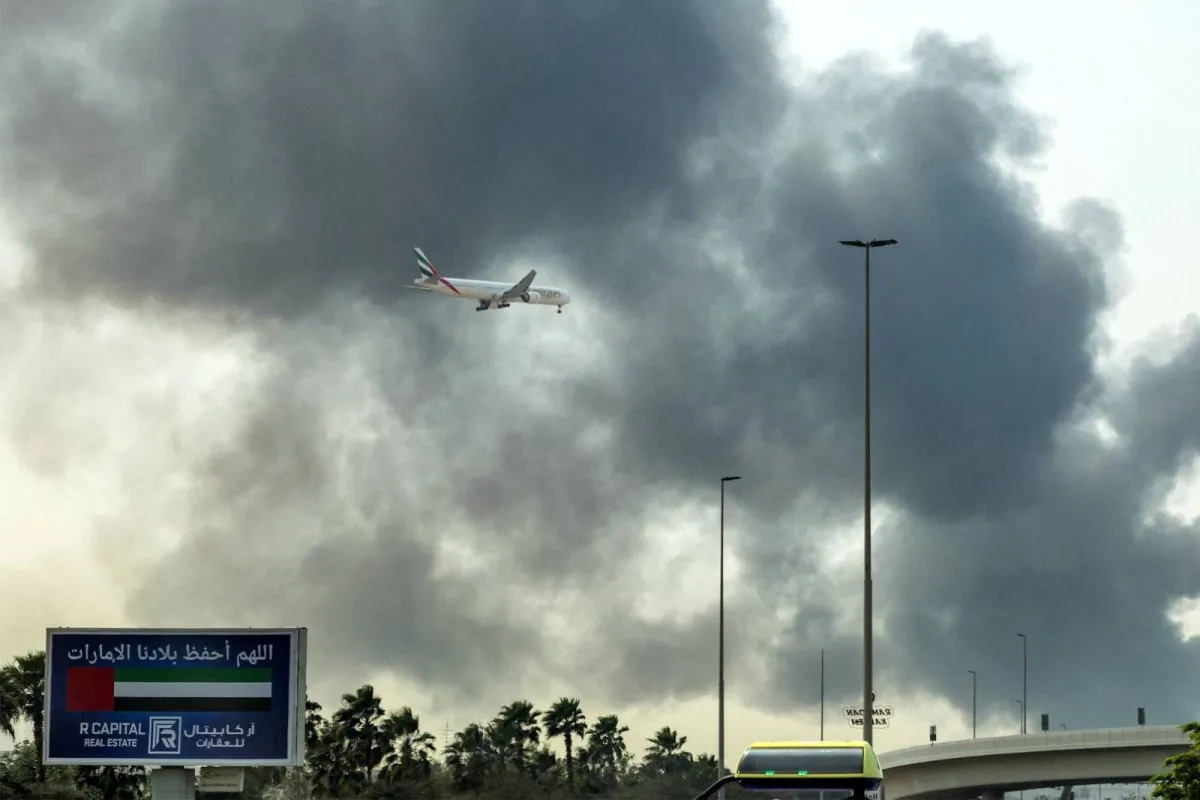
On Saturday, Gulf countries reported limited damage to civilian and residential facilities as air defenses intercepted dozens of Iranian missile and drone attacks, with no human casualties recorded. Authorities in the UAE began addressing incidents resulting from debris falling on the facade of an Oracle building in Dubai Internet City and another in the Marina area, confirming no injuries.
In detail, UAE air defenses dealt with 23 ballistic missiles and 56 drones coming from Iran, bringing the total number of attacks since the onset of hostilities to 498 ballistic missiles and 2141 drones. The UAE Ministry of Defense reported that these attacks resulted in the deaths of two military personnel, a Moroccan civilian contractor, and ten others, in addition to injuring 217 individuals of various nationalities.
Details of the Incident
The UAE Ministry of Defense confirmed its readiness to respond to any threats, emphasizing the necessity of maintaining the state's security and stability. In a related context, Sheikh Tamim bin Hamad Al Thani, the Emir of Qatar, and Italian Prime Minister Giorgia Meloni stressed the importance of de-escalation and prioritizing political dialogue as a means to resolve the current crisis in the Middle East.
In Kuwait, the armed forces monitored and dealt with 8 ballistic missiles and 19 drones over the past 24 hours, with no human casualties reported. Colonel Saud Al-Awtan, spokesperson for the Kuwaiti Ministry of Defense, urged citizens and residents to avoid approaching the debris from the downed drones scattered at the crash sites.
Background & Context
These attacks occur amid rising tensions in the Gulf region, where Bahrain also intercepted and destroyed 8 drones in the past 24 hours, bringing the total number intercepted since the beginning of the attacks to 188 missiles and 453 drones. The Bahrain Defense Force expressed pride in its personnel's capabilities to counter these threats.
Additionally, Engineer Fatima Hayat, spokesperson for the Kuwaiti Ministry of Electricity, confirmed that the electricity and water systems remain under control despite the Iranian attacks, noting that two power generation and water desalination stations sustained material damage.
Impact & Consequences
These attacks represent a blatant violation of international humanitarian law and the United Nations Charter, posing a direct threat to regional peace and security. The Saudi Ministry of Foreign Affairs condemned the targeting of a hospital by Rapid Support Forces in Sudan, reflecting the escalating tensions in the region.
The UAE also condemned the riots targeting its diplomatic mission in Damascus, calling for an urgent investigation into the circumstances of these attacks. These events indicate a deterioration of security conditions in the region, necessitating enhanced regional and international cooperation to safeguard security and stability.
Regional Significance
These assaults underscore the urgent need for Arab unity in addressing the increasing security challenges. They also highlight the importance of dialogue and diplomacy as means to resolve conflicts in the region, especially amid the multiple crises facing Middle Eastern countries.
In conclusion, the situation in the Gulf remains under close observation, with growing fears of further escalation that could impact regional security and complicate conditions in the area.