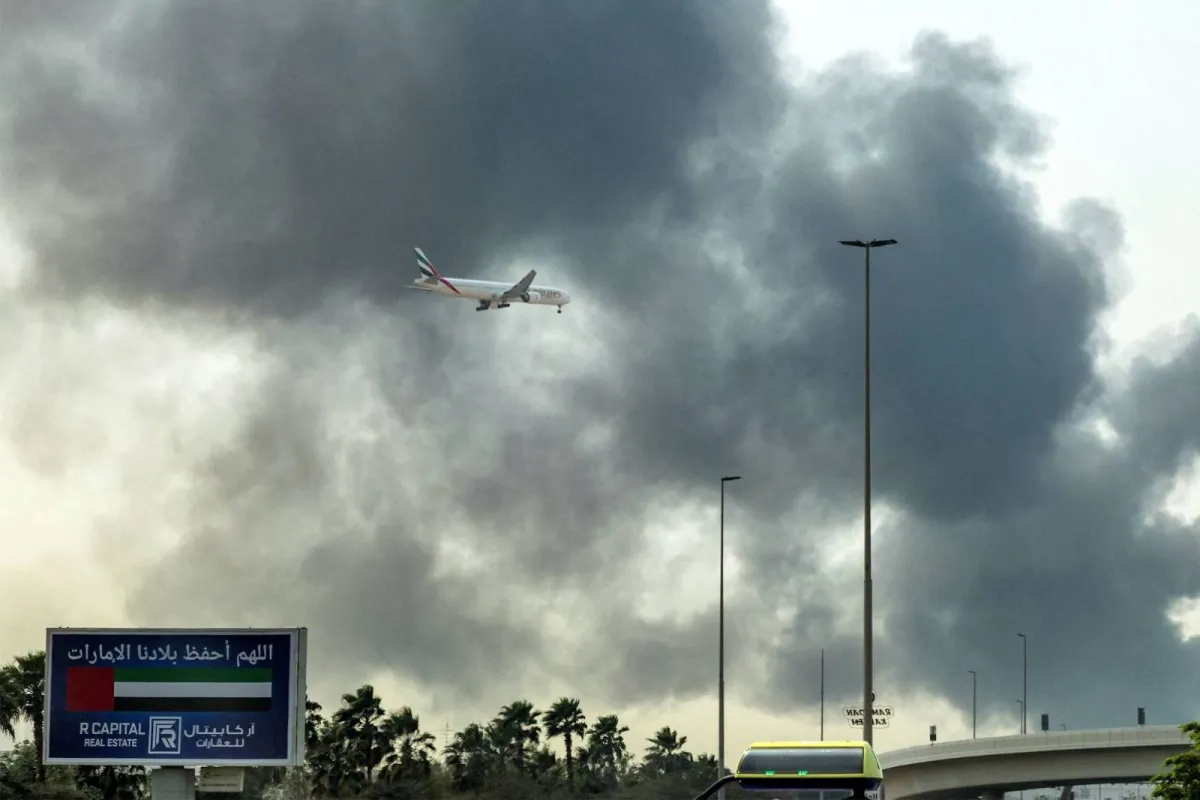
On Saturday, Iranian attacks targeted civilian and residential facilities in Gulf countries, with air defenses intercepting dozens of missile and drone attacks without recording any human injuries.
In the UAE, authorities began investigating two incidents resulting from debris falling on the facade of an Oracle building in Dubai Internet City, and another in the Marina area, where officials confirmed there were no injuries.
Details of the Incident
The UAE air defenses dealt with 23 ballistic missiles and 56 drones coming from Iran, bringing the total number of attacks since the onset of hostilities to 498 missiles and 2141 drones. The UAE Ministry of Defense reported that these attacks resulted in the deaths of two military personnel and a Moroccan civilian, in addition to injuring 217 individuals of various nationalities.
In Kuwait, the armed forces detected 8 ballistic missiles and 19 drones over the past 24 hours, with no injuries reported. Colonel Saud Al-Otaibi, spokesperson for the Kuwaiti Ministry of Defense, confirmed that the armed forces are coordinating with security agencies to counter any threats.
Meanwhile, in Bahrain, air defenses managed to destroy 8 drones, bringing the total destroyed since the beginning of the attacks to 188 missiles and 453 drones.
Background & Context
These attacks come at a sensitive time when the region is witnessing heightened tensions between Iran and Gulf countries, as the involved nations seek to bolster their defensive capabilities. The UAE Ministry of Defense has confirmed that it is on high alert to counter any threats, emphasizing the importance of protecting national security.
In a related context, Qatar's Emir Sheikh Tamim bin Hamad Al Thani and Italian Prime Minister Giorgia Meloni emphasized the need to de-escalate tensions and prioritize political dialogue as a means to resolve current crises in the region during their meeting in Doha.
Impact & Consequences
Concerns are growing that these attacks could lead to a greater escalation of regional tensions, potentially affecting the stability of energy markets and supply chains. Furthermore, the continuation of hostilities may hinder peace efforts in the region and complicate humanitarian conditions.
These events underscore the importance of enhancing security cooperation among Gulf states to address common threats, as the current situation requires greater coordination among the armed forces of the concerned countries.
Regional Significance
These attacks represent a blatant violation of international law, necessitating strong reactions from the international community. The ongoing assaults could exacerbate humanitarian crises and increase the suffering of civilians in the region.
In conclusion, the current situation in the Gulf calls for a concerted effort from regional and international stakeholders to ensure security and stability, as any escalation could negatively impact all countries in the region.