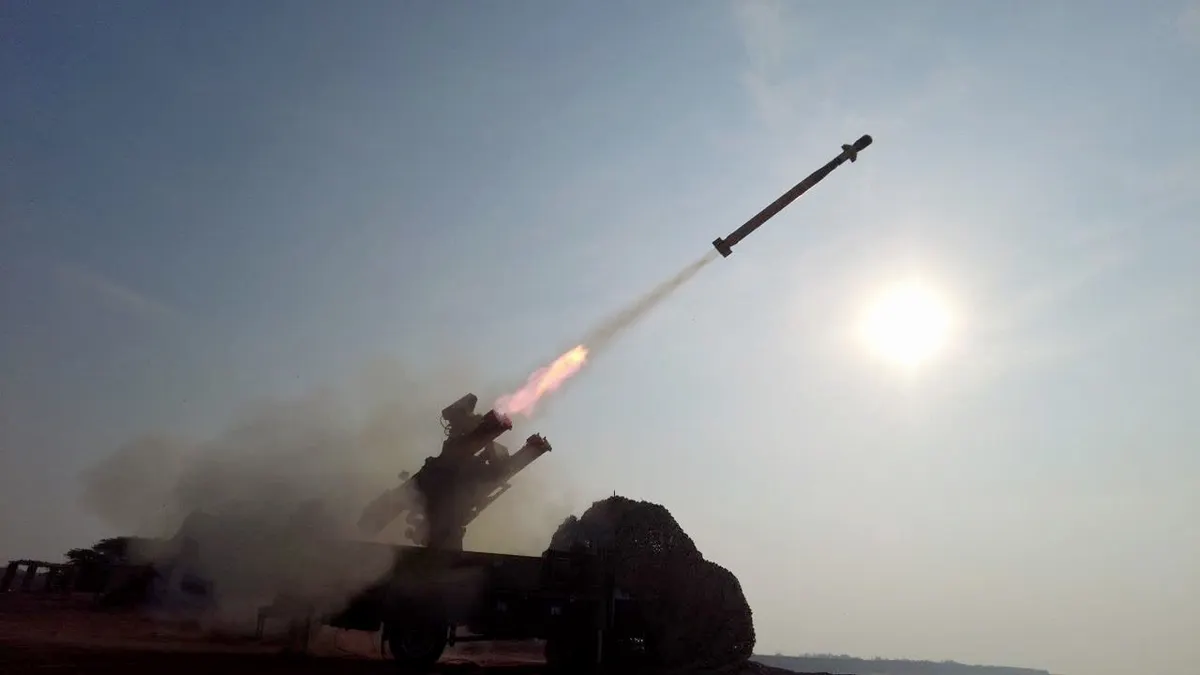
The Iranian attacks on Gulf states have continued, with the UAE, Kuwait, Qatar, and Bahrain reporting new waves of missile and drone assaults. This escalation occurs amid increasing military tensions in the region, as the conflict between Iran and its allies on one side and the United States and Israel on the other persists.
In an official statement, the UAE Ministry of Defense confirmed that it intercepted missile and drone attacks originating from Iran, noting that the sounds heard in some areas were a result of air defense systems engaging these threats. Earlier, the UAE had reported dealing with 9 ballistic missiles, a cruise missile, and 50 drones in recent hours.
Details of the Incident
The media office of the Sharjah government reported that emergency response teams managed to control a fire at the Khor Fakkan port caused by debris from intercepted missiles, resulting in injuries to 4 individuals of Nepalese and Pakistani nationalities. In Kuwait, the military issued three separate statements confirming its response to missile and drone attacks, indicating that the sounds heard were due to the interception of these assaults.
The official spokesperson for the Kuwaiti Ministry of Defense, Colonel Saud Abdulaziz Al-Otaibi, announced that the armed forces detected and dealt with 9 ballistic missiles, 4 cruise missiles, and 31 drones, which targeted two power stations and an oil sector complex, without any reported human casualties.
Background & Context
These attacks come amid escalating military tensions in the region, with rising hostilities between Iran and its allies on one side and the United States and Israel on the other. Iran has expressed its readiness to continue military operations, asserting that it targets what it describes as American bases and interests, despite some of these attacks resulting in injuries and damage to civilian facilities.
In Qatar, the Ministry of Defense reported successfully intercepting an attack involving drones and cruise missiles, confirming that its forces thwarted all assaults. In Bahrain, the Defense Force stated that it intercepted and destroyed 13 drones within 24 hours, while also controlling a fire at one of the targeted facilities.
Impact & Consequences
Concerns are growing over the escalating tensions in the region, with reports indicating that Iranian attacks could exacerbate security and economic conditions in Gulf states. These assaults may also impact air and maritime navigation, complicating the situation in a region already suffering from instability.
Attention is turning to potential international reactions to these assaults, particularly from the United States, which may bolster its military presence in the region. Additionally, military escalation could have negative repercussions on relations between Gulf states and Iran, complicating efforts for peace and stability in the area.
Regional Significance
These attacks serve as a stark reminder of the fragility of security in the region, where Arab states are directly affected by military tensions. Such events may increase divisions among Arab countries, hindering regional cooperation efforts to address shared challenges.
In conclusion, there is an urgent need to enhance dialogue and cooperation mechanisms among Arab states to confront looming security and economic challenges and work towards achieving lasting stability in the region.