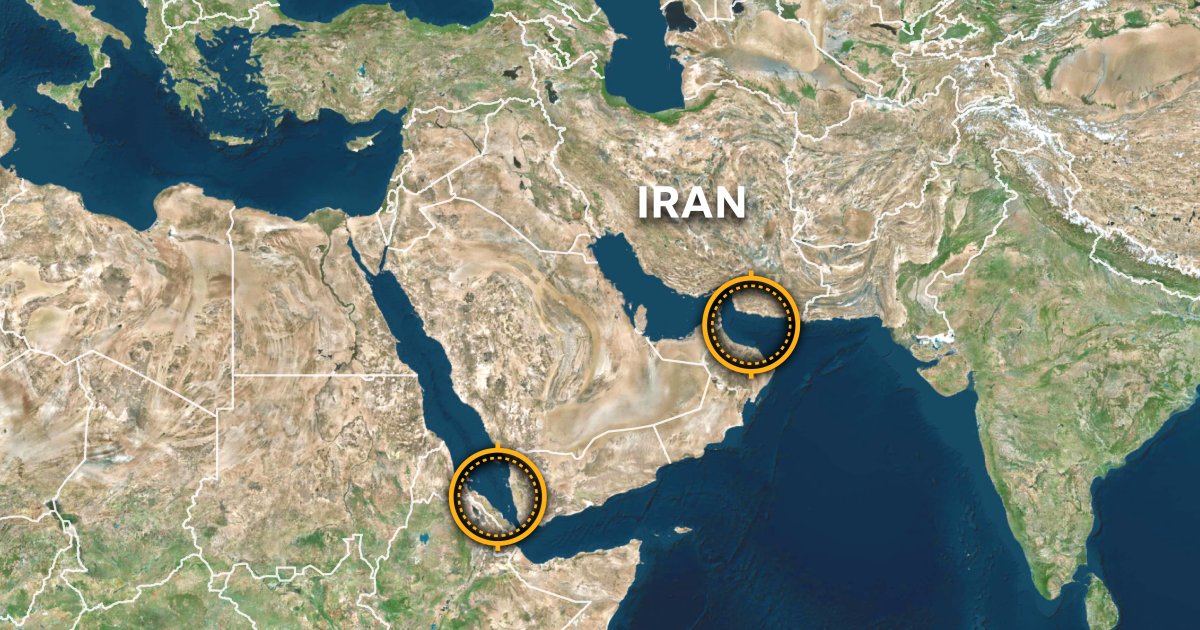
Several Gulf countries, on Sunday, experienced missile and drone attacks launched from Iran, which included Qatar, Bahrain, the UAE, and Kuwait, raising widespread international concern. The Gulf states announced that they managed to intercept most of these attacks, while the European Union confirmed its solidarity with these nations in the face of Iranian threats.
In Qatar, the Ministry of Defense reported that the country was targeted by drone attacks from Iran, noting that the Qatari armed forces successfully intercepted all drones without any casualties or damages recorded. This response reflects the high level of readiness that the Qatari forces maintain against external threats.
Details of the Event
In Bahrain, the Bahrain Defense Force announced that its air defense systems intercepted and destroyed 174 missiles and 391 drones since the onset of Iranian aggression. As a precautionary measure, the Bahraini Ministry of Interior imposed a partial ban on maritime movement during the evening hours until dawn to ensure the safety of sea-goers.
In Kuwait, the Kuwaiti army reported detecting 14 ballistic missiles and 12 hostile drones within its airspace over the past twenty-four hours. A drone attack resulted in injuries to 10 military personnel, alongside material damages. Additionally, warehouses belonging to a private logistics company were targeted, but no human casualties were reported.
In the UAE, the Ministry of Defense announced that its air defense systems dealt with 16 ballistic missiles and 42 drones launched from Iran on Sunday. It confirmed that since the beginning of the attacks, 413 ballistic missiles and 1914 drones have been intercepted, resulting in the deaths of 8 civilians, 2 military personnel, and a Moroccan national working as a military contractor.
In a related context, the Iranian Revolutionary Guard announced that it targeted aluminum factories in the UAE and Bahrain, claiming they are linked to American military industries. Both Alba and Emirates Global Aluminium confirmed that their facilities sustained damages due to the Iranian attacks, with injuries reported as minor or moderate among workers.
Background & Context
These attacks come amid escalating tensions between Iran and Gulf countries, with Tehran claiming it is responding militarily to American-Israeli attacks. Since February 28, Gulf states have faced repeated Iranian assaults, leading to a deterioration of security conditions in the region.
These attacks are part of Iran's strategy to influence the regional situation, as it seeks to demonstrate its military strength and ability to target the interests of other nations. However, these assaults have caused significant damage to civilian facilities in Gulf countries, including airports, ports, and residential buildings.
Impact & Consequences
Concerns are growing that these attacks may lead to further escalation in the region, potentially affecting both regional and international security. The European Union, through European Council President Antonio Costa, has called for an immediate cessation of these strikes, emphasizing the importance of maintaining stability in the region.
The continuation of these attacks could increase tensions between Iran and Gulf states and may prompt major powers to reassess their strategies in the region. Additionally, these events could impact trade and tourism in Gulf countries, negatively affecting the regional economy.
Regional Significance
These events serve as a wake-up call for Arab nations, highlighting the need to enhance security and defense cooperation among Gulf states to confront common threats. Furthermore, these attacks may lead to increased international support for Gulf countries in facing security challenges.
In conclusion, the region remains on high alert as Iranian threats escalate, necessitating a swift and effective response from Gulf states and the international community to ensure security and stability in the area.