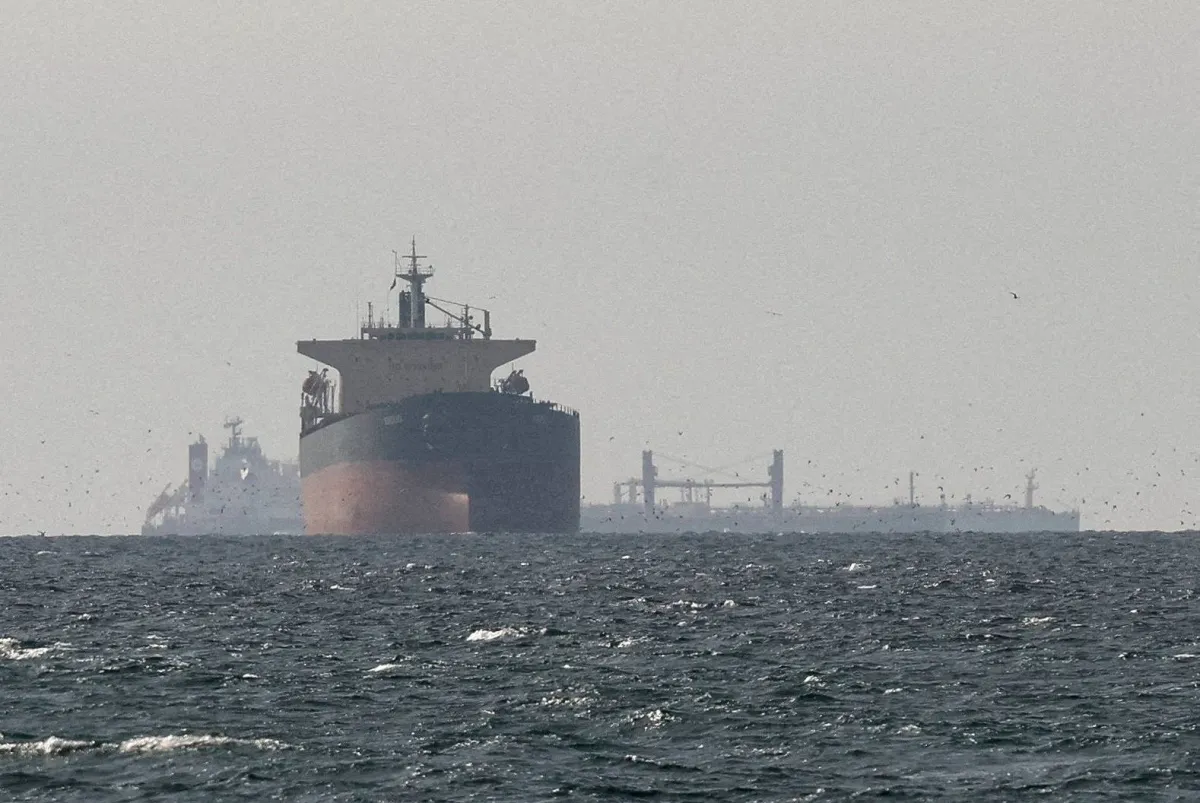
An Iranian parliamentary committee has approved plans to impose fees on ships crossing the strategic Strait of Hormuz, as reported by Iranian state television on Monday. This move comes as part of Iran's efforts to strengthen its sovereignty over this vital waterway through which about 20% of the world's oil production passes.
The television report quoted a member of the parliamentary security committee stating that the plan includes "financial arrangements and toll collection systems in rials" and "implementing Iran's sovereign role," in addition to cooperation with Oman on the other side of the strait. The plan also involves banning U.S. and Israeli ships from passing through the strait and prohibiting other countries that impose sanctions on Iran from navigating in it.
Details of the Event
The Strait of Hormuz is a critical transit point for oil and natural gas, accounting for approximately 20% of total global oil exports. The near paralysis of shipping traffic in the strait has led to a sharp rise in fuel prices and disruptions in global supply chains. In this context, several Iranian lawmakers have intensified calls to review Tehran's membership in the Nuclear Non-Proliferation Treaty, reflecting the escalation of regional and international tensions.
Aladdin Boroujerdi, a member of the National Security Committee in Parliament, stated that "the time has come for Iran to exit the Nuclear Non-Proliferation Treaty," indicating that public opinion among lawmakers is shifting towards a lack of justification for continuing to accept restrictions on Iran's nuclear program. Boroujerdi also criticized the Director General of the International Atomic Energy Agency, Rafael Grossi, claiming that his recent statements reflect his susceptibility to U.S. and Israeli pressures.
Background & Context
Concerns are growing over escalating tensions in the region, especially following repeated attacks on Iranian nuclear facilities. Iran has reported a new attack near the Bushehr nuclear power plant to the International Atomic Energy Agency, raising alarms about the safety of nuclear facilities. In this context, Alexey Likhachev, head of Russia's Rosatom, stated that the situation at the Bushehr plant is "deteriorating," heightening fears regarding nuclear safety in the region.
These developments come at a time of increasing international concern over Iran's nuclear program, with reports indicating that Iran possesses significant quantities of enriched uranium, raising fears of its potential development of nuclear weapons. The United States has shown interest in applying pressure on Iran, with reports suggesting that former President Donald Trump was considering military options against Iran.
Impact & Consequences
Imposing fees on ships transiting the Strait of Hormuz could exacerbate tensions between Iran and the United States and its allies, potentially affecting global oil prices and market stability. This move may also prompt major powers to reassess their strategies in the region, especially amid rising Iranian threats.
On the other hand, this step could enhance cooperation between Iran and Oman, reflecting new shifts in regional relations. Additionally, the escalating calls for a review of Iran's membership in the Nuclear Non-Proliferation Treaty could worsen political and economic crises in the region.
Regional Significance
These developments are of significant importance to the Arab region, as they could lead to heightened political and economic crises. Any escalation in the Strait of Hormuz could directly impact shipping and trade in the Arabian Gulf, adversely affecting the economies of Arab countries.
In conclusion, the situation in the region remains tense, with increasing fears of escalating military and economic conflicts. The imposition of fees on ships in the Strait of Hormuz could mark the beginning of a new phase of tensions in regional and international relations.