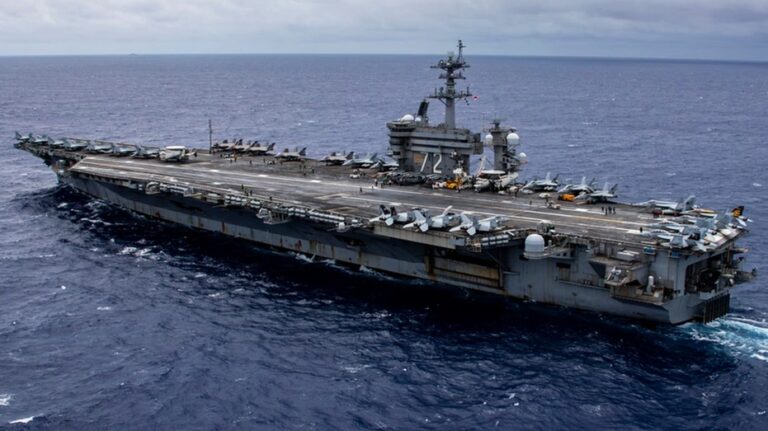
The Iranian Revolutionary Guard reported that it targeted the USS Abraham Lincoln with four cruise missiles in the northern Indian Ocean. This announcement comes as tensions between Tehran and Washington escalate, raising concerns about a potential military escalation in the region.
The Revolutionary Guard, which is one of the military arms of the Iranian regime, confirmed that this operation is part of military exercises aimed at enhancing the country's defensive capabilities. The announcement of this attack comes at a sensitive time, as fears of military escalation in the Arabian Gulf are increasing.
Details of the Incident
Reports indicate that the Revolutionary Guard launched the missiles from an undisclosed location, and that they were part of large-scale military maneuvers. Images released by Iranian media showed the missiles being launched towards the target, reflecting the advanced military capabilities possessed by the Revolutionary Guard.
This action follows a series of tensions between Iran and the United States, as the USS Abraham Lincoln had been deployed in the region as part of the American strategy to counter Iranian activities. This targeting serves as a clear message from Iran that it has the capacity to strike American military assets in the area.
Background & Context
Historically, relations between Iran and the United States have been marked by increasing tensions since the Islamic Revolution in 1979. Since then, there have been several military crises, including attacks on commercial vessels and military operations in the Arabian Gulf. These tensions have notably increased following the U.S. withdrawal from the Iranian nuclear deal in 2018.
In recent years, Iran has bolstered its military capabilities, including the development of long-range cruise missiles, raising concerns among many countries in the region. Additionally, Iran's frequent military maneuvers are seen as part of Tehran's strategy to deter any potential attack from the United States and its allies.
Impact & Consequences
This targeting could lead to heightened tensions in the region, as the United States is expected to respond to this attack by increasing its military presence in the Gulf. Moreover, this incident may impact global oil prices, as any military escalation in the region could heighten fears of oil supply disruptions.
Furthermore, this incident may increase pressure on European countries that are trying to maintain the nuclear deal with Iran, complicating diplomatic efforts in the region. This targeting could also encourage some armed factions in the area to take similar actions against U.S. forces.
Regional Significance
Neighboring Arab countries, such as Saudi Arabia and the UAE, are among the most affected by this escalation. Any military escalation could increase tensions in the Gulf region, threatening the security and stability of these countries. These events may also impact the relationships between Arab countries and Iran, potentially driving some nations to strengthen their alliances with the United States.
In conclusion, the situation in the region remains tense and depends on the reactions from both the United States and Iran. Military escalation could have dire consequences for regional security, necessitating international intervention to mitigate tensions.