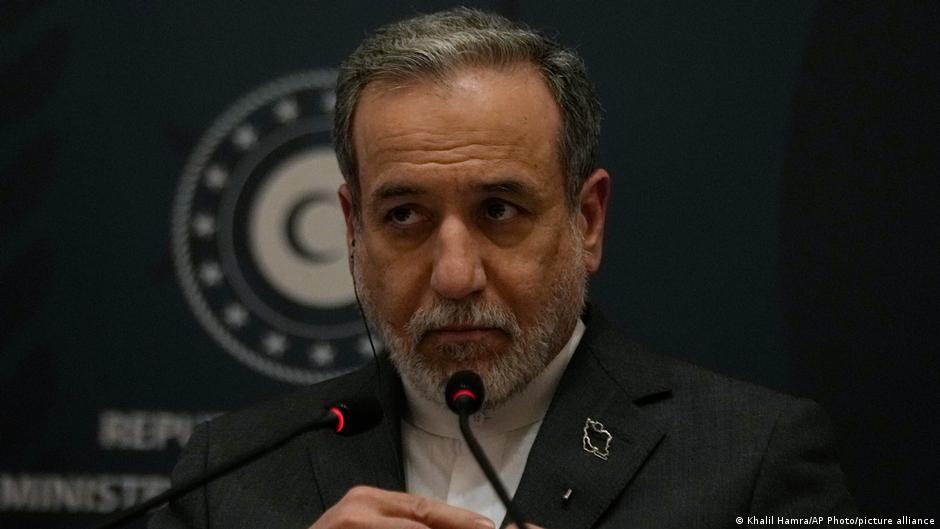
Iranian Foreign Minister Abbas Araqchi arrived in Russia on Monday, where he is expected to meet with Russian President Vladimir Putin in an effort to gain Moscow's support. This visit follows a series of trips Araqchi made to mediators in Pakistan and Oman, where he discussed the escalating conflicts in the Middle East, while peace efforts between Tehran and Washington remain stalled.
Russia and Iran are considered strategic allies, yet Moscow has taken a cautious stance regarding involvement in recent Middle Eastern conflicts, particularly amid its ongoing comprehensive invasion of Ukraine. Araqchi indicated that discussions in Oman focused on reopening the Strait of Hormuz, a vital artery for oil and gas transport, which has been significantly affected by the ongoing conflict.
Details of the Visit
Araqchi, who met in Pakistan with the Chief of Army Staff Asim Munir, Prime Minister Shehbaz Sharif, and Foreign Minister Isaac Dar, then traveled to Oman before returning to Islamabad and subsequently heading to Russia. He noted that talks in Oman addressed the importance of reopening the Strait of Hormuz, which has experienced closures that significantly impacted global oil supplies.
The Fars News Agency reported that efforts are still underway to create suitable conditions for a second round of talks between the United States and Iran, indicating that Tehran has sent "written messages" to Washington via the Pakistani mediator, outlining its red lines concerning nuclear issues and the Strait of Hormuz.
Background & Context
Araqchi's visit comes at a sensitive time as negotiations between Iran and the United States have stalled, with both sides rejecting many of each other's demands. Meanwhile, former US President Donald Trump canceled a planned visit to Islamabad by his envoys Steve Witkoff and Jared Kushner, stating that talks there would mean "sitting down and talking about nothing."
The first round of talks between the United States and Iran in Pakistan in mid-April failed to achieve any agreement, complicating the situation further. In this context, Iran is seeking to secure Russian support amid rising tensions in the region.
Impact & Consequences
Araqchi's visit to Russia carries significant implications for Iranian-Russian relations, especially given the multiple crises facing Iran. Russian support could be crucial for Tehran in the face of Western pressures, particularly amid sanctions imposed on its nuclear program.
Iran is looking to postpone nuclear negotiations, with reports indicating that Tehran wishes to reopen the Strait of Hormuz as a first step towards resolving the conflict. The United States is urging Iran to halt uranium enrichment, asserting that this program aims to build nuclear weapons, while Tehran insists that its nuclear program is peaceful.
Regional Significance
This visit highlights the strategic relationship between Iran and Russia amid escalating regional tensions, and its impact on nuclear negotiations. The dynamics of this relationship could influence the broader geopolitical landscape in the Middle East.
In conclusion, Araqchi's discussions in Russia are expected to shape the future of Iranian foreign policy and its approach to ongoing negotiations, as Tehran seeks to navigate a complex international environment.