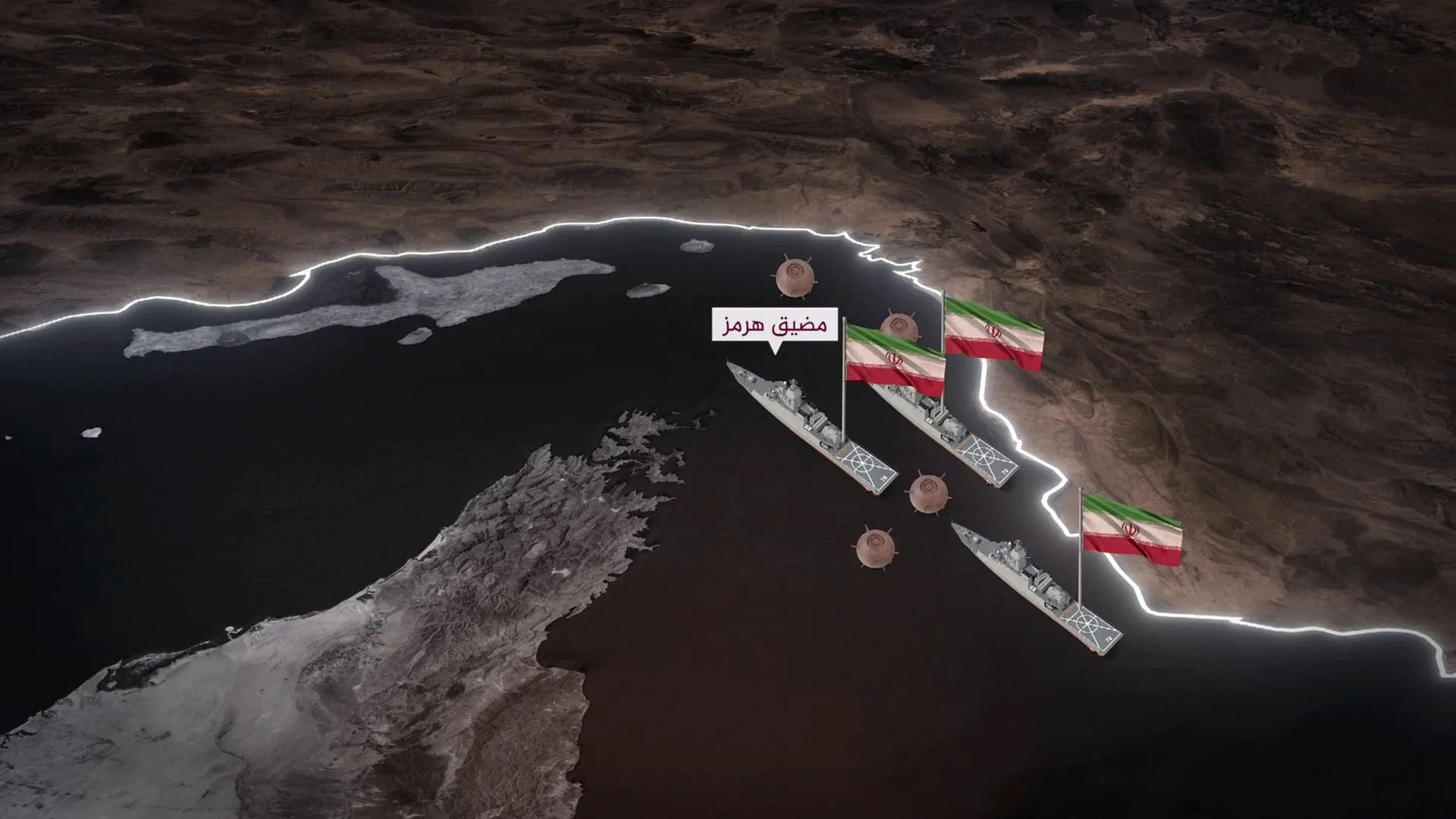
The Iranian islands located along the Gulf coast overlook the entrance of the Strait of Hormuz, giving them the ability to monitor ship movements and control maritime traffic routes, which are a global energy lifeline.
Reuters reported that U.S. officials plan to deploy thousands of troops in the Middle East, while reports also surfaced about potential U.S. control over Khark Island, highlighting the strategic importance of these locations.
Among the most notable islands at the direct entrance of the strait are Qeshm, Hormuz, and Larak. These islands represent three main hubs as the strait carries approximately 20% of global energy exports, with ships passing through shipping lanes that can sometimes be as narrow as ten kilometers, making them susceptible to surveillance or disruption in case of escalation.
Qeshm Island holds particular significance as the largest Iranian island in the region, located near the Iranian coast and connected to the port of Bandar Abbas, making it an advanced logistical base with missile storage facilities, potential fast-boat platforms, drones, and surveillance systems.
Larak Island is situated close to actual shipping routes, giving Iran direct monitoring capabilities over passing vessels, and serves as a logistical support point for naval forces, with the presence of Revolutionary Guard units and weapons depots.
Hormuz Island essentially controls the maritime passage at the direct entrance to the strait, as its location allows for monitoring incoming and outgoing ships from the Gulf, while its terrain supports the deployment of radar and surveillance systems.
Close to Hormuz is Kish Island, which is used for the mooring of assault boats and naval support, in addition to serving as an economic and commercial hub.
Among the islands are three disputed territories with the UAE that are currently under Iranian control: Abu Musa, Greater Tunb, and Lesser Tunb. Abu Musa's sensitive position allows for monitoring and threatening ship movements, granting Tehran leverage over oil and energy transport routes. The Greater and Lesser Tunb islands, although small, gain strategic importance due to their proximity to transit routes.
Other islands such as Khark, Lawan, and Siri are considered a cornerstone of the Iranian maritime and oil sector. Khark is the largest terminal for Iranian oil exports and had previously been subjected to U.S. airstrikes, while Lawan and Siri are linked to maritime oil fields and loading facilities, playing a role in securing energy exports and monitoring maritime activity in the northern Gulf.
These islands are intertwined within a multi-layered maritime structure that forms an advanced network for monitoring and defense in Gulf waters, providing Iran with tools for surveillance and pressure on vital maritime routes.