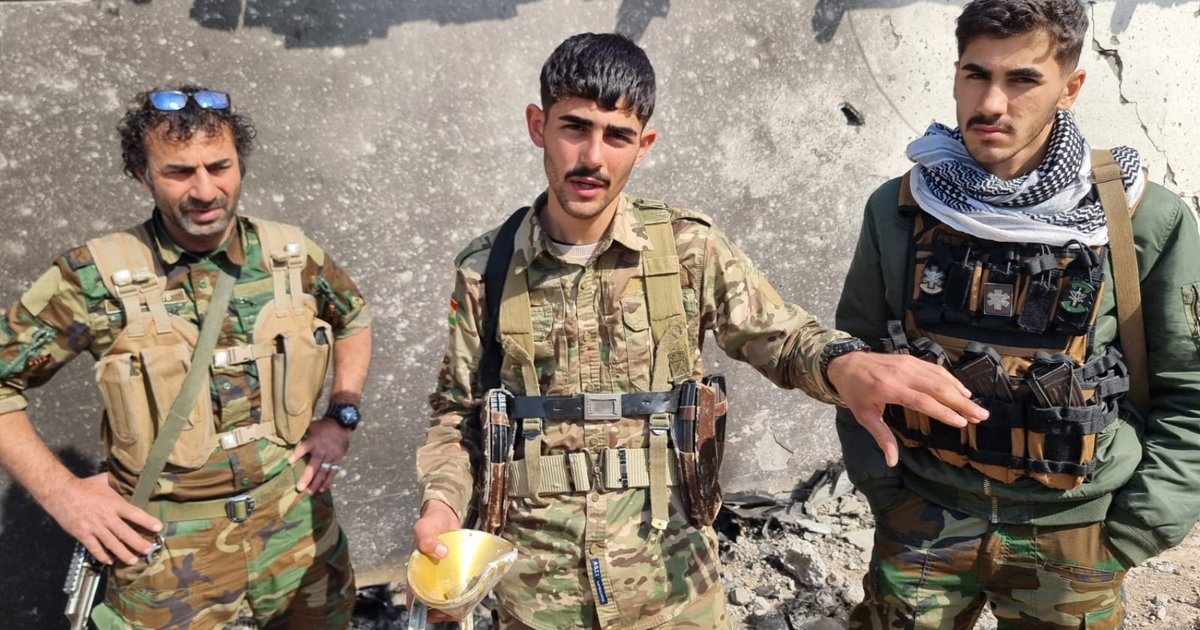
Leaders from Iranian Kurdish parties have firmly denied receiving any weapons from the United States, following President Donald Trump's assertions that Washington sent arms to Iranian protesters through the Kurds. Trump stated in an interview with Fox News that the Kurds were the recipients of these weapons.
In this context, Siavand Moieni, a prominent leader of the Free Life Party of Kurdistan (PJAK), expressed that he is unaware of any arms being received, emphasizing that the party has not received anything. Similarly, Hana Yazdani-Panah, the foreign relations coordinator for the Kurdistan Freedom Party (PAK), confirmed that they still possess the "old Kalashnikovs" used in their fight against ISIS.
Details of the Situation
Trump's statements came at a sensitive time as Iran is experiencing widespread protests against the government, which began in late December and lasted for two weeks before being violently suppressed. Despite the Iranian Kurds having a fighting force of around 6,000 fighters, they have not engaged in the American-Israeli war against Iran that commenced on February 28.
Several leaders of Iranian Kurdish parties reiterated that they have not received any weapons from the United States, pointing out that the current situation does not necessitate such support. Additionally, Shakria Baradest, a Kurdish security expert, noted that Kurdish parties did not receive any arms during the recent protests.
Background & Context
Historically, Iran has witnessed numerous popular protests, but the recent demonstrations have been among the most violent. These protests were met with severe repression from the authorities, with reports indicating that Iranian forces committed massacres against protesters on January 8 and 9, resulting in thousands of deaths. Although Trump affirmed his support for the Kurds, he later retracted these statements, indicating that he does not wish for the Kurds to become embroiled in the conflict.
Impact & Consequences
The contradictory statements from the U.S. administration could impact the position of the Kurds in the region, as they fear being used as a tool in regional conflicts. Furthermore, their lack of weaponry may weaken their ability to support Iranian protesters, potentially exacerbating the situation in Iran. Additionally, the situation in Iran could affect stability across the entire region, as any escalation in conflict could have repercussions for neighboring countries, including Iraq and Turkey.
Regional Significance
The events unfolding in Iran highlight the regional tensions and their impact on the Kurds in Iran, which could influence stability in the broader area. The Kurdish community is concerned about their role in the ongoing conflicts and the potential for being marginalized in the political landscape. As protests continue, the international community will be watching closely to see how these dynamics evolve and what implications they may have for regional security.
In conclusion, the Iranian Kurdish leaders' denial of receiving U.S. arms reflects their cautious approach amid ongoing protests and geopolitical tensions. The situation remains fluid, and the Kurdish parties are navigating their role carefully as they seek to maintain their autonomy and influence in a complex environment.