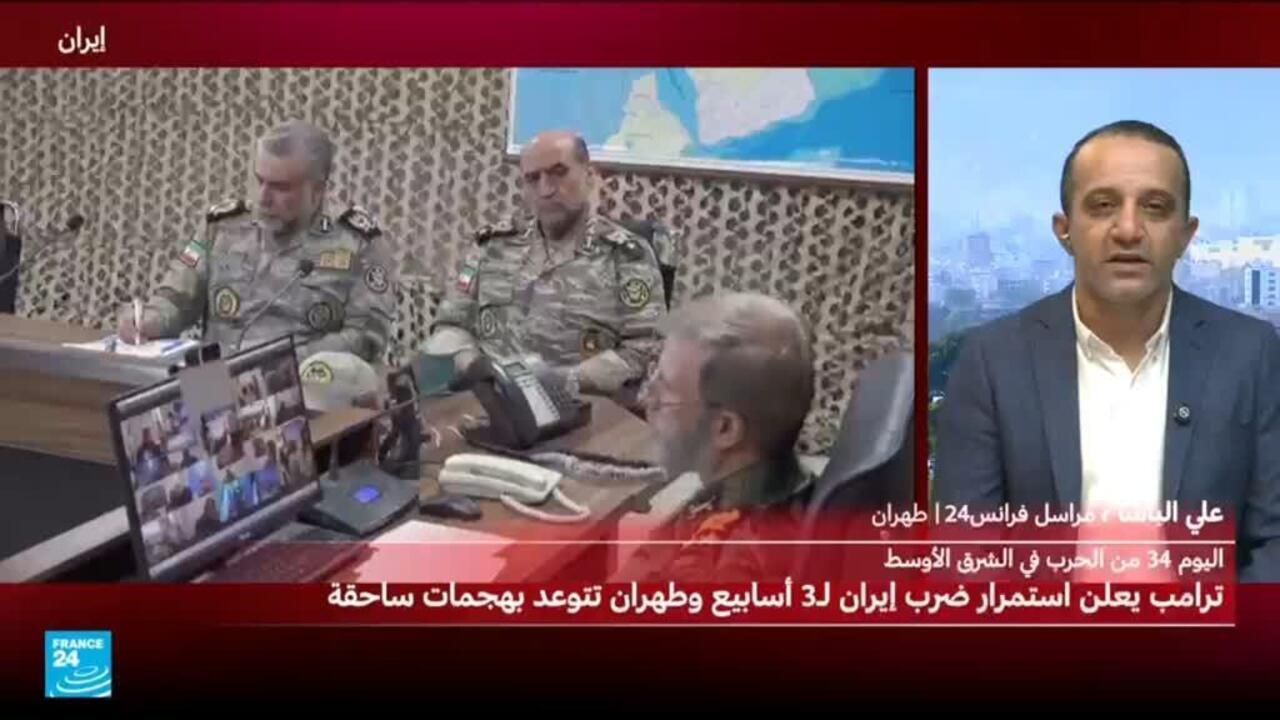
In a new escalation, Iranian Armed Forces Chief Amir Hatami confirmed that the Iranian army will continue to monitor enemy movements with precision and caution, emphasizing the necessity of being prepared to face any form of attack. These statements come at a time when US President Donald Trump announced that the conflict with Iran is 'approaching its end,' raising questions about Washington's intentions in the region.
Trump's remarks were made in the context of the United States bolstering its military presence in the Gulf, with additional troops being sent, heightening fears of potential ground operations. In this context, Hatami asserted that the 'Headquarters of Khatam al-Anbiya,' the central command room for Iranian military operations, will continue to implement its plans until victory is achieved, indicating that the war will persist until the 'enemy is humiliated.'
Details of the Event
In a statement broadcast by Iranian state television, Hatami stated: 'With reliance on God, this war will continue until your humiliation, your disgrace, your constant and inevitable regret, and your surrender.' These remarks reflect the escalating rhetoric between Tehran and Washington, as both sides appear to be preparing for a potential confrontation. Hatami also noted that upcoming military operations will be 'the most crushing and destructive,' further intensifying tensions in the region.
The Iranian statements come at a sensitive time, as the United States continues to enhance its military presence in the Gulf, raising concerns about a potential military escalation that could impact regional and international security.
Background & Context
Historically, Iranian-American relations have witnessed increasing tensions since the United States withdrew from the nuclear agreement in 2018. Since then, Washington has imposed strict economic sanctions on Tehran, exacerbating the economic situation in Iran and increasing public discontent. In response, Iran has strengthened its military capabilities and expanded its regional influence, heightening tensions with the United States and its allies in the region.
In recent years, the region has seen numerous events contributing to the escalation of tensions, including attacks on oil facilities in Saudi Arabia, which Iran has been accused of orchestrating. Additionally, Iran's support for militias in Iraq, Syria, and Lebanon has raised concerns among the United States and its allies.
Impact & Consequences
The current escalation could lead to serious repercussions for regional security, as any military confrontation could ignite a widespread conflict in the area. Furthermore, ongoing tensions may negatively affect the global economy, particularly with rising oil prices resulting from any potential escalation in the Gulf.
On the other hand, this escalation may increase pressure on the Iranian government, as Tehran faces significant internal economic challenges. The Iranian regime may seek to use these tensions as a means to bolster national unity; however, continued military pressures could exacerbate internal conditions.
Regional Significance
Neighboring Arab countries to Iran, such as Iraq and Saudi Arabia, are among the most affected by the current tensions. Any military escalation could impact the stability of these nations and increase the risks of new conflicts erupting. Additionally, Arab countries striving for stability in the region may find themselves compelled to deal with the repercussions of any potential escalation.
In conclusion, the situation in the region remains complex, with overlapping political and military interests making it difficult to predict the course of events. Under these circumstances, the need for dialogue and negotiation persists, yet military escalation may hinder any efforts to achieve peace and stability.