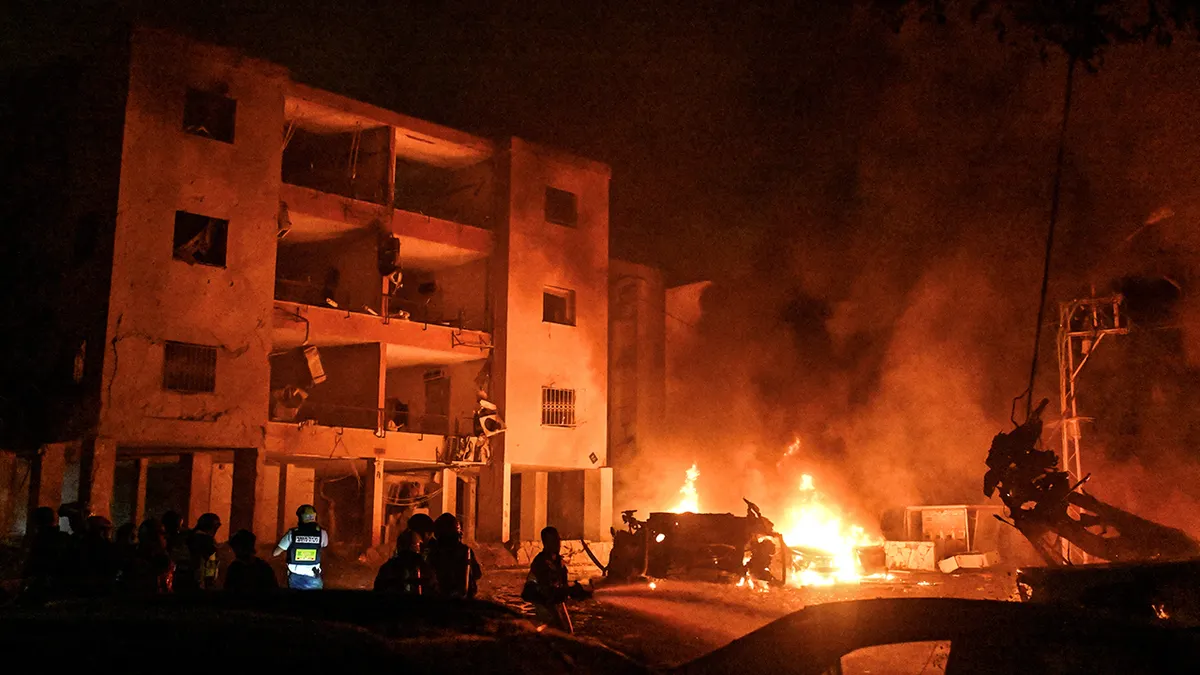
This morning, the Israeli city of Haifa witnessed extensive damage to numerous vehicles and significant destruction of buildings following an Iranian missile attack targeting the city. The attack resulted in multiple injuries, creating a state of panic among the residents.
The missile strike comes at a sensitive time, as tensions in the region escalate due to increasing political and military crises. Israeli authorities have confirmed they are assessing the damage and providing assistance to those affected.
Details of the Incident
According to initial reports, Iranian missiles targeted several locations in Haifa, leading to the destruction of both private and public vehicles. Some buildings sustained severe damage, prompting the intervention of rescue and firefighting teams. Local authorities confirmed that the attack was unexpected and that Israeli air defenses were unable to fully counter it.
Simultaneously, Iran claimed responsibility for the attack, stating that it was a response to the escalation of Israeli strikes against Iranian targets in the region. This escalation reflects the deteriorating relations between Iran and Israel, which have seen increasing tensions in recent years.
Background & Context
Historically, Iranian-Israeli relations have been marked by ongoing tensions, with Iran viewing Israel as a primary enemy in the region. The mutual attacks between the two sides are not new, but they have seen a notable escalation recently. In past years, several Israeli cities have been targeted by missile attacks from armed factions supported by Iran, further heightening regional tensions.
These events occur at a time when the region is grappling with multiple crises, including conflicts in Syria and Yemen, complicating the security situation. Additionally, tensions between Iran and the United States cast a shadow over the circumstances in the region, as both Tehran and Washington seek to bolster their influence.
Impact & Consequences
The missile attack on Haifa could have serious implications for regional security. This escalation may provoke military reactions from Israel, increasing the likelihood of a large-scale conflict. Moreover, repeated attacks could strengthen alliances between Arab nations and Israel in the face of the Iranian threat.
Domestically, these events may impact Israeli public opinion, as citizens might feel heightened concerns regarding personal security. The Israeli government may find itself under increasing pressure to take stringent actions against Iran, potentially leading to further military escalation.
Regional Significance
These events signal a rise in tensions in the region, which could affect stability in neighboring countries. Arab nations facing internal crises may find themselves in a difficult position, needing to manage the repercussions of the Iranian-Israeli conflict.
Additionally, these events may influence relations between Arab countries and Iran, as some nations might seek to enhance their cooperation with Israel in confronting Iranian threats. At the same time, these developments could lead to increased tensions between Palestinian factions and Israel, complicating the situation in the occupied territories.
In conclusion, the Iranian missile attack on Haifa represents a serious escalation in the regional conflict and reflects the growing tensions between Iran and Israel. The current situation requires close monitoring by the international community, as any further escalation could have dire consequences for security and stability in the region.