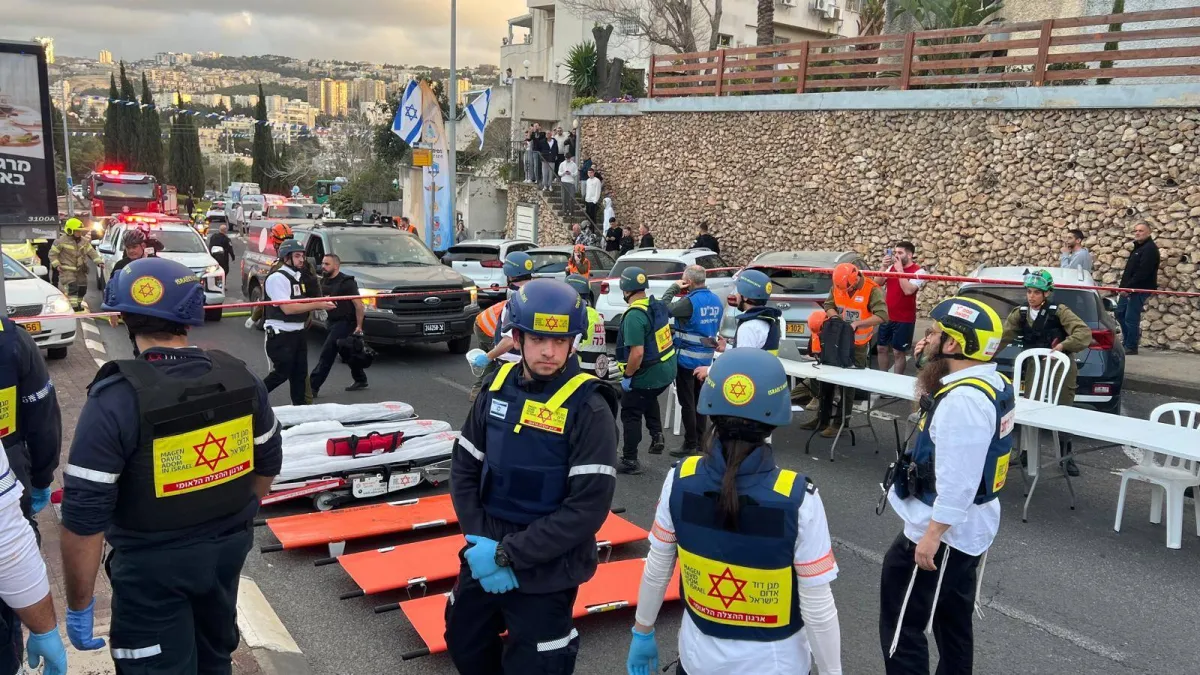
The Israeli army and Israeli ambulance services reported on Sunday that an Iranian missile struck a residential building in Haifa, resulting in multiple injuries. This incident is part of the escalating tensions between Iran and Israel, highlighting the security challenges faced by the latter.
The Israeli army confirmed in a statement to Agence France-Presse that the building was directly hit by an Iranian missile. In a separate statement, the Israeli ambulance service (Magen David Adom) reported that four people were injured in this attack, while Channel 14 reported that the number of injured had reached nine, including one serious case.
Details of the Incident
The attack on Haifa comes at a sensitive time, as tensions between Iran and the United States intensify, with the deadline of 48 hours set by U.S. President Donald Trump approaching. This deadline served as a warning to Tehran, raising questions about whether it will be followed by larger U.S. military actions.
The recent escalation reflects a state of instability in the region, with observers expecting these events to lead to potential military escalation. Trump's recent statements, threatening to target vital facilities in Iran, heighten tensions and raise fears of a broader escalation.
Background & Context
Historically, relations between Iran and Israel have been marked by ongoing tensions, with Israel viewing Iran as an existential threat. The reciprocal missile attacks reflect the intensification of these tensions, especially amid the political and economic crises facing Iran.
Israeli military operations against Iranian targets in Syria and Lebanon, along with Iranian support for armed groups in the region, complicate efforts to achieve stability. The recent escalation may have far-reaching implications for regional security.
Impact & Consequences
The attack on Haifa could provoke military responses from Israel, potentially escalating the conflict in the region. Additionally, military escalation may affect relations between the United States and its allies in the region, particularly in light of Iranian threats.
Increasing tensions could lead to a rise in oil prices, impacting the global economy. Furthermore, any military escalation could open the door to broader conflicts in the region, exacerbating civilian suffering.
Regional Significance
The impact of this incident extends to neighboring Arab countries, potentially increasing tensions between Arab states and Iran. Countries experiencing internal conflicts may find themselves in a difficult position if the situation escalates.
This incident may also reopen discussions about regional security and cooperation among Arab states to confront Iranian threats. Under these circumstances, it is crucial for Arab nations to remain united in facing security challenges.