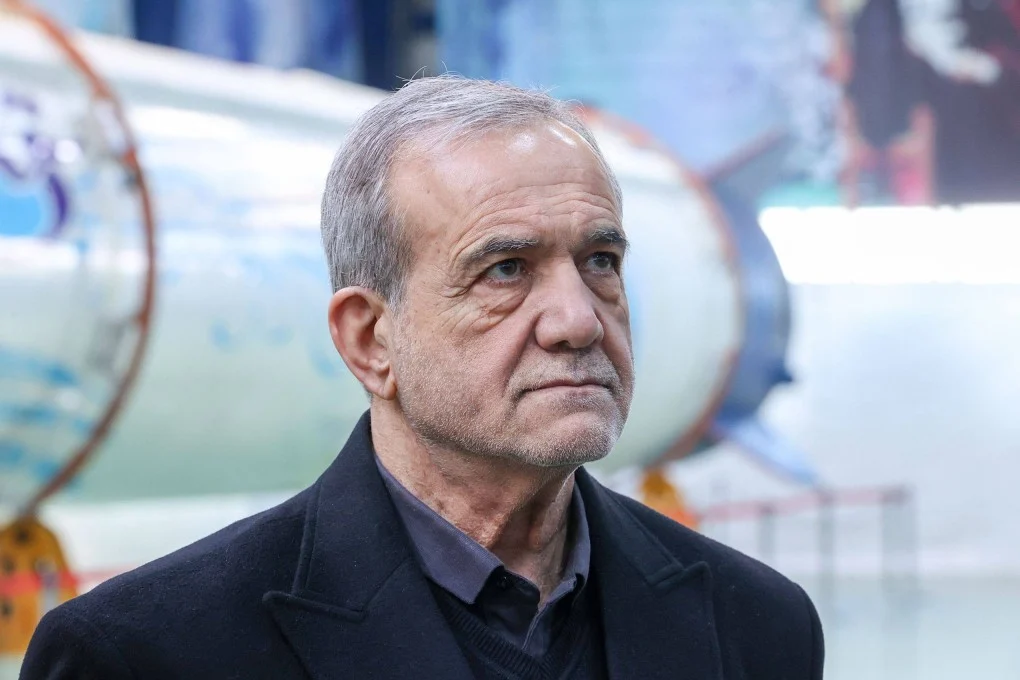
Iranian President Masoud Beizhekin criticized the US war against his country in an open letter to the American people, pointing out that it is a futile endeavor that costs the United States dearly. In his message, he affirmed that the world today stands at a crossroads, where continuing down the path of confrontation has become more expensive and unsuccessful than ever before.
This letter comes at a time when relations between Iran and the United States are under severe strain, with escalating rhetoric from both sides. Beizhekin noted that history has seen many aggressors against Iran, but what remains of them are distorted names in the pages of history, reflecting the resilience of his country in the face of challenges.
Details of the Event
In his letter, Beizhekin described the US war against Iran as unjustified, indicating that its costs are not limited to the financial aspect but also encompass humanitarian and social dimensions. He pointed out that the continuation of this war would only exacerbate crises in the region and increase the suffering of the Iranian people.
The Iranian president also called for dialogue and understanding instead of escalation, emphasizing that peaceful solutions are the optimal way to address complex issues between nations. These statements come at a time of increasing international concern regarding Iran's nuclear activities and growing US pressure on Tehran.
Background & Context
The history of Iranian-American relations is fraught with tensions, beginning with the Islamic Revolution in 1979 and the subsequent severing of diplomatic ties. Since then, relations between the two countries have seen continuous escalation, with the United States imposing strict economic sanctions on Iran, negatively impacting the Iranian economy and exacerbating social crises.
Despite diplomatic efforts made in recent years, including the 2015 nuclear agreement, the US withdrawal from the agreement in 2018 brought relations back to square one and heightened tensions. In this context, Beizhekin's message serves as a call to consider peaceful alternatives to military escalation.
Impact & Consequences
The Iranian president's message carries significant implications at both the regional and international levels. It reflects Iran's desire to open channels of dialogue with the United States, despite the substantial challenges it faces. It also suggests the possibility of changes in US policy towards Iran if issues are addressed more diplomatically.
On the other hand, this message may elicit varied reactions from the US administration, with some viewing it as an attempt to manipulate American public opinion, while others may see it as an opportunity for negotiation. In any case, the impact of this message will extend beyond Iran's borders to encompass the entire region.
Regional Significance
Arab countries are significantly affected by the tensions between Iran and the United States, as these relations play a crucial role in the stability of the region. Military escalation could lead to increased tensions in countries such as Iraq, Syria, and Lebanon, where Iranian influence is strong.
At the same time, Beizhekin's call for dialogue may open the door for Arab countries to play a mediating role in alleviating tensions, contributing to regional stability. Thus, the message carries within it hope for the possibility of achieving peace in a region suffering from ongoing conflicts.