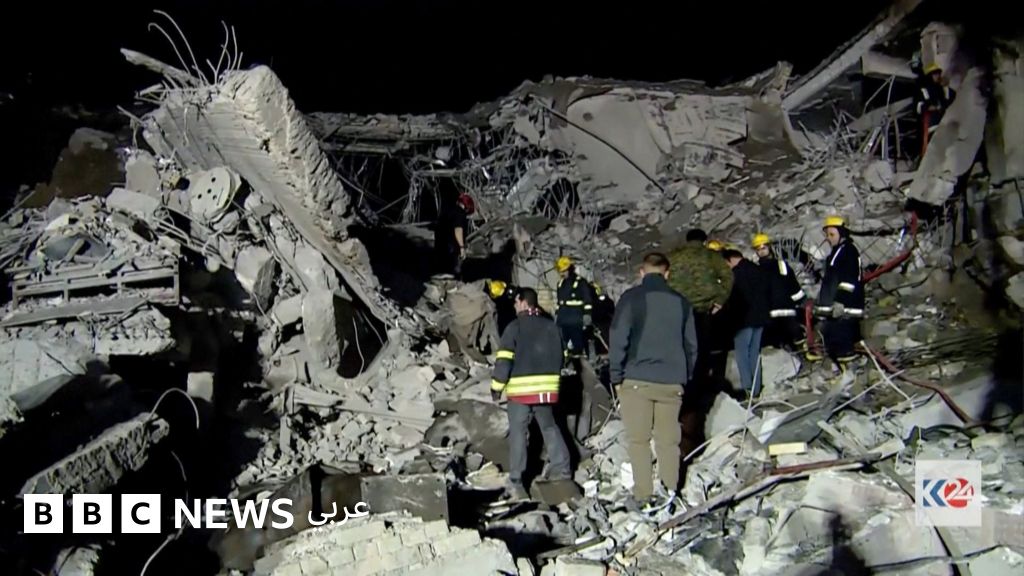
The Iranian Red Crescent has revealed that US-Israeli attacks have led to the damage of over 81,000 housing units across the country. In its statement, the Red Crescent clarified that the damages also include targeting medical facilities, schools, and emergency response teams, reflecting a blatant violation of international humanitarian laws that protect civilians during conflicts.
The Iranian Red Crescent, a humanitarian organization known for its assistance in crises, condemned these assaults as unacceptable and called on the international community to intervene to stop the violence and protect innocents. This statement comes at a time of notable escalation in tensions between Iran on one side and the United States and Israel on the other, amidst reports of increased airstrikes targeting critical infrastructure.
Since 2018, the United States has implemented a maximum pressure policy against Iran, effectively dismantling the 2015 nuclear agreement. This policy has sparked rising tensions in the region, where actions such as the US withdrawal from the nuclear agreement and the imposition of severe sanctions have left Iran feeling defensive. In retaliation, Iran has conducted several military operations targeting American interests and allied sites.
Historically, the region has seen numerous conflicts used as a means to achieve geopolitical goals, often with civilians being the main victims in these contexts. The recent attacks described in the Red Crescent reports can be understood within this broader framework of ongoing conflicts, where civilians are perceived as easy targets used to solidify military and political influence.
The consequences of these attacks could be far-reaching, not only in terms of physical damage but also in terms of the psychological and social impact on civilian populations. Often, such attacks lead to mass displacement, increasing pressure on local resources and complicating relief efforts.
When discussing the regional impacts, events in Iran are closely linked to the situation in neighboring countries, such as Iraq and Syria. Iran has often played a crucial role in steering events in those countries, making the Iranian government a target of numerous targeted attacks. In this context, some view that Western powers are trying to tighten the grip on Iran in an attempt to undermine its influence in the region.
In addition to the military aspect, many point out that the Iranian economy is suffering severely due to these policies and pressures. The Iranian government may need to adopt new strategies to ensure civilian safety and reduce conflicts, with an emphasis on collaborating with the international community to resolve crises.
Ultimately, these events serve as a painful lesson about the cost of armed conflict and its devastating impacts on innocent lives, calling for the urgent protection of civilians and states' adherence to international laws.