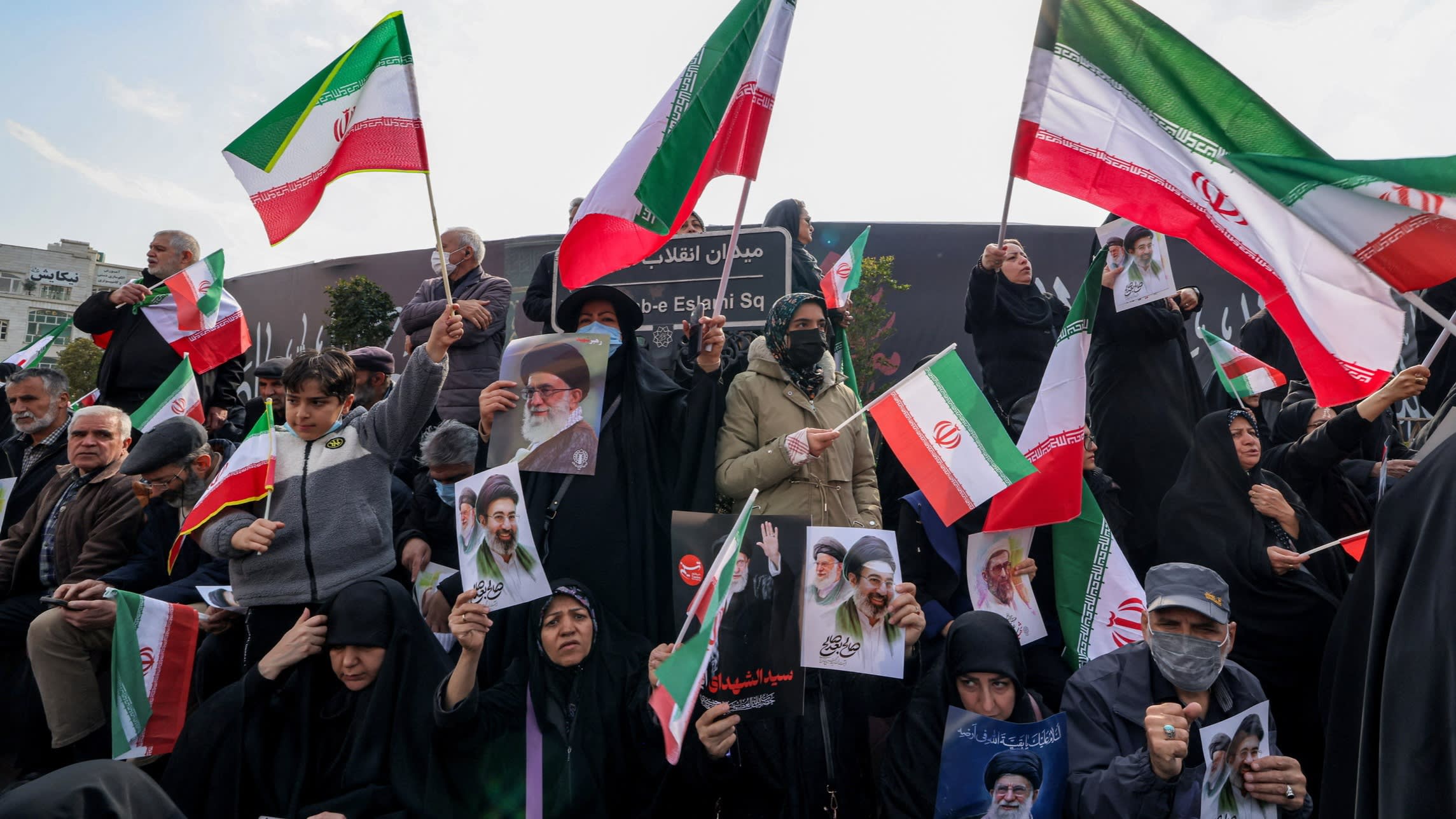
Amid rising tensions between Iran and both the United States and Israel, it seems that the Iranian regime has resorted to utilizing its supporters and armed volunteers to strengthen its grip on the Iranian streets. These individuals are patrolling cities while managing security checkpoints, reflecting the regime's response to internal and external crises.
The battles fought by the Iranian army under complex circumstances require the presence of additional forces from the regime's supporters, as this move is part of a strategy to preserve the regime and contain any disturbances that could lead to instability. These maneuvers demonstrate that the Iranian regime is determined to use all possible means to ensure its survival and enhance its military and political prowess.
Details of the Event
In recent weeks, Iran has focused on recruiting its supporters, as well as armed volunteers, to confront external pressures and potential threats. Reports indicate that government-backed groups have begun to conduct security patrols in various major cities, thereby reinforcing state presence in key areas.
This comes at a time when the Iranian regime aims to improve its image on the international stage, especially as negotiations over the Iranian nuclear program remain stalled. In this context, these steps are seen as part of a broader plan to enhance internal control and tighten the screws on opposition.
Historical Context and Background
Historically, the Iranian regime has always faced challenges from both within and outside. Since the Islamic Revolution in 1979, Iran has pursued a clear policy of confrontation, and several perceptions have emerged regarding the necessity to bolster internal security in the face of numerous external threats. Increased hostility from the United States and Israel adds a new pressure element that necessitates an optimal response from the Iranian regime to maintain its stability.
In recent years, there has been a surge in military operations against Israeli and American interests in the region, which complicates the internal situation in Iran. This has been met with rising popular protests and debates regarding the political and economic situation in the country, further escalating the urgent need to bolster security presence on the streets.
Implications and Effects
The impact of these steps on the internal situation in Iran could have a dual aspect. On one hand, this policy might enhance the government's ability to suppress any opposition movements or waves of protests that may erupt, creating an atmosphere of anxiety and chaos. On the other hand, these movements could fuel anger among the Iranian people, especially if the public feels that the security state seeks to impose its control increasingly over their daily lives.
These dynamics are expected to impact the broader Iranian situation, as they may contribute to increased polarization within society, undermining trust between the government and the people. If the escalation continues, these policies may end up harming the regime more than benefiting it.
Impact on the Arab Region
The Iranian regime continues to be a focal point in the geopolitical relations within the Middle East. Recent moves, including the increased number of security patrols and the use of supporters to strengthen control, may have repercussions in the neighboring Arab countries. As pressure on Iran increases, this influence may spill over into countries such as Iraq, Lebanon, and Syria, where the Iranian regime supports allied factions and parties.
The current situation imposes a delicate balance in Arab-Iranian relations, along with the necessity to closely monitor developments in Iran, as the fate of that region remains contingent on the evolution of events in Tehran.