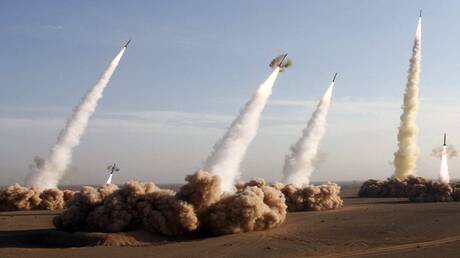
In the early hours of Sunday, the Iranian Revolutionary Guard executed phase 86 of Operation 'True Promise 4', where precision strikes targeted both Israel and U.S. military bases deployed in the Gulf region. This move comes amid rising tensions between Iran and the United States, raising concerns about a potential larger military escalation in the area.
This operation is part of Iran's military strategy aimed at enhancing its defensive and offensive capabilities, especially under the pressure of international sanctions. The Revolutionary Guard indicated that this operation reflects Iran's commitment to defending its national interests and national security.
Details of the Operation
The Iranian Revolutionary Guard announced the execution of phase 86 of Operation 'True Promise 4', which includes precision strikes targeting specific sites in Israel and U.S. military bases. The operation was carried out using advanced technologies, showcasing Iran's progress in military technology.
This operation follows a series of escalating tensions between Iran and the United States, as both sides have increased military movements in the region. The Revolutionary Guard confirmed that these operations are a response to what it described as American and Israeli threats against Iran.
Background & Context
Historically, Iranian-American relations have seen increasing tensions since the Islamic Revolution in 1979. The economic and political sanctions imposed on Iran have bolstered the Revolutionary Guard's position as a key force in defending the country. In recent years, Iran has ramped up its military activities in the region, causing concern among neighboring countries and the United States.
Operation 'True Promise 4' is not the first of its kind, as the Revolutionary Guard has previously conducted similar operations in past years, reflecting the continuity of Iran's strategy in facing military challenges. These operations are part of enhancing Iran's military capabilities and asserting its presence in the region.
Impact & Consequences
The Iranian military escalation could provoke reactions from the United States and its allies in the region, increasing the likelihood of armed conflicts. Iranian military movements may affect regional stability, especially with the presence of American bases in Gulf countries.
Moreover, these operations could heighten tensions between Iran and Israel, as the latter considers any threat from Iran a danger to its national security. The military escalation may negatively impact humanitarian and economic conditions in the region, necessitating international intervention to mitigate the escalation.
Regional Significance
The Iranian military operations impact regional security, as neighboring Arab countries are increasingly concerned about the rise of Iranian military activities. These operations may lead to increased sectarian and political divisions in the region, complicating peace and stability efforts.
Additionally, military escalation could affect the Arab economy, particularly in Gulf countries that rely on security stability to attract investments. Under these circumstances, Arab nations must take proactive measures to enhance their security and stability.
The execution of phase 86 of Operation 'True Promise 4' reflects a new escalation in regional tensions, warranting close monitoring by the international community. As Iran seeks to bolster its military capabilities, the question remains regarding how the United States and its allies in the region will respond.