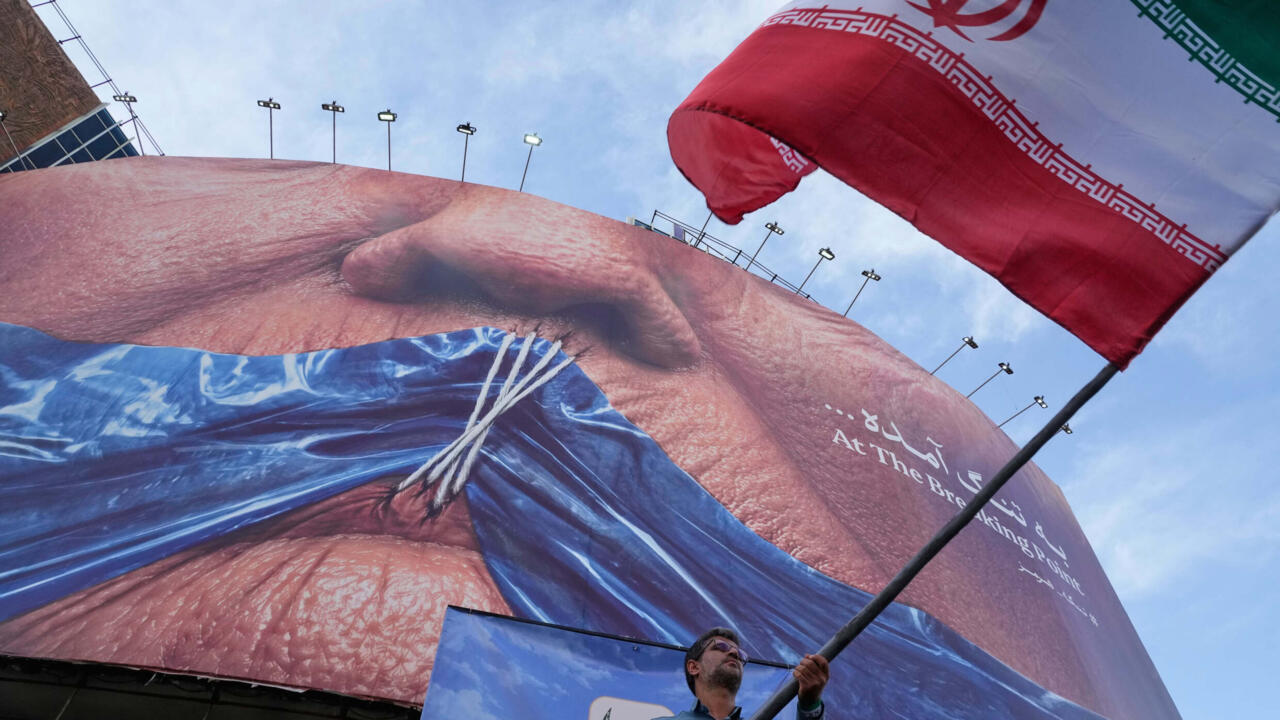
In a new military escalation, the Iranian Revolutionary Guard announced on Thursday that it targeted a US airbase, responding to what it described as an American attack on Iranian drones near the Strait of Hormuz. This escalation follows hours after US President Donald Trump denied reports that he was close to reaching an agreement with Tehran to halt the conflict.
These events reflect the increasing tensions between the United States and Iran, as a US official confirmed that the military shot down four Iranian drones and bombed a ground control center in Bandar Abbas that was preparing to launch a fifth drone. The official noted that these actions were calculated and aimed solely at maintaining the fragile ceasefire agreed upon last April.
Details of the Incident
According to the Iranian Tasnim news agency, the Revolutionary Guard targeted the US airbase from which the strikes on the control center in Bandar Abbas were launched. In contrast, Kuwait confirmed that it was dealing with missile and drone attacks, without indicating the source of these attacks.
The Iranian Foreign Ministry condemned the US strikes, emphasizing that these violations pose a threat to the ceasefire. Ministry spokesperson Ismail Baqaei stated that Iran would take all necessary measures to defend its national sovereignty, criticizing US threats against Iran and regional countries.
Background & Context
These developments come at a sensitive time, as relations between the United States and Iran have been increasingly strained since Washington's withdrawal from the nuclear agreement in 2018. Since then, the United States has imposed severe sanctions on Iran, exacerbating the country's economic and political conditions.
At the same time, Iran is seeking to enhance its influence in the region, complicating relations with its neighbors and Western countries. The recent escalation reflects a state of instability that could impact both regional and global security.
Impact & Consequences
This escalation could worsen conditions in the region, with rising fears of an outbreak of full-scale military conflict. Additionally, the continuation of these tensions may negatively affect oil prices, which have seen notable increases in recent days.
Furthermore, these events could impact peace efforts in the region, where attempts have been made to reach a comprehensive agreement between Iran and Western countries. The military escalation could undermine these efforts and increase uncertainty in global markets.
Regional Significance
Arab countries neighboring Iran, such as Kuwait and Oman, find themselves in a sensitive position, as they could be directly affected by any military escalation. These countries rely on regional stability to ensure their economic and political security.
Ultimately, hope remains pinned on diplomacy to resolve disputes, but the current military escalation complicates matters and makes it difficult to achieve any progress in this direction.