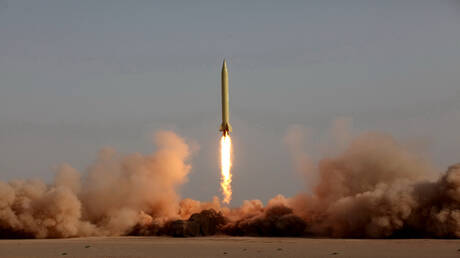
The Iranian Revolutionary Guard announced on Wednesday the execution of a new military operation targeting 25 US and Israeli sites, as part of the 100th wave of Operation 'Promise of the Truth 4'. This move occurs during a sensitive time marked by increasing tensions between Iran and its allies on one side, and the United States and its allies on the other.
According to official statements, the Revolutionary Guard has warned Washington's allies in the region of potential consequences, indicating that these operations are part of defending Iranian interests in the area. The spokesperson for the Revolutionary Guard described these operations as a response to what he termed ongoing threats from the United States and Israel.
Details of the Operation
The 100th wave of 'Promise of the Truth 4' involves targeting military and security sites that Iran considers a direct threat to its national security. These operations have been executed using advanced technologies, reflecting the Revolutionary Guard's capability to carry out complex operations in diverse environments.
The Revolutionary Guard also indicated that these operations are not merely reactions but part of a long-term strategy aimed at enhancing Iranian influence in the region. These operations were conducted at a time when tensions between Iran and the United States are escalating, especially following Washington's withdrawal from the nuclear agreement.
Background & Context
Historically, relations between Iran and the United States have experienced increasing tensions since the Islamic Revolution in 1979. These tensions have led to a series of regional conflicts, as Iran seeks to bolster its influence in Iraq, Syria, and Lebanon, raising concerns among Washington's allies in the region.
In recent years, Iran has enhanced its military capabilities, including the development of ballistic missile programs, making it one of the major military powers in the Middle East. Additionally, Iranian support for militias in Iraq, Syria, and Lebanon reflects its strategy to counter American and Israeli influence.
Impact & Consequences
These operations indicate a potential escalation in the regional conflict, which may provoke reactions from the United States and its allies. These developments are expected to heighten tensions in the region, potentially impacting regional stability.
Furthermore, these operations could lead to a shift in the strategies of other countries in the region, as some may seek to strengthen their alliances to counter Iranian threats. This impact could have repercussions on both regional and global security, especially given the current tensions.
Regional Significance
These events are particularly significant for Arab countries, as they may lead to the escalation of existing conflicts in the region. Arab nations closely allied with the United States may find themselves in a difficult position should tensions rise between Iran and the West.
Additionally, these operations could affect global oil markets, as any military escalation in the region could lead to rising oil prices, impacting the global economy as a whole.
In conclusion, the current escalation between Iran and the United States and its allies signals a new phase of tensions in the region. It is crucial to closely monitor developments, as any escalation could lead to serious implications for security and stability in the Middle East.