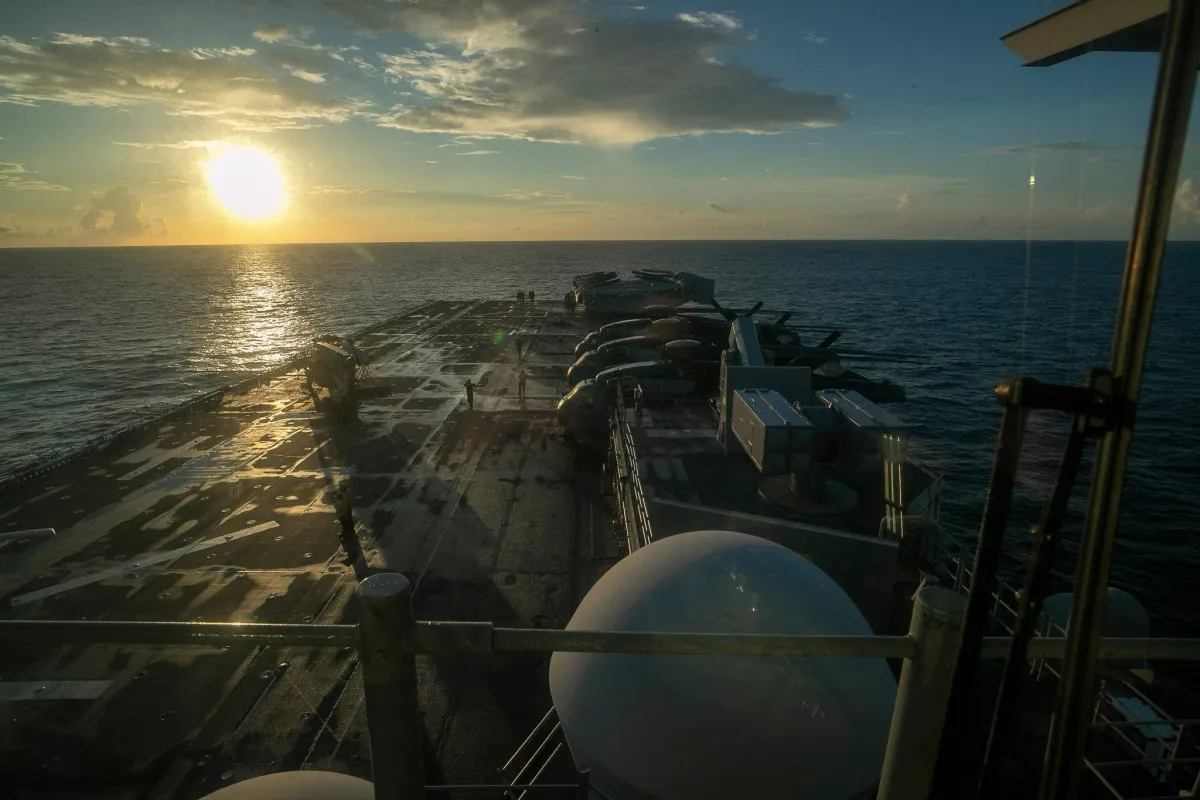
The Iranian Revolutionary Guard Corps (IRGC) targeted the US amphibious ship 'LHA 7' today, compelling it to retreat towards the southern Indian Ocean. This action is part of rising tensions between Iran and the United States, with military activities in the region noticeably increasing.
Additionally, reports indicate that the IRGC also targeted a container ship believed to be Israeli, carrying the code (SDN7), although its location has not been disclosed. These events occur at a time when the Middle East is witnessing escalating military confrontations, raising concerns about regional stability.
Details of the Incident
Iran's Fars News Agency reported that several explosions were heard at the South Pars petrochemical complex in Asaluyeh, indicating a surge in military activities. Earlier today, an airstrike in the Iranian city of Qom resulted in at least five fatalities, according to the state-run Iran daily. Iran has not provided total casualty figures since the onset of the war, reflecting a state of ambiguity regarding human losses.
In the capital, Tehran, the city experienced a series of airstrikes, with the sounds of explosions echoing through the night as fighter jets flew at low altitudes. This escalation comes at a sensitive time, as tensions between Iran, the United States, and Israel are on the rise.
Background & Context
The roots of the current tensions can be traced back to ongoing conflicts in the region, with military activities increasing since the outbreak of war with the United States and Israel on February 28. The IRGC has announced that it is completing preparations to impose a 'new navigation system' through the Strait of Hormuz, which has become nearly closed since the conflict began. This situation has disrupted the passage of approximately 20% of global oil and gas shipments.
In a related context, the Oman News Agency reported that Iran and Oman discussed ways to ensure 'smooth transit' through the strait, reflecting the importance of this vital corridor for global economies. Iranian lawmakers have also proposed imposing fees on vessels passing through the strait, which could complicate the situation further.
Impact & Consequences
Concerns are growing that these events could lead to a greater escalation in the conflict between Iran, the United States, and Israel, significantly affecting regional stability. Warnings from the IRGC about the conditions in the Strait of Hormuz not returning to their previous state indicate that matters may be heading towards further escalation.
Moreover, the mutual threats between the United States and Iran could lead to heightened military tensions, reflecting a state of instability in the region. This situation may impact oil prices and global markets, as many countries rely on the passage of oil shipments through this strait.
Regional Significance
These developments directly affect Arab countries, many of which depend on importing oil and gas from this region. The escalation of tensions could lead to rising energy prices, impacting Arab economies and increasing pressure on governments.
Any military escalation could also affect regional security, raising concerns about the stability of neighboring countries. Under these circumstances, Arab nations must take proactive steps to ensure their security and stability in the face of growing challenges.
Recent events indicate a rise in tensions in the region, necessitating close monitoring by the international community. Relevant parties must work towards de-escalating the situation and avoiding military escalation that could lead to dire consequences.