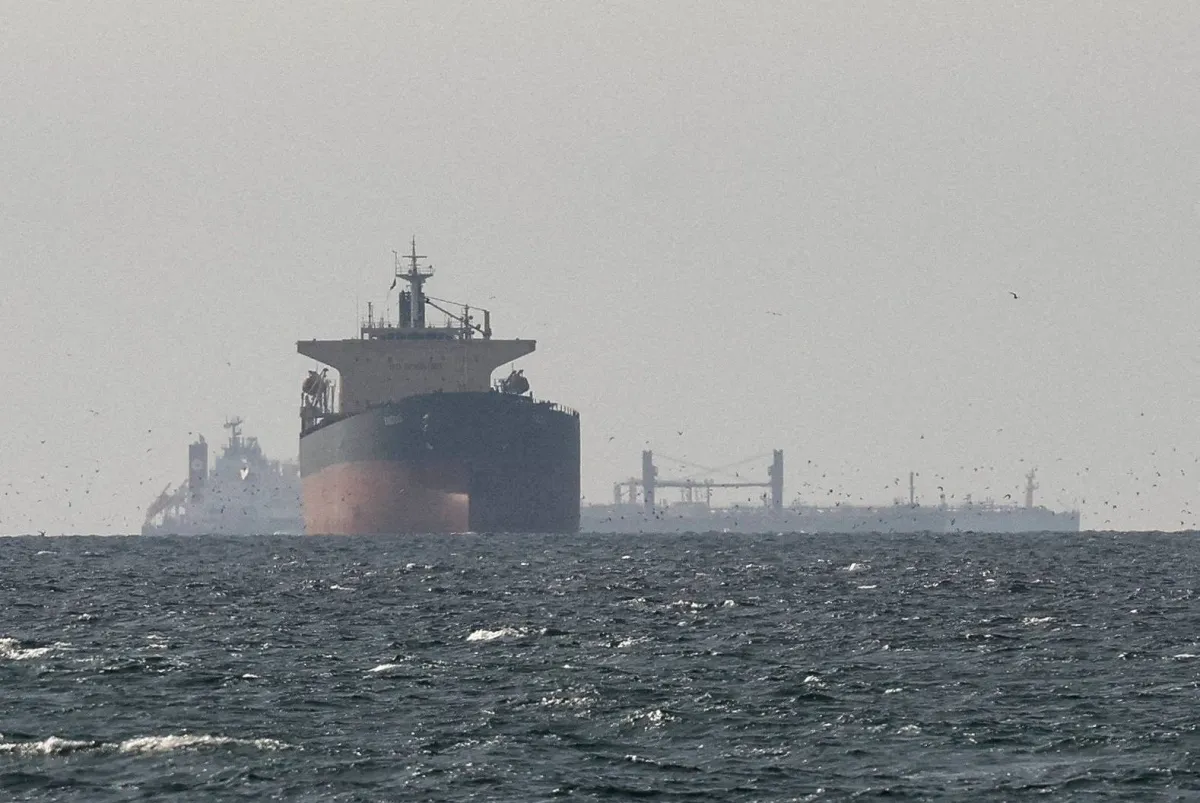
Asian countries are experiencing a severe energy crisis as a result of the Iranian war, with crude oil shipments witnessing a significant decline and a scarcity of alternatives. This was confirmed by Jean Maïnière, the head of Kepler, in an interview with the French Press Agency, indicating that Asia will be the most affected region at this time.
The war, which erupted on February 28 due to U.S.-Israeli strikes on Iran, has led to a near halt in shipping traffic through the Strait of Hormuz, a vital passageway for about one-fifth of global oil supplies, along with large quantities of natural gas. These events have caused a strong shock in global energy markets, leading to price increases for consumers worldwide.
Event Details
Maïnière explained that Asia lacks sufficient energy resources to compensate for this shortfall, stating, "In China, as well as in major countries like the Philippines and Indonesia, there are not enough alternatives; making it a real energy crisis." He noted that the near-complete closure of the Strait of Hormuz has prompted governments to take extraordinary measures, such as the Philippines declaring a national emergency in the energy sector, adding, "The situation is extremely difficult for Asia, and we are not optimistic if it continues this way."
Maïnière also pointed out that the flow of crude oil to Asia is nearly halted currently, and there are no viable alternatives for energy imports from the Middle East amid depleting stocks. Despite the anticipation of an attack on Iran, the timing and duration of the conflict came as a surprise, especially for Asia, which is now facing a real energy crisis.
Background & Context
Kepler, based in Brussels, was established in 2014 and is considered one of the leading companies specializing in data analysis and global shipping tracking. Since the outbreak of the war, Kepler has been closely monitoring shipping traffic in the Strait of Hormuz. Although Iranian military officials have announced control over the waterway and targeting "hostile" ships, some vessels still risk crossing. A total of 17 cargo ships crossed the strait over the weekend, marking one of the busiest crossing days since March 1. However, the total crossings did not exceed 196 ships during the month until Monday evening, a sharp decline compared to pre-war levels.
Among these vessels, most of the 120 oil and gas tankers were heading east out of the strait. Kepler relies on satellites, drones, and other advanced technologies to track shipping movements, allowing it to understand what is actually happening, including instances of ships disappearing.
Impact & Consequences
Satsuki Katayama, Japan's finance minister, warned that the government is prepared to respond "on all fronts" to market fluctuations amid speculative movements in the currency and crude oil futures markets. She confirmed that fluctuations in foreign exchange rates affect people's lives, highlighting Tokyo's concern over the yen's decline once again.
Separately, data from Japan's Ministry of Economy, Trade, and Industry showed a 2.1 percent month-on-month decline in industrial output during February, contrary to analysts' expectations. Retail sales also fell by 0.2 percent month-on-month, reflecting the crisis's impact on the Japanese economy.
Regional Significance
Chinese stocks have emerged as a relatively safe haven for investors during March amid the ongoing war in the Middle East, despite pressures on the markets due to the closure of the Strait of Hormuz. Nevertheless, global financial institutions have shown increasing optimism towards the Chinese market, reflecting its relative superiority amid regional turmoil.
At the same time, the UAE and Qatar have raised fuel prices in the country by varying degrees, reflecting the impact of rising oil prices on the Gulf economy. This increase comes at a time when the region is facing significant challenges due to political and economic crises.
In conclusion, the current crisis in Asia reflects the effects of the Iranian war on global energy markets, necessitating urgent actions by governments to mitigate the severity of this crisis.