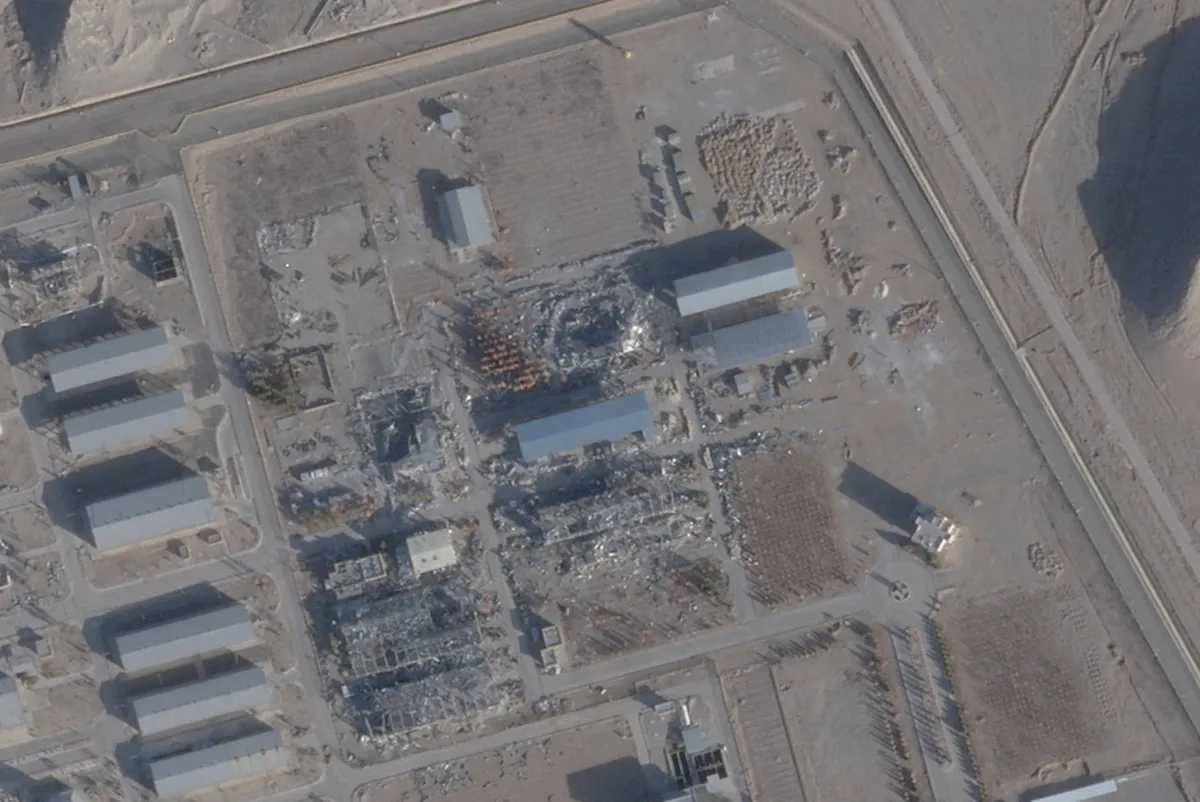
Amid escalating U.S. and Israeli attacks, calls within Iran for acquiring a nuclear bomb are increasing. The debate has shifted from closed circles to public discourse, reflecting changes in the balance of power within the Iranian regime.
Information from within the Iranian establishment indicates that the death of Supreme Leader Ali Khamenei at the onset of the war on February 28 has strengthened the position of the hardline faction and increased the influence of the Revolutionary Guard in determining the course of nuclear policy. Although Western countries have long considered that Iran seeks to possess a nuclear weapon, Tehran denies this, relying on Khamenei's fatwa prohibiting nuclear weapons and its membership in the Nuclear Non-Proliferation Treaty.
Details of the Current Situation
A senior Iranian source reported that Iran has not made an official decision to change its nuclear doctrine, but influential voices within the regime have begun to question the current policy and call for a review. The escalation of U.S. and Israeli military actions may have altered the calculations of some decision-makers, as abandoning the nuclear option or adhering to the treaty is seen as not yielding clear benefits.
Recently, calls within official media for withdrawing from the Nuclear Non-Proliferation Treaty have increased, alongside the proposal of directly pursuing the acquisition of a bomb, a matter that was considered taboo in public discourse until recently. The Tasnim news agency, affiliated with the Revolutionary Guard, published an article calling for a swift withdrawal from the treaty while maintaining a civilian nuclear program.
Context and Background
Historically, Tehran has used the threat of withdrawal from the Nuclear Non-Proliferation Treaty as a bargaining chip during its negotiations with the West, without ever following through. With the current debate intensifying, there seems to be a growing desire to reassess nuclear policy, especially with increasing military pressures.
Earlier this month, Iranian state television aired an interview with conservative commentator Nasser Torabi, who indicated that public opinion is calling for a move towards acquiring nuclear weapons. The sources confirmed that the nuclear file has become a topic of discussion within ruling circles, with a clear divide between the hardline faction and some political elites regarding the feasibility of pursuing the bomb option.
Implications and Effects
Analyses suggest that Iran has sought over the past years to reach a threshold state, meaning possessing the technical capability to produce a nuclear weapon quickly when needed, without officially declaring it. Leaders of the Revolutionary Guard have previously warned that threats to the regime's survival could push towards adopting the bomb option, a scenario that is becoming more likely amid the current war.
The absence of Khamenei, along with the death of Ali Larijani, who tended to restrain the hardliners, has made it difficult to balance this trend within the regime. While the continuation of adherence to the fatwa after Khamenei's death remains uncertain, there are indications that it may persist unless revoked by the new Supreme Leader Mostafa Khamenei.
Impact on the Arab Region
The Arab region is significantly affected by the rising nuclear tensions in Iran, as any shift in Iranian nuclear policy could lead to an arms race in the region. Arab countries are closely monitoring developments, considering that any nuclear threat from Iran poses a danger to their national security.
In conclusion, Iran appears to be undergoing a sensitive phase that requires a delicate balance between internal and external pressures. As calls for acquiring a nuclear bomb escalate, the future of Iranian nuclear policy will remain a subject of ongoing debate and discussion in political and media circles.