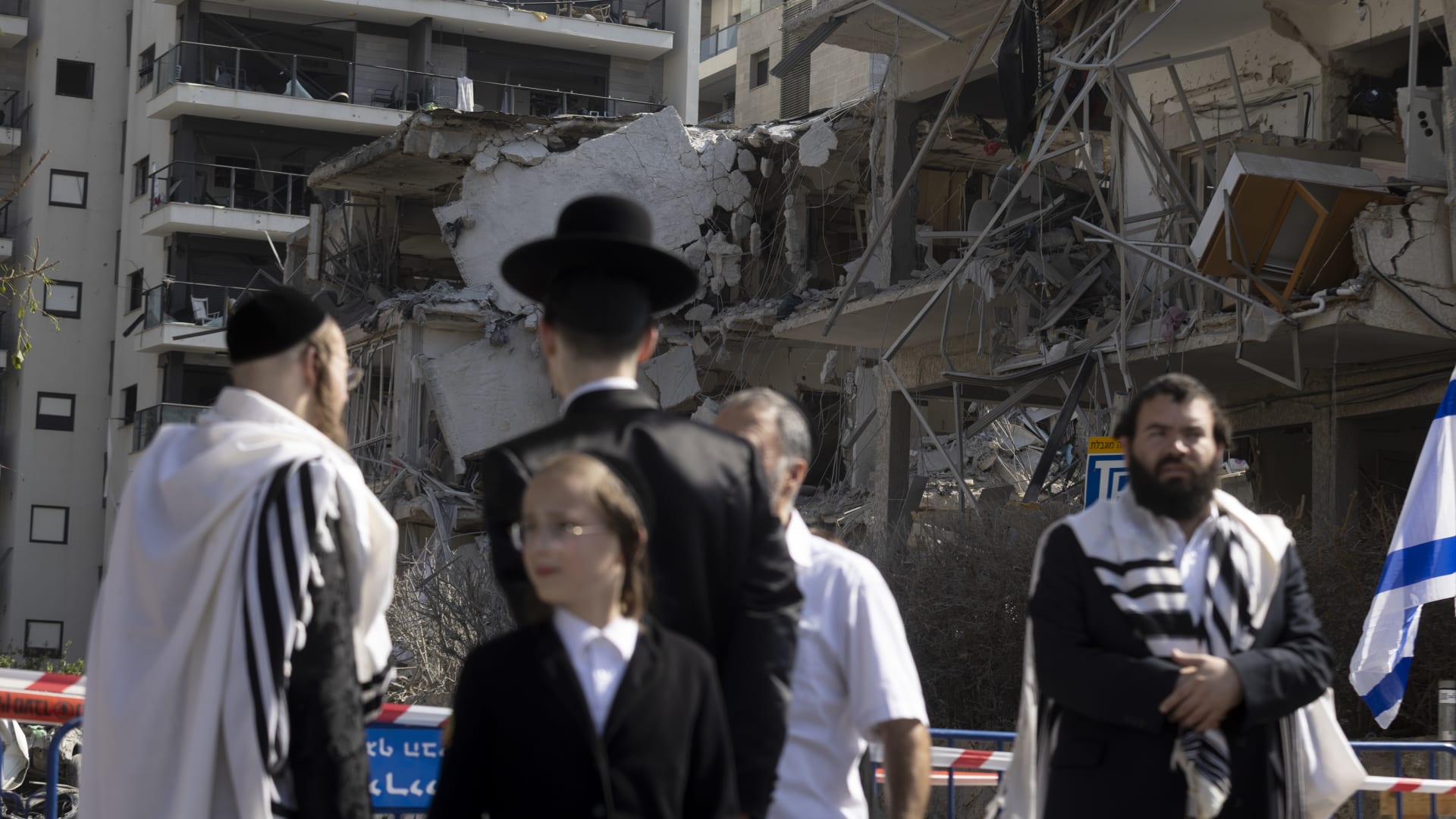
Iran has utilized ballistic missiles equipped with cluster munitions in the ongoing war, exposing vulnerabilities in Israeli air defense systems and resulting in casualties within Israel. As the war led by the United States and Israel against Iran enters its fourth week, the air battlefield has witnessed a tactical shift characterized by Iran's increasing reliance on ballistic missiles with cluster warheads. This development has raised questions about the ability of Israeli air defense systems to cope with this type of weapon, especially after reports of numerous submunitions falling in residential and commercial areas, leading to casualties and material damage.
To understand this battlefield development, it is essential to first dissect the nature of this weapon and understand what cluster munitions are and how they differ from conventional missiles. Unlike a conventional warhead that explodes as a single mass upon impact with the target, a cluster warhead relies on an "early detonation" mechanism. According to a report by the Associated Press, these missiles are programmed to open their outer casing at an altitude ranging from 7 to 10 kilometers above the ground.
Details of the Event
Once opened, they scatter dozens of small submunitions—some weighing between 2 to 5 kilograms—over a wide geographical area that may extend for several kilometers. Based on this complex detonation mechanism, the most pressing question arises: why do advanced interception systems struggle to counter them?
The tactical dilemma lies in the timing of the interception. Missile expert Tal Inbar explains in an interview with CNN that defense systems like the Arrow are designed to intercept the missile as a single mass outside the atmosphere or in its upper layers. Inbar adds that if the missile is not destroyed before it opens, or if it is partially hit after releasing its payload, the task becomes exceedingly complicated, as systems designed for low altitudes (like the Iron Dome) cannot track and intercept dozens of small targets falling at high speeds simultaneously.
Background & Context
Experts have pointed out to The Guardian the economic aspect and the war of "attrition," noting that it is neither militarily nor economically feasible to launch an expensive intercept missile to take down each small submunition individually. This raises two important questions: what exactly does Iran possess in terms of these missiles? And how has it employed them in the current battle?
Military analysts describe Iran's missile program as the largest in the Middle East. While precise and confirmed details about all models equipped with cluster munitions are not available, the Associated Press reported from the Missile Defense Project at the Center for Strategic and International Studies in Washington that the Khorramshahr medium-range missile can carry multiple warheads and distribute up to 80 submunitions. Tehran also possesses shorter-range missiles like Zulfiqar equipped with the same technology, according to the agency.
Impact & Consequences
On the battlefield, Israeli army spokesman Major Nadav Shoshani stated that estimates suggest that about half of the ballistic missiles launched from Iran (over 400 out of 850 missiles according to Kan 11 Israeli channel) were equipped with cluster warheads. Although most Iranian missiles were intercepted, a significant proportion—either from the missiles themselves or the small munitions released—reached targets within Israel, causing notable human and material losses compared to previous wars between the two sides.
In addition to the direct damage, the greatest danger lies in the "unexploded bombs," as general military estimates (according to The New York Times) indicate that about 20% of cluster munitions may fail to detonate upon impact, turning into landmines that could explode later.
Regional Significance
In the short term, cluster munitions appear to be a tool for Iran to create the maximum psychological and operational impact with a limited number of missiles, forcing millions of Israelis to repeatedly seek shelter, depleting missile defense stockpiles, and creating a long-term burden of unexploded remnants. However, in the longer term, this intensive use—in one of the most globally monitored wars—reopens the discussion about the feasibility of "normalization" with these weapons, both among countries that have not signed the ban treaty and within public opinion.
In conclusion, Iran's increasing use of cluster munitions represents a strategic shift in the conflict with Israel, raising questions about the future of the conflict and its impact on regional stability.