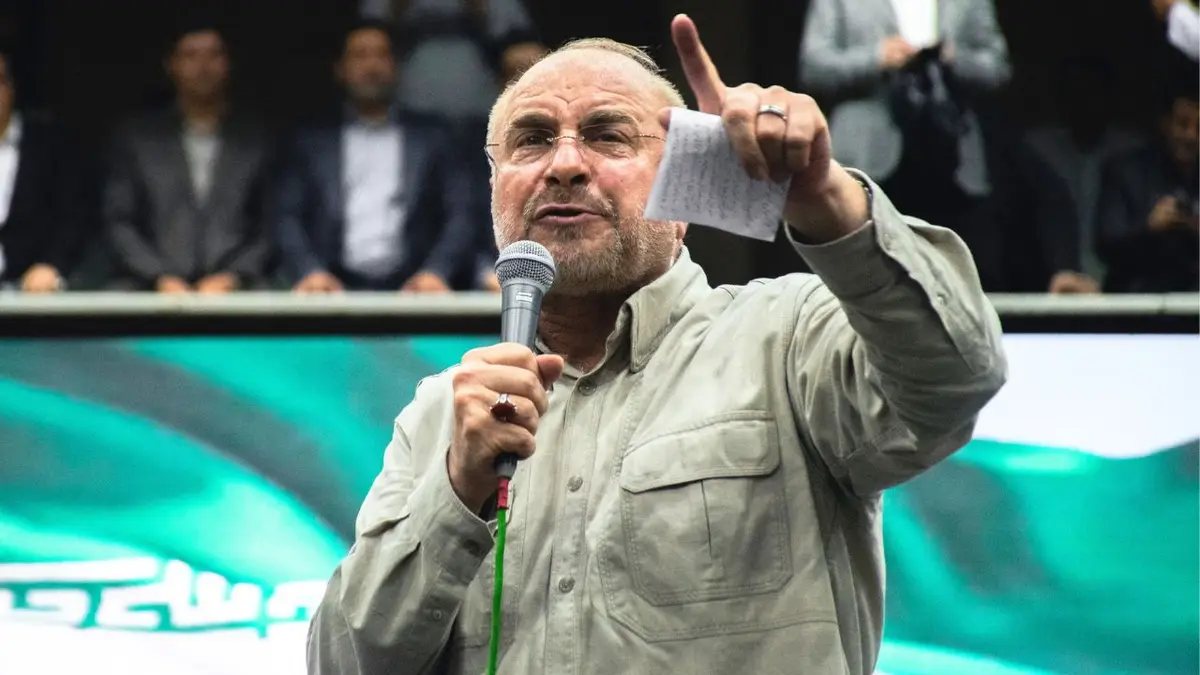
In the face of US threats of a ground attack, Iranian Parliament Speaker Mohammad Baqer Qalibaf announced that Iran is ready to defend its sovereignty with full force. This statement was made during a post on the X platform, where he emphasized that his country is armed and steadfast in its position, adding, "Come, we are waiting for you."
Qalibaf, who expressed his willingness to shed blood to defend the homeland, pointed out that around 7 million Iranians have declared their readiness to take up arms against what he described as the "enemy." He confirmed that Iran is not only in a defensive state but is also prepared to fight for its sovereignty.
Details of the Event
Qalibaf's remarks come at a sensitive time, as former US President Donald Trump announced Washington's intention to deliver a severe blow to Iran within a timeframe of two to three weeks. Trump clarified that this strike would return Iran to the "Stone Age," escalating tensions between the two countries.
Trump also indicated that the United States has largely achieved its military objectives in Iran, reflecting an escalation in the American rhetoric towards Tehran. Meanwhile, reports suggest that the US Department of Defense (Pentagon) is preparing to launch a ground operation that could last for two months, with the possibility of occupying the strategic Kharq Island.
Background & Context
Since February 28 of this year, Iranian-American relations have seen a noticeable escalation, with Israel and the United States waging a war against Iran that has resulted in thousands of casualties. Tehran has responded by launching missiles and drones towards Israel, complicating the security situation in the region.
Historically, relations between Iran and the United States have been tense since the Islamic Revolution in 1979, witnessing periods of military escalation and mutual threats. These tensions stem from multiple issues, including Iran's nuclear program and Tehran's support for armed groups in the region.
Impact & Consequences
Qalibaf's and Trump's recent statements could lead to potential military escalation, threatening stability in the region. Should any military action occur, it could negatively impact regional security and lead to severe humanitarian consequences.
Moreover, any military escalation could affect the Iranian economy, which is already suffering from US sanctions, increasing pressure on the Iranian government and impacting the lives of citizens. At the same time, global markets, particularly oil markets, may be affected by any disruptions in the region.
Regional Significance
The tensions between Iran and the United States have significant implications for Arab countries, potentially leading to increased sectarian divisions and exacerbating existing conflicts. Additionally, any military escalation could open the door to new foreign interventions in Arab affairs, further complicating the situation in the region.
In conclusion, all eyes remain on upcoming developments, as any moves by the United States or Iran could radically alter the landscape of conflict in the region.